Why CBSE's three-language framework is such a raging debate
Parents worry about added stress on students while educators examine whether the policy can balance cultural diversity and academic realities
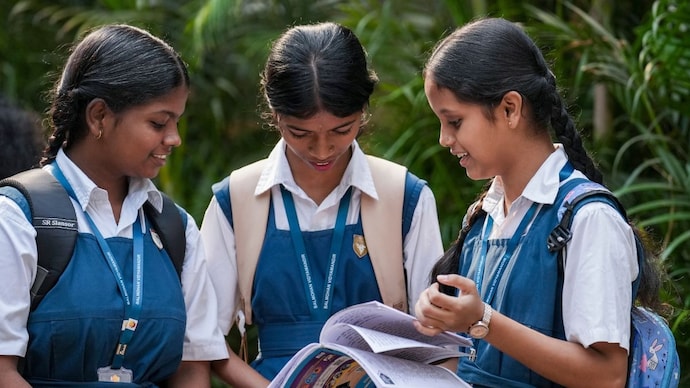
For some, it may be an opportunity to learn the language of a neighbouring state, reconnect with a mother tongue or explore a culture beyond their own. For others, it may feel like one more subject added to an already packed academic schedule.
The decision of the Central Board of Secondary Education (CBSE) to make the three-language framework mandatory for Class 9 students, in line with the National Education Policy (NEP) 2020, has reignited a debate that goes far beyond classrooms.
India's linguistic richness is staggering. Every few hundred kilometres, accents change, scripts shift and entirely different languages emerge. Yet many students spend their school years functioning primarily in English and one regional language.
“India has over 19,500 languages and dialects. A child navigating only two of them moves through an extraordinarily narrow slice of this country,” argues Preethi Rajeev Nair, principal, CBSE section, Lancers Army School, Surat. “Making a third language compulsory at Class 9 gives secondary school students structured exposure precisely at the age when linguistic identity is most absorptive.”
The idea sounds compelling. In a country as diverse as India, multilingualism is often seen as a bridge between communities and cultures. Studies have also linked learning multiple languages with stronger cognitive flexibility, problem-solving abilities and adaptability.
But education policies rarely exist in isolation. They arrive in real classrooms filled with real students, many of whom are already balancing board exam preparation, coaching classes, extracurricular activities and the pressures of adolescence. That is why one of the first concerns raised by parents was simple: Will a third language create more stress?
Nair believes the policy has tried to address that fear. The third language will not be part of the Class 10 board examination, and the assessment will remain internal. “The stated intent is to keep the focus on learning, not scoring,” she says.
Yet the larger question remains: will students truly learn another language or simply study it? Experts point out that the benefits of multilingual education depend heavily on how it is taught. A language learned through conversation, stories and meaningful engagement can open doors to new ways of thinking. A language reduced to memorisation and periodic tests may become little more than another item on a report card.
“A third language reduced to one period a week of rote exercises improves very little,” says Nair. “What matters is a way of teaching that builds actual competency through conversation, comprehension, reading and writing.”
The challenge becomes even more complex when viewed across India's vastly different school ecosystems. In a well-funded urban school, students may have access to trained teachers and multiple language options. In a small-town school already struggling with staff shortages, introducing another language could prove far more difficult.
“The staffing gap is real,” says Nair. “Good intentions at the policy level don't automatically translate into qualified teachers in a Class 9 classroom.”
This concern has become central to the debate. Supporters and critics alike agree that success will depend less on policy announcements and more on implementation. Questions have also emerged from states with strong linguistic identities, particularly in southern India. While the framework allows students to choose their third language and does not mandate Hindi, some worry that shortages of teachers could limit those choices in practice.
“The concern is whether schools will genuinely offer meaningful alternatives or whether practical constraints quietly narrow those options,” notes Nair. That distinction matters because language is never just a subject. It carries history, culture, memory and belonging. For many families, conversations around language are deeply personal.
Supporters of the policy argue that learning another Indian language can strengthen national integration by helping students connect with people and regions beyond their own. Critics counter that such goals can only be achieved if every student enjoys equal access to meaningful choices.
“The test of this policy isn't its intent,” says Nair. “It's whether every student, regardless of where they study, experiences genuine choice.”
Interestingly, this debate is unfolding at the same time schools are introducing artificial intelligence, computational thinking and other future-focused skills. To some, language learning and digital literacy may seem like competing priorities.
As AI tools become more capable of understanding and generating content in Indian languages, multilingual abilities may become an asset rather than an outdated skill. Language fluency and digital fluency, many argue, are likely to grow together.
Ultimately, the three-language framework is about more than adding another subject. It is about how India imagines its future citizens—young people who can move comfortably between cultures, communities and ideas.
Subscribe to India Today Magazine
For some, it may be an opportunity to learn the language of a neighbouring state, reconnect with a mother tongue or explore a culture beyond their own. For others, it may feel like one more subject added to an already packed academic schedule.
The decision of the Central Board of Secondary Education (CBSE) to make the three-language framework mandatory for Class 9 students, in line with the National Education Policy (NEP) 2020, has reignited a debate that goes far beyond classrooms.
India's linguistic richness is staggering. Every few hundred kilometres, accents change, scripts shift and entirely different languages emerge. Yet many students spend their school years functioning primarily in English and one regional language.
“India has over 19,500 languages and dialects. A child navigating only two of them moves through an extraordinarily narrow slice of this country,” argues Preethi Rajeev Nair, principal, CBSE section, Lancers Army School, Surat. “Making a third language compulsory at Class 9 gives secondary school students structured exposure precisely at the age when linguistic identity is most absorptive.”
The idea sounds compelling. In a country as diverse as India, multilingualism is often seen as a bridge between communities and cultures. Studies have also linked learning multiple languages with stronger cognitive flexibility, problem-solving abilities and adaptability.
But education policies rarely exist in isolation. They arrive in real classrooms filled with real students, many of whom are already balancing board exam preparation, coaching classes, extracurricular activities and the pressures of adolescence. That is why one of the first concerns raised by parents was simple: Will a third language create more stress?
Nair believes the policy has tried to address that fear. The third language will not be part of the Class 10 board examination, and the assessment will remain internal. “The stated intent is to keep the focus on learning, not scoring,” she says.
Yet the larger question remains: will students truly learn another language or simply study it? Experts point out that the benefits of multilingual education depend heavily on how it is taught. A language learned through conversation, stories and meaningful engagement can open doors to new ways of thinking. A language reduced to memorisation and periodic tests may become little more than another item on a report card.
“A third language reduced to one period a week of rote exercises improves very little,” says Nair. “What matters is a way of teaching that builds actual competency through conversation, comprehension, reading and writing.”
The challenge becomes even more complex when viewed across India's vastly different school ecosystems. In a well-funded urban school, students may have access to trained teachers and multiple language options. In a small-town school already struggling with staff shortages, introducing another language could prove far more difficult.
“The staffing gap is real,” says Nair. “Good intentions at the policy level don't automatically translate into qualified teachers in a Class 9 classroom.”
This concern has become central to the debate. Supporters and critics alike agree that success will depend less on policy announcements and more on implementation. Questions have also emerged from states with strong linguistic identities, particularly in southern India. While the framework allows students to choose their third language and does not mandate Hindi, some worry that shortages of teachers could limit those choices in practice.
“The concern is whether schools will genuinely offer meaningful alternatives or whether practical constraints quietly narrow those options,” notes Nair. That distinction matters because language is never just a subject. It carries history, culture, memory and belonging. For many families, conversations around language are deeply personal.
Supporters of the policy argue that learning another Indian language can strengthen national integration by helping students connect with people and regions beyond their own. Critics counter that such goals can only be achieved if every student enjoys equal access to meaningful choices.
“The test of this policy isn't its intent,” says Nair. “It's whether every student, regardless of where they study, experiences genuine choice.”
Interestingly, this debate is unfolding at the same time schools are introducing artificial intelligence, computational thinking and other future-focused skills. To some, language learning and digital literacy may seem like competing priorities.
As AI tools become more capable of understanding and generating content in Indian languages, multilingual abilities may become an asset rather than an outdated skill. Language fluency and digital fluency, many argue, are likely to grow together.
Ultimately, the three-language framework is about more than adding another subject. It is about how India imagines its future citizens—young people who can move comfortably between cultures, communities and ideas.
Subscribe to India Today Magazine

