Why 'Cockroach Janta Party' is India's new internet phenomenon
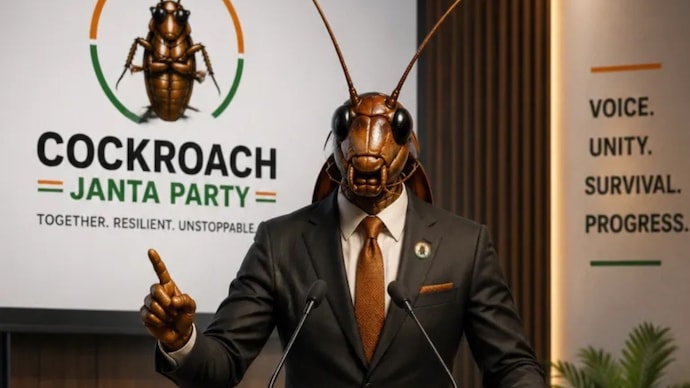
The 'cockroach' symbolism itself explains part of the appeal for a young generation that feels unheard, yet impossible to be ignored completely
The trigger was Chief Justice of India (CJI) Surya Kant’s purported remark during a court hearing, in which he allegedly compared unemployed youth drifting towards activism with “cockroaches” and “parasites”. By the time CJI Kant clarified that he had been misquoted and that the remark was aimed at people holding “fake and bogus degrees” and not India’s youth in general, the statement had gone viral. Memes, videos and angry reactions flooded social media almost immediately.
Among those reacting to the development was Abhijeet Dipke, who launched CJP online and provoked a wider digital movement. CJP’s official Instagram page crossed 22 million followers within days.
The symbolism itself explains part of the appeal. Cockroaches are seen as unwanted, difficult to eliminate and capable of surviving almost anything. The supporters of the online movement have evidently embraced that comparison, presenting themselves as a generation that feels ignored, yet impossible to silence completely.
The speed with which CJP grew is also what made it politically significant. The movement arrived at a moment when youth dissatisfaction is palpable. The controversy surrounding the national medical entrance (NEET-UG 2026) paper leak has caused nationwide outrage. Across social media, students have been speaking openly about exhaustion, uncertainty, repeated exam controversies, corruption, and a feeling that the system no longer rewards merit.
The CJP tapped directly into that mood. Its first major campaign was an online petition demanding the resignation of Union education minister Dharmendra Pradhan over the NEET row. Dipke claimed 600,000 supporters had signed the petition. In a video message, he urged people to support the campaign and “put pressure on the system” for accountability. He argued that the paper leak and the uncertainty around re-examinations had pushed many students into emotional distress, burnout and depression.
The broader dissatisfaction over competitive exams, recruitment delays and unemployment only helped the campaign spread faster. Many online users saw the movement less as a formal political platform and more as a digital expression of collective frustration. That frustration goes beyond a single examination.
Across social media platforms, young Indians have increasingly been discussing unemployment, rising living costs, recruitment delays, exam leaks, shrinking opportunities and what they see as political indifference towards their concerns. The movement’s sarcastic tone, meme-heavy language and refusal to behave like a traditional political outfit made it especially relatable to younger audiences. Its perceived ‘anti-establishment’ stand also added to the buzz.
Soon after gaining traction, the party’s X account was reportedly withheld in India, allegedly following government directions linked to ‘national security concerns’. Dipke later said the group’s website, where he claimed nearly 1 million people had signed up as ‘cockroach’ members, was also taken down.
“Why is the government so scared of cockroaches? But this dictatorial behaviour is opening the eyes of India’s youth. Our only crime is we were demanding a better future. But you can’t get rid of us that easily. We are working on a new home right now. Cockroaches never die,” he posted.
Dipke also alleged that both his personal Instagram account and the party’s page had been hacked, claims that only intensified online curiosity. At the same time, he repeatedly appealed to supporters to remain cautious and avoid impulsive protests.
Calling it a “long battle”, Dipke clarified that the CJP had not officially called for any street protest. “We are not going to protest right now. Whatever we will do, we will plan for it and will do it very carefully. We will be very mindful about it,” he said. He also warned supporters against taking any hurried step that could allow authorities to “demonise” the movement.
That reflects how internet politics in India is changing. Digital outrage today can rapidly turn into organised mobilisation. What makes the CJP unusual is not merely its humour or symbolism but the fact that it has emerged from a generation increasingly using memes, satire and online communities to express political anger. Whether this survives beyond the current wave of attention is uncertain. But CPJ’s sudden rise certainly represents a growing section of young Indians that feels increasingly cynical about the system and unheard.
Subscribe to India Today Magazine
The trigger was Chief Justice of India (CJI) Surya Kant’s purported remark during a court hearing, in which he allegedly compared unemployed youth drifting towards activism with “cockroaches” and “parasites”. By the time CJI Kant clarified that he had been misquoted and that the remark was aimed at people holding “fake and bogus degrees” and not India’s youth in general, the statement had gone viral. Memes, videos and angry reactions flooded social media almost immediately.
Among those reacting to the development was Abhijeet Dipke, who launched CJP online and provoked a wider digital movement. CJP’s official Instagram page crossed 22 million followers within days.
The symbolism itself explains part of the appeal. Cockroaches are seen as unwanted, difficult to eliminate and capable of surviving almost anything. The supporters of the online movement have evidently embraced that comparison, presenting themselves as a generation that feels ignored, yet impossible to silence completely.
The speed with which CJP grew is also what made it politically significant. The movement arrived at a moment when youth dissatisfaction is palpable. The controversy surrounding the national medical entrance (NEET-UG 2026) paper leak has caused nationwide outrage. Across social media, students have been speaking openly about exhaustion, uncertainty, repeated exam controversies, corruption, and a feeling that the system no longer rewards merit.
The CJP tapped directly into that mood. Its first major campaign was an online petition demanding the resignation of Union education minister Dharmendra Pradhan over the NEET row. Dipke claimed 600,000 supporters had signed the petition. In a video message, he urged people to support the campaign and “put pressure on the system” for accountability. He argued that the paper leak and the uncertainty around re-examinations had pushed many students into emotional distress, burnout and depression.
The broader dissatisfaction over competitive exams, recruitment delays and unemployment only helped the campaign spread faster. Many online users saw the movement less as a formal political platform and more as a digital expression of collective frustration. That frustration goes beyond a single examination.
Across social media platforms, young Indians have increasingly been discussing unemployment, rising living costs, recruitment delays, exam leaks, shrinking opportunities and what they see as political indifference towards their concerns. The movement’s sarcastic tone, meme-heavy language and refusal to behave like a traditional political outfit made it especially relatable to younger audiences. Its perceived ‘anti-establishment’ stand also added to the buzz.
Soon after gaining traction, the party’s X account was reportedly withheld in India, allegedly following government directions linked to ‘national security concerns’. Dipke later said the group’s website, where he claimed nearly 1 million people had signed up as ‘cockroach’ members, was also taken down.
“Why is the government so scared of cockroaches? But this dictatorial behaviour is opening the eyes of India’s youth. Our only crime is we were demanding a better future. But you can’t get rid of us that easily. We are working on a new home right now. Cockroaches never die,” he posted.
Dipke also alleged that both his personal Instagram account and the party’s page had been hacked, claims that only intensified online curiosity. At the same time, he repeatedly appealed to supporters to remain cautious and avoid impulsive protests.
Calling it a “long battle”, Dipke clarified that the CJP had not officially called for any street protest. “We are not going to protest right now. Whatever we will do, we will plan for it and will do it very carefully. We will be very mindful about it,” he said. He also warned supporters against taking any hurried step that could allow authorities to “demonise” the movement.
That reflects how internet politics in India is changing. Digital outrage today can rapidly turn into organised mobilisation. What makes the CJP unusual is not merely its humour or symbolism but the fact that it has emerged from a generation increasingly using memes, satire and online communities to express political anger. Whether this survives beyond the current wave of attention is uncertain. But CPJ’s sudden rise certainly represents a growing section of young Indians that feels increasingly cynical about the system and unheard.
Subscribe to India Today Magazine

