Why Haryana says it's India's most trusted destination for Japanese investment
Dr Yash Garg, Director General, Industries and Commerce and MSME, Haryana, says Japanese association has defined the state's industrial ecosystem
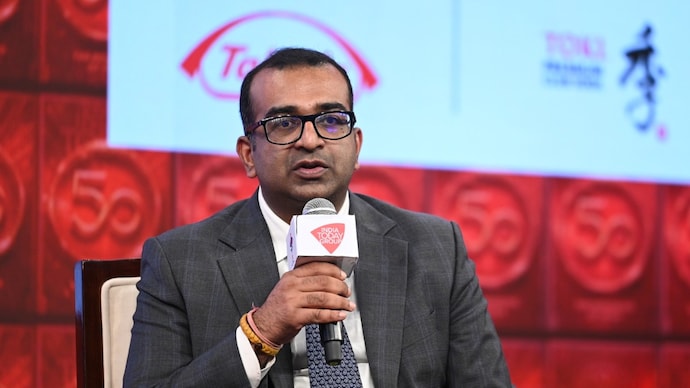
In his keynote address for the session ‘The States: Building Bonds on Trust and Collaboration’, Dr Garg argued that Haryana’s decades-long engagement with Japanese companies has evolved into a mature industrial partnership now moving beyond automobiles into advanced technologies, healthcare, logistics, electronics, AI and semiconductors.
Dr Garg said Haryana’s association with Japanese industry stretches back nearly four decades and has played a defining role in shaping the state’s industrial ecosystem. Japanese firms, he said, had not only established manufacturing bases but also nurtured local MSMEs, transferred technology and created long-term industrial linkages.
According to him, nearly 300 Japanese companies currently operate in Haryana, accounting for almost one-third of Japanese firms present in India while more than 5,000 Japanese expatriates live in Gurugram alone.
The state, he said, is now attempting to transition from a manufacturing-led economy to a knowledge economy. Haryana is actively seeking collaborations in AI, electric vehicles, semiconductor manufacturing, medical technology, automation, logistics and data centres. Healthcare and medical devices emerged as major areas of future cooperation during Chief Minister Nayab Singh Saini’s recent Japan visit, he added.
Responding to questions on competition from neighbouring states, Dr Garg described inter-state competition as healthy and added that Haryana’s strategy was not based purely on incentives but on creating a dependable ecosystem. He stressed that the state government viewed industry relationships as long-term partnerships rather than transactional engagements. Haryana, he said, was also investing heavily in skilling and AI-led governance, along with centres of excellence focused on emerging technologies.
A major part of the discussion focused on Haryana’s upcoming industrial policy. Dr Garg acknowledged that Haryana had historically not relied heavily on subsidies, but that changing geopolitical conditions and intensifying competition among states had forced a rethink. The new policy, he said, would provide capital subsidies of up to 40 per cent for eligible investments, customised packages for large investors, and strong incentives for green manufacturing initiatives such as renewable energy, captive power plants, effluent treatment systems and zero-liquid discharge facilities.
He also said Haryana wanted Indian manufacturing units to become globally competitive, particularly against large-scale Chinese manufacturing. The state’s new policy framework aims to improve production efficiency, scale and export competitiveness. Export-oriented firms would receive additional support for diversification and relocation of production lines. Dr Garg added that a separate MSME policy would soon be unveiled to support enterprises across their entire lifecycle.
On global supply chains, Dr Garg said Japanese firms were increasingly viewing India as an export base for Africa and other international markets. He pointed to companies like Panasonic already using India as a manufacturing and export hub. Haryana, he said, was positioning itself to benefit from broader geopolitical shifts and rapidly changing trade patterns through flexible and dynamic policymaking.
The discussion also highlighted Haryana’s infrastructure push around emerging airport hubs. Dr Garg said the state planned to establish 10 new Industrial Model Townships strategically linked to airports such as Hisar, Jewar and Chandigarh. Hisar, in particular, is being developed as a future aerospace and defence manufacturing hub alongside a cargo ecosystem for North India.
On land acquisition, Dr Garg emphasised that Haryana does not rely on compulsory acquisition and instead follows a voluntary land purchase mechanism in which farmers themselves quote prices. The state is also preparing a land pooling policy intended to make farmers “partners in development” by offering them a share of developed land rather than one-time compensation.
The session concluded with a discussion on skilled labour and Japanese language training. Dr Garg said Haryana had already begun Japanese language courses through its skill development network and industrial training institutes, anticipating future demand for Japanese-speaking skilled workers both in Haryana-based industries and in Japan itself.
EXPERT-SPEAK
* “The relationship between Japanese companies and Haryana is not transactional; it is civilisational.”
“We trust the Japanese, and the Japanese trust Haryana Haryana has always been a home away from home for Japanese companies.”
“The biggest competition right now for any Indian company will be a Chinese one. We have to make our companies more competitive.”
“The world is changing very fast, and our policies have to be dynamic. Changes have to come very quickly.”
“We completely aim at making the farmer a partner in development, not merely a spectator.”
Subscribe to India Today Magazine
In his keynote address for the session ‘The States: Building Bonds on Trust and Collaboration’, Dr Garg argued that Haryana’s decades-long engagement with Japanese companies has evolved into a mature industrial partnership now moving beyond automobiles into advanced technologies, healthcare, logistics, electronics, AI and semiconductors.
Dr Garg said Haryana’s association with Japanese industry stretches back nearly four decades and has played a defining role in shaping the state’s industrial ecosystem. Japanese firms, he said, had not only established manufacturing bases but also nurtured local MSMEs, transferred technology and created long-term industrial linkages.
According to him, nearly 300 Japanese companies currently operate in Haryana, accounting for almost one-third of Japanese firms present in India while more than 5,000 Japanese expatriates live in Gurugram alone.
The state, he said, is now attempting to transition from a manufacturing-led economy to a knowledge economy. Haryana is actively seeking collaborations in AI, electric vehicles, semiconductor manufacturing, medical technology, automation, logistics and data centres. Healthcare and medical devices emerged as major areas of future cooperation during Chief Minister Nayab Singh Saini’s recent Japan visit, he added.
Responding to questions on competition from neighbouring states, Dr Garg described inter-state competition as healthy and added that Haryana’s strategy was not based purely on incentives but on creating a dependable ecosystem. He stressed that the state government viewed industry relationships as long-term partnerships rather than transactional engagements. Haryana, he said, was also investing heavily in skilling and AI-led governance, along with centres of excellence focused on emerging technologies.
A major part of the discussion focused on Haryana’s upcoming industrial policy. Dr Garg acknowledged that Haryana had historically not relied heavily on subsidies, but that changing geopolitical conditions and intensifying competition among states had forced a rethink. The new policy, he said, would provide capital subsidies of up to 40 per cent for eligible investments, customised packages for large investors, and strong incentives for green manufacturing initiatives such as renewable energy, captive power plants, effluent treatment systems and zero-liquid discharge facilities.
He also said Haryana wanted Indian manufacturing units to become globally competitive, particularly against large-scale Chinese manufacturing. The state’s new policy framework aims to improve production efficiency, scale and export competitiveness. Export-oriented firms would receive additional support for diversification and relocation of production lines. Dr Garg added that a separate MSME policy would soon be unveiled to support enterprises across their entire lifecycle.
On global supply chains, Dr Garg said Japanese firms were increasingly viewing India as an export base for Africa and other international markets. He pointed to companies like Panasonic already using India as a manufacturing and export hub. Haryana, he said, was positioning itself to benefit from broader geopolitical shifts and rapidly changing trade patterns through flexible and dynamic policymaking.
The discussion also highlighted Haryana’s infrastructure push around emerging airport hubs. Dr Garg said the state planned to establish 10 new Industrial Model Townships strategically linked to airports such as Hisar, Jewar and Chandigarh. Hisar, in particular, is being developed as a future aerospace and defence manufacturing hub alongside a cargo ecosystem for North India.
On land acquisition, Dr Garg emphasised that Haryana does not rely on compulsory acquisition and instead follows a voluntary land purchase mechanism in which farmers themselves quote prices. The state is also preparing a land pooling policy intended to make farmers “partners in development” by offering them a share of developed land rather than one-time compensation.
The session concluded with a discussion on skilled labour and Japanese language training. Dr Garg said Haryana had already begun Japanese language courses through its skill development network and industrial training institutes, anticipating future demand for Japanese-speaking skilled workers both in Haryana-based industries and in Japan itself.
EXPERT-SPEAK
* “The relationship between Japanese companies and Haryana is not transactional; it is civilisational.”
“We trust the Japanese, and the Japanese trust Haryana Haryana has always been a home away from home for Japanese companies.”
“The biggest competition right now for any Indian company will be a Chinese one. We have to make our companies more competitive.”
“The world is changing very fast, and our policies have to be dynamic. Changes have to come very quickly.”
“We completely aim at making the farmer a partner in development, not merely a spectator.”
Subscribe to India Today Magazine

