Why India has deployed a costly oil shock buffer
As India's crude basket moves past $120 and New Delhi cuts Rs 10 per litre excise on March 27, the government buys time ahead of the Reserve Bank of India's April 2 policy meet. But the real test lies in how long this hedge can hold
The ruling BJP, already in election mode, may leverage this move in the coming assembly polls in Assam, West Bengal, Tamil Nadu, Kerala and Puducherry. In contrast, neighbouring Bangladesh, Sri Lanka and Pakistan continue to face acute energy stress, resorting to fuel price hikes, import curbs, currency controls, load shedding and IMF-backed adjustments. India’s approach reflects relative macro stability, supported by a calibrated policy response rather than abrupt corrections.
Yet the arithmetic is stark. A Rs 10 per litre reduction of excise duty on petrol and diesel translates into an estimated annual revenue foregone of roughly Rs 1.5 lakh crore, or about 0.5 per cent of GDP. For context, the Union government’s gross tax revenues for Financial year 2026-27 are budgeted at Rs 38-40 lakh crore, which means this single decision erodes close to 4 per cent of its tax base. The move will also shape the Reserve Bank of India’s Monetary Policy Committee (MPC) deliberations on April 2, as it softens the near-term inflation outlook and reduces the urgency for immediate monetary tightening.
In a fiscal framework that aimed to bring the deficit down to 5.1 per cent of GDP, this is not a rounding error; it is a meaningful deviation that could push the deficit closer to 5.5 per cent if sustained. Yet, the government appears willing to absorb the hit, because the alternative — a spike in inflation and a collapse in demand momentum –– could prove even more costly. India’s post-pandemic recovery has leaned heavily on public capex, which has risen to over Rs 11 lakh crore, and on resilient consumption. A fuel-driven inflation shock risks undermining both simultaneously.
Left unchecked, this would have forced RBI into a far more aggressive tightening cycle. India has already seen how sensitive growth is to interest rate cycles, every 100 basis point increase in policy rates meaningfully tightens credit conditions across MSMEs, housing and consumption. By cutting excise, the Centre has effectively stepped in as
the economy’s shock absorber, using its own fiscal space to dampen volatility and keep inflation expectations anchored. In macroeconomic terms, this is counter-cyclical policy done right. But it is also expensive.
But the real question is not how big the fiscal cost is, it is how long India can afford to bear it. If oil prices retreat in the next few months, the strategy will look prescient. The government can rebuild excise buffers, as it did between 2020 and 2022 when duties were raised sharply, and the fiscal math will normalise. But if crude price remains elevated for longer, the calculus begins to shift. Every quarter of high prices compounds the revenue loss. Borrowing requirements rise, pushing up government bond yields, which have already been hovering in the 7.1-7.3 per cent range for the 10-year benchmark. Higher yields, in turn, risk crowding out private investment just as India is trying to revive its capex cycle. At some point, the government is forced into uncomfortable trade-offs: trim capital expenditure, widen the deficit further, or allow fuel prices to rise again.
This is precisely the dilemma that will weigh on policymakers when the RBI’s MPC meets on April 2. The excise cut offers immediate relief, potentially shaving off 20-30 basis points from inflation and allowing the central bank to avoid an aggressive rate hike in the near term. But it simultaneously shifts the burden to the fiscal side, implying higher borrowing, firmer bond yields and lingering medium-term inflation risks. For RBI, this is not a clean disinflation signal but a temporary cushion masking deeper pressures, suggesting a likely pause on rates, but with a distinctly hawkish undertone, as the real variable remains the persistence of high oil prices.
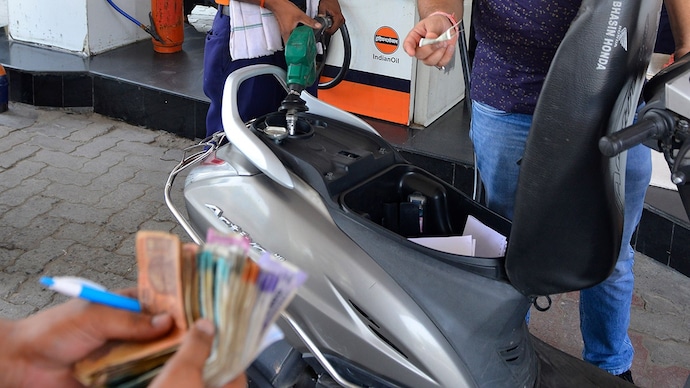
At its core, the excise cut is not aimed at lowering fuel prices but at cushioning consumers while protecting oil marketing company (OMC) margins in a high-crude environment. Retail pump prices have remained largely unchanged in the days around March 27, indicating limited pass-through. PSU OMCs — IOC, BPCL and HPCL — are absorbing part of the cost pressure rather than transmitting the tax cut fully to consumers.
What makes this moment more complex is that the pressure is not merely cyclical, it is structural. Despite aggressive diversification over the past three years, India remains deeply exposed to global oil price cycles. The country has broadened its sourcing basket—Russian crude, which accounted for less than 2 per cent of imports before 2022, now makes up 30-35 per cent in some months, while supplies from the United States and Africa have increased. Yet, 45-50 per cent of imports still originate in the Middle East, and a significant share of pricing remains linked, directly or indirectly, to the Dubai/Oman benchmark, which is highly sensitive to geopolitical disruptions in West Asia.
This means that even when India diversifies where it buys oil from, it has not fully diversified how that oil is priced. When tensions rise around chokepoints like the Strait of Hormuz — which handles nearly one-fifth of global oil trade — prices spike across benchmarks, freight and insurance costs surge, and India’s landed cost rises almost immediately.
The feedback loops are unforgiving. A sustained high-oil environment widens India’s current account deficit, which typically expands by 0.3-0.4 percentage points of GDP for every $10 increase in crude. This puts pressure on the rupee, and a weaker rupee makes imports even more expensive, amplifying the original shock. The fiscal cushion provided by the excise cut does little to break this external vulnerability. At the same time, higher borrowing to offset lost revenue raises the government’s interest burden, which already consumes over 20 per cent of its revenue receipts. The risk of fiscal-monetary tension also looms: while the excise cut helps contain inflation in the short term, a persistently higher deficit could become inflationary over the medium term.
Fuel prices, meanwhile, occupy a unique space in India’s political economy. They are among the few economic variables tracked daily across income classes. A Rs 5-10 increase at the pump is immediate, visible and often politically consequential. The excise cut, therefore, is not just an economic buffer, but also a political stabiliser, shielding households from abrupt cost-of-living shocks and preserving consumption sentiment.
And that brings us to the uncomfortable truth. This pain is not episodic, it is structural. As long as India imports the vast majority of its crude, as long as a large share of that oil is benchmarked to volatile Gulf-linked pricing systems, and as long as the rupee remains sensitive to external shocks, episodes like this will recur. Diversification has given India tactical flexibility, not strategic immunity. The excise cut is a buffer, not a solution.
In the end, the success of this strategy will not be judged by the size of the tax cut, but by the timing of its exit. India can afford the cost of protection. It cannot afford to pay for it indefinitely.
Subscribe to India Today Magazine
The ruling BJP, already in election mode, may leverage this move in the coming assembly polls in Assam, West Bengal, Tamil Nadu, Kerala and Puducherry. In contrast, neighbouring Bangladesh, Sri Lanka and Pakistan continue to face acute energy stress, resorting to fuel price hikes, import curbs, currency controls, load shedding and IMF-backed adjustments. India’s approach reflects relative macro stability, supported by a calibrated policy response rather than abrupt corrections.
Yet the arithmetic is stark. A Rs 10 per litre reduction of excise duty on petrol and diesel translates into an estimated annual revenue foregone of roughly Rs 1.5 lakh crore, or about 0.5 per cent of GDP. For context, the Union government’s gross tax revenues for Financial year 2026-27 are budgeted at Rs 38-40 lakh crore, which means this single decision erodes close to 4 per cent of its tax base. The move will also shape the Reserve Bank of India’s Monetary Policy Committee (MPC) deliberations on April 2, as it softens the near-term inflation outlook and reduces the urgency for immediate monetary tightening.
In a fiscal framework that aimed to bring the deficit down to 5.1 per cent of GDP, this is not a rounding error; it is a meaningful deviation that could push the deficit closer to 5.5 per cent if sustained. Yet, the government appears willing to absorb the hit, because the alternative — a spike in inflation and a collapse in demand momentum –– could prove even more costly. India’s post-pandemic recovery has leaned heavily on public capex, which has risen to over Rs 11 lakh crore, and on resilient consumption. A fuel-driven inflation shock risks undermining both simultaneously.
Left unchecked, this would have forced RBI into a far more aggressive tightening cycle. India has already seen how sensitive growth is to interest rate cycles, every 100 basis point increase in policy rates meaningfully tightens credit conditions across MSMEs, housing and consumption. By cutting excise, the Centre has effectively stepped in as
the economy’s shock absorber, using its own fiscal space to dampen volatility and keep inflation expectations anchored. In macroeconomic terms, this is counter-cyclical policy done right. But it is also expensive.
But the real question is not how big the fiscal cost is, it is how long India can afford to bear it. If oil prices retreat in the next few months, the strategy will look prescient. The government can rebuild excise buffers, as it did between 2020 and 2022 when duties were raised sharply, and the fiscal math will normalise. But if crude price remains elevated for longer, the calculus begins to shift. Every quarter of high prices compounds the revenue loss. Borrowing requirements rise, pushing up government bond yields, which have already been hovering in the 7.1-7.3 per cent range for the 10-year benchmark. Higher yields, in turn, risk crowding out private investment just as India is trying to revive its capex cycle. At some point, the government is forced into uncomfortable trade-offs: trim capital expenditure, widen the deficit further, or allow fuel prices to rise again.
This is precisely the dilemma that will weigh on policymakers when the RBI’s MPC meets on April 2. The excise cut offers immediate relief, potentially shaving off 20-30 basis points from inflation and allowing the central bank to avoid an aggressive rate hike in the near term. But it simultaneously shifts the burden to the fiscal side, implying higher borrowing, firmer bond yields and lingering medium-term inflation risks. For RBI, this is not a clean disinflation signal but a temporary cushion masking deeper pressures, suggesting a likely pause on rates, but with a distinctly hawkish undertone, as the real variable remains the persistence of high oil prices.
At its core, the excise cut is not aimed at lowering fuel prices but at cushioning consumers while protecting oil marketing company (OMC) margins in a high-crude environment. Retail pump prices have remained largely unchanged in the days around March 27, indicating limited pass-through. PSU OMCs — IOC, BPCL and HPCL — are absorbing part of the cost pressure rather than transmitting the tax cut fully to consumers.
What makes this moment more complex is that the pressure is not merely cyclical, it is structural. Despite aggressive diversification over the past three years, India remains deeply exposed to global oil price cycles. The country has broadened its sourcing basket—Russian crude, which accounted for less than 2 per cent of imports before 2022, now makes up 30-35 per cent in some months, while supplies from the United States and Africa have increased. Yet, 45-50 per cent of imports still originate in the Middle East, and a significant share of pricing remains linked, directly or indirectly, to the Dubai/Oman benchmark, which is highly sensitive to geopolitical disruptions in West Asia.
This means that even when India diversifies where it buys oil from, it has not fully diversified how that oil is priced. When tensions rise around chokepoints like the Strait of Hormuz — which handles nearly one-fifth of global oil trade — prices spike across benchmarks, freight and insurance costs surge, and India’s landed cost rises almost immediately.
The feedback loops are unforgiving. A sustained high-oil environment widens India’s current account deficit, which typically expands by 0.3-0.4 percentage points of GDP for every $10 increase in crude. This puts pressure on the rupee, and a weaker rupee makes imports even more expensive, amplifying the original shock. The fiscal cushion provided by the excise cut does little to break this external vulnerability. At the same time, higher borrowing to offset lost revenue raises the government’s interest burden, which already consumes over 20 per cent of its revenue receipts. The risk of fiscal-monetary tension also looms: while the excise cut helps contain inflation in the short term, a persistently higher deficit could become inflationary over the medium term.
Fuel prices, meanwhile, occupy a unique space in India’s political economy. They are among the few economic variables tracked daily across income classes. A Rs 5-10 increase at the pump is immediate, visible and often politically consequential. The excise cut, therefore, is not just an economic buffer, but also a political stabiliser, shielding households from abrupt cost-of-living shocks and preserving consumption sentiment.
And that brings us to the uncomfortable truth. This pain is not episodic, it is structural. As long as India imports the vast majority of its crude, as long as a large share of that oil is benchmarked to volatile Gulf-linked pricing systems, and as long as the rupee remains sensitive to external shocks, episodes like this will recur. Diversification has given India tactical flexibility, not strategic immunity. The excise cut is a buffer, not a solution.
In the end, the success of this strategy will not be judged by the size of the tax cut, but by the timing of its exit. India can afford the cost of protection. It cannot afford to pay for it indefinitely.
Subscribe to India Today Magazine

