Siddaramaiah's quiet revenge on successor DKS and Rahul Gandhi
Just before stepping down as the Chief Minister of Karnataka, Siddaramaiah decided to accept a caste census report, pending since November 2025. With this, he is leaving a ticking bomb for his successor, DK Shivakumar, and the Congress's de facto chief, Rahul Gandhi.
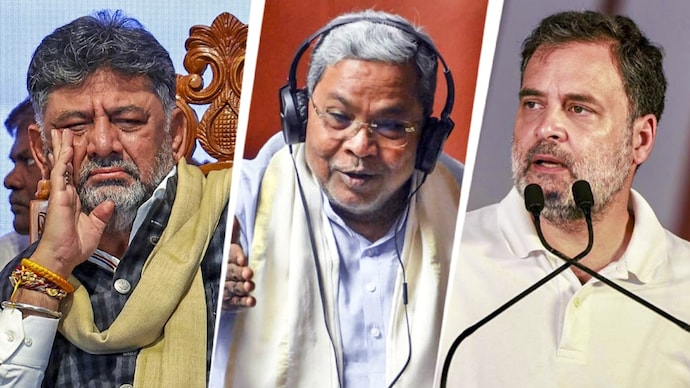
Siddaramaiah on Thursday finally confirmed his resignation as Karnataka Chief Minister after a breakfast meeting with Cabinet ministers in Bengaluru. Even as he steps down, Siddaramaiah appears determined to ensure that his exit is not politically quiet. In fact, he has activated a time bomb, which will be ticking for his successor, DK Shivakumar, and the Congress's de facto chief, Rahul Gandhi.
By formally accepting the contentious Backward Classes Commission's Socio-Economic and Educational Survey (caste census) report on Wednesday, Siddaramaiah might have taken a quiet revenge on DK Shivakumar and Rahul Gandhi.
The report on the first caste survey (commonly referred to as caste census) in Karnataka has been ready since 2017, Siddaramaiah's previous term as the chief minister. After returning to power in 2023, Siddaramaiah ordered a fresh caste survey, whose report was ready in 2025.
The move to accept the survey report by Siddaramaiah just ahead of stepping down is being viewed as his final strategic message. The report was submitted by Karnataka State Backward Classes Commission chairman K Madhusudan Nayak after Siddaramaiah fast-tracked the process amid rapidly evolving political developments in the state.
While this is officially an administrative exercise by the chief minister, the timing of his receiving the report has transformed it into a deeply political act.
Political observers believe Siddaramaiah is attempting to leave office after firmly stamping his image as Karnataka's foremost backward-class leader. But by accepting the report at this moment, he has also ensured that the burden of handling its consequences shifts entirely to DK Shivakumar.
KARNATAKA'S TRYST WITH TWO CASTE SURVEYS
Karnataka has conducted two caste surveys in the last nine years, both with Siddaramaiah at the helm in the state.
The Karnataka government under Siddaramaiah's first term as CM conducted a caste survey, led by H Kantharaj, and was completed and ready by 2017, but remained unimplemented for years due to political sensitivities, opposition from dominant castes like Lingayats and Vokkaligas, and technical issues such as missing original records and unsigned documents.
Successive governments, including the JD(S)-Congress and the BJP governments, avoided tabling the report amid fears of backlash over the survey's findings.
After returning to power in 2023, Siddaramaiah moved to accept the report in 2025. However, he announced in May 2025 a fresh caste survey, citing outdated 10-year-old data, legal requirements for periodic review, complaints from communities over inaccuracies, and the need for wider political consensus. The new caste census report has been sitting since November 2025.
WHY KARNATAKA CASTE CENSUS WILL BE A HOT POTATO FOR DK SHIVAKUMAR
The caste census report might end up becoming Siddaramaiah's political legacy project. But for DK Shivakumar, it could become the most difficult issue of his political career, along with other pressures he might face within his party.
The revised 2025 survey reportedly covered nearly 5.9 crore people and is among the largest caste enumeration exercises conducted by any Indian state till now. But the survey report is politically sensitive because it directly touches Karnataka's delicate caste power structure.
Though the official figures of the 2025 Karnataka caste census have not yet been made public, leaks and references to earlier survey findings suggest that Backward classes and OBC communities constitute nearly 69.6% of Karnataka's population. Muslims are reportedly the single largest social group at around 14%, while the population shares of dominant communities such as Lingayats and Vokkaligas are estimated at around 11% and 10-12%, respectively, lower than their traditionally perceived strength.
For decades, Karnataka politics has revolved around Lingayats and Vokkaligas.
Siddaramaiah's AHINDA politics (an alliance of minorities, backward classes, and Dalits) was designed precisely to counter that dominance by consolidating numerically large but politically fragmented social groups. This caste census report shows the numerical strength of the AHINDA bloc and threatens to reopen that battle on a wider scale.
The reported figures from the survey have created anxiety among dominant communities because they allegedly show stronger population shares for backward classes and minorities while reducing the perceived demographic strength of Lingayats and Vokkaligas. Such numbers could trigger fresh demands for revising reservations, welfare allocations, and political representation.
This is where the problem for the next CM of Karnataka, DK Shivakumar (DKS) begins.
Shivakumar is not just the Congress's most prominent Vokkaliga leader in Karnataka, but he is also seen as the face of the party's organisational revival in the state. If he proceeds with tabling or implementing the report, he risks backlash from influential Vokkaliga and Lingayat groups, and if he delays it, he risks alienating the AHINDA base that Siddaramaiah has carefully consolidated for the Congress over the years.
In effect, Siddaramaiah set up a political minefield where every available option carries electoral consequences for DKS.
Political experts see Siddaramaiah's acceptance of the report as more than an administrative closure. It is also being viewed as a message by Siddaramaiah to the Congress leadership that even if he vacates the chief minister's chair, his AHINDA politics and influence over Karnataka Congress will remain impossible to ignore.
The political undercurrents became visible on the ground as well. Members of the Kuruba community, Siddaramaiah's own caste group, staged protests in Karnataka's Raichur against Congress leader Rahul Gandhi following reports of the CM's impending resignation. Protesters raised slogans against the Congress high command and burned photographs of Rahul Gandhi, blaming the party leadership for the power shift in Karnataka.
Siddaramiah doesn't want to take up a central role that was offered to him by the Congress brass, according to reports. He wants to stay relevant in Karnataka's politics, and the caste survey report is key to that.
WHY CASTE CENSUS IS A CREDIBILITY TEST FOR RAHUL GANDHI
The Karnataka caste census does not create problems only for DKS. It also creates a major political challenge for Rahul Gandhi, and that will be on a national level.
In the past, Rahul Gandhi has made caste census politics one of the Congress party's central national campaigns and has also gained some fruit from it in the 2024 Lok Sabha elections.
He repeatedly described the caste census as the "X-ray of society" and argued that accurate caste data is essential for social justice, fair representation, and evidence-based welfare policies for OBCs, Dalits, and minorities.
It was Rahul Gandhi who pushed to conduct caste surveys in Congress-ruled states with a vision of demonstrating that the Congress is the party that is serious about implementing what it preaches politically.
Karnataka, along with Revanth Reddy-led Telangana, became the biggest testing ground for Rahul Gandhi's promise.
But despite conducting the survey, the Congress government under Siddaramaiah was repeatedly forced to delay tabling and releasing the report because of pressure from Lingayats and Vokkaligas.
If the next government under Shivakumar's leadership avoids tabling the report, it would weaken Rahul Gandhi's national social justice narrative. This will enable the BJP to accuse the Congress of demanding a caste census nationally while refusing to implement it when confronted with political resistance in a state ruled by it.
That is precisely why Siddaramaiah's final move has placed Rahul Gandhi in a politically uncomfortable position.
Replacing an OBC leader like Siddaramaiah with a dominant caste leader like Shivakumar already carries the risk of upsetting sections of the AHINDA coalition. Now, the caste census report has added another layer of political tension. Acting on the report could anger dominant castes. Ignoring it could damage the image Rahul Gandhi is trying to cultivate. The image is that of a leader fighting to deliver social justice.
In many ways, Siddaramaiah's final political gambit has pushed both Shivakumar and Rahul Gandhi into a corner.
The next Karnataka leadership will now have to choose between upsetting influential dominant caste groups or the AHINDA bloc and the Congress's national caste census credibility. And that is perhaps Siddaramaiah's quiet revenge, which he is ensuring even as he is exiting the CM's office, both his successor and the Congress high command remain trapped in a political battle defined on Siddaramaiah's terms.
Siddaramaiah on Thursday finally confirmed his resignation as Karnataka Chief Minister after a breakfast meeting with Cabinet ministers in Bengaluru. Even as he steps down, Siddaramaiah appears determined to ensure that his exit is not politically quiet. In fact, he has activated a time bomb, which will be ticking for his successor, DK Shivakumar, and the Congress's de facto chief, Rahul Gandhi.
By formally accepting the contentious Backward Classes Commission's Socio-Economic and Educational Survey (caste census) report on Wednesday, Siddaramaiah might have taken a quiet revenge on DK Shivakumar and Rahul Gandhi.
The report on the first caste survey (commonly referred to as caste census) in Karnataka has been ready since 2017, Siddaramaiah's previous term as the chief minister. After returning to power in 2023, Siddaramaiah ordered a fresh caste survey, whose report was ready in 2025.
The move to accept the survey report by Siddaramaiah just ahead of stepping down is being viewed as his final strategic message. The report was submitted by Karnataka State Backward Classes Commission chairman K Madhusudan Nayak after Siddaramaiah fast-tracked the process amid rapidly evolving political developments in the state.
While this is officially an administrative exercise by the chief minister, the timing of his receiving the report has transformed it into a deeply political act.
Political observers believe Siddaramaiah is attempting to leave office after firmly stamping his image as Karnataka's foremost backward-class leader. But by accepting the report at this moment, he has also ensured that the burden of handling its consequences shifts entirely to DK Shivakumar.
KARNATAKA'S TRYST WITH TWO CASTE SURVEYS
Karnataka has conducted two caste surveys in the last nine years, both with Siddaramaiah at the helm in the state.
The Karnataka government under Siddaramaiah's first term as CM conducted a caste survey, led by H Kantharaj, and was completed and ready by 2017, but remained unimplemented for years due to political sensitivities, opposition from dominant castes like Lingayats and Vokkaligas, and technical issues such as missing original records and unsigned documents.
Successive governments, including the JD(S)-Congress and the BJP governments, avoided tabling the report amid fears of backlash over the survey's findings.
After returning to power in 2023, Siddaramaiah moved to accept the report in 2025. However, he announced in May 2025 a fresh caste survey, citing outdated 10-year-old data, legal requirements for periodic review, complaints from communities over inaccuracies, and the need for wider political consensus. The new caste census report has been sitting since November 2025.
WHY KARNATAKA CASTE CENSUS WILL BE A HOT POTATO FOR DK SHIVAKUMAR
The caste census report might end up becoming Siddaramaiah's political legacy project. But for DK Shivakumar, it could become the most difficult issue of his political career, along with other pressures he might face within his party.
The revised 2025 survey reportedly covered nearly 5.9 crore people and is among the largest caste enumeration exercises conducted by any Indian state till now. But the survey report is politically sensitive because it directly touches Karnataka's delicate caste power structure.
Though the official figures of the 2025 Karnataka caste census have not yet been made public, leaks and references to earlier survey findings suggest that Backward classes and OBC communities constitute nearly 69.6% of Karnataka's population. Muslims are reportedly the single largest social group at around 14%, while the population shares of dominant communities such as Lingayats and Vokkaligas are estimated at around 11% and 10-12%, respectively, lower than their traditionally perceived strength.
For decades, Karnataka politics has revolved around Lingayats and Vokkaligas.
Siddaramaiah's AHINDA politics (an alliance of minorities, backward classes, and Dalits) was designed precisely to counter that dominance by consolidating numerically large but politically fragmented social groups. This caste census report shows the numerical strength of the AHINDA bloc and threatens to reopen that battle on a wider scale.
The reported figures from the survey have created anxiety among dominant communities because they allegedly show stronger population shares for backward classes and minorities while reducing the perceived demographic strength of Lingayats and Vokkaligas. Such numbers could trigger fresh demands for revising reservations, welfare allocations, and political representation.
This is where the problem for the next CM of Karnataka, DK Shivakumar (DKS) begins.
Shivakumar is not just the Congress's most prominent Vokkaliga leader in Karnataka, but he is also seen as the face of the party's organisational revival in the state. If he proceeds with tabling or implementing the report, he risks backlash from influential Vokkaliga and Lingayat groups, and if he delays it, he risks alienating the AHINDA base that Siddaramaiah has carefully consolidated for the Congress over the years.
In effect, Siddaramaiah set up a political minefield where every available option carries electoral consequences for DKS.
Political experts see Siddaramaiah's acceptance of the report as more than an administrative closure. It is also being viewed as a message by Siddaramaiah to the Congress leadership that even if he vacates the chief minister's chair, his AHINDA politics and influence over Karnataka Congress will remain impossible to ignore.
The political undercurrents became visible on the ground as well. Members of the Kuruba community, Siddaramaiah's own caste group, staged protests in Karnataka's Raichur against Congress leader Rahul Gandhi following reports of the CM's impending resignation. Protesters raised slogans against the Congress high command and burned photographs of Rahul Gandhi, blaming the party leadership for the power shift in Karnataka.
Siddaramiah doesn't want to take up a central role that was offered to him by the Congress brass, according to reports. He wants to stay relevant in Karnataka's politics, and the caste survey report is key to that.
WHY CASTE CENSUS IS A CREDIBILITY TEST FOR RAHUL GANDHI
The Karnataka caste census does not create problems only for DKS. It also creates a major political challenge for Rahul Gandhi, and that will be on a national level.
In the past, Rahul Gandhi has made caste census politics one of the Congress party's central national campaigns and has also gained some fruit from it in the 2024 Lok Sabha elections.
He repeatedly described the caste census as the "X-ray of society" and argued that accurate caste data is essential for social justice, fair representation, and evidence-based welfare policies for OBCs, Dalits, and minorities.
It was Rahul Gandhi who pushed to conduct caste surveys in Congress-ruled states with a vision of demonstrating that the Congress is the party that is serious about implementing what it preaches politically.
Karnataka, along with Revanth Reddy-led Telangana, became the biggest testing ground for Rahul Gandhi's promise.
But despite conducting the survey, the Congress government under Siddaramaiah was repeatedly forced to delay tabling and releasing the report because of pressure from Lingayats and Vokkaligas.
If the next government under Shivakumar's leadership avoids tabling the report, it would weaken Rahul Gandhi's national social justice narrative. This will enable the BJP to accuse the Congress of demanding a caste census nationally while refusing to implement it when confronted with political resistance in a state ruled by it.
That is precisely why Siddaramaiah's final move has placed Rahul Gandhi in a politically uncomfortable position.
Replacing an OBC leader like Siddaramaiah with a dominant caste leader like Shivakumar already carries the risk of upsetting sections of the AHINDA coalition. Now, the caste census report has added another layer of political tension. Acting on the report could anger dominant castes. Ignoring it could damage the image Rahul Gandhi is trying to cultivate. The image is that of a leader fighting to deliver social justice.
In many ways, Siddaramaiah's final political gambit has pushed both Shivakumar and Rahul Gandhi into a corner.
The next Karnataka leadership will now have to choose between upsetting influential dominant caste groups or the AHINDA bloc and the Congress's national caste census credibility. And that is perhaps Siddaramaiah's quiet revenge, which he is ensuring even as he is exiting the CM's office, both his successor and the Congress high command remain trapped in a political battle defined on Siddaramaiah's terms.

