Missing Saraswati idol, Ayodhya verdict: Bhojshala ruling raises bigger questions
The Madhya Pradesh High Court's Bhojshala verdict has done more than settle a long-running dispute in Dhar. By relying heavily on principles laid down in the Ayodhya case, the ruling has reopened larger questions around faith, archaeology, historical claims and the Places of Worship Act.
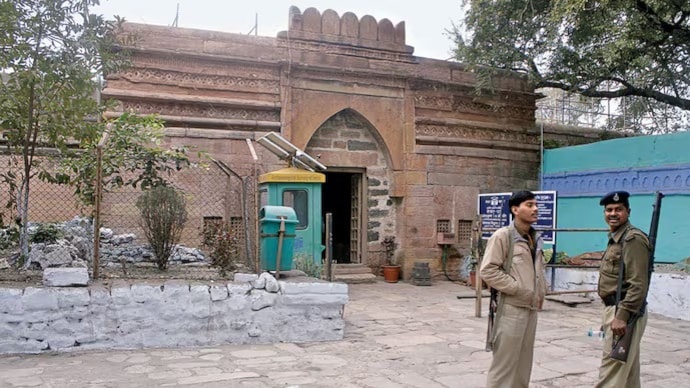
The Madhya Pradesh High Court’s Bhojshala verdict is not just another ruling in a long-running religious dispute. The 242-page judgment has reopened larger legal and constitutional questions around the Places of Worship Act, the extent to which courts can rely on historical and archaeological claims, and how far the principles laid down in the Ayodhya Ram Mandir verdict can be stretched to other disputed sites.
At the centre of the ruling is the Bhojshala-Kamal Maula Mosque complex in Dhar — a site claimed by Hindus as an ancient temple and centre of Sanskrit learning dedicated to goddess Vagdevi Saraswati, and by Muslims as the Kamal Maula Mosque where namaz has been offered for centuries.
On Friday, the Madhya Pradesh High Court held that the disputed Bhojshala complex was historically Hindu in character and said the Archaeological Survey of India (ASI) would continue to protect and manage the site under the ASI Act. The court also struck down a 2003 government arrangement that had allowed Hindus to offer prayers on Tuesdays and certain festivals, while Muslims were allowed to offer namaz on Fridays.
The court held that the “religious character of the disputed area” was that of “a centre of Sanskrit learning with a temple of goddess Vagdevi”.
But beyond the immediate dispute over prayers and access, the judgment is significant because it borrows heavily from the Supreme Court’s 2019 Ayodhya verdict — particularly on issues such as the role of faith, archaeological evidence, missing idols, and the legal protection of what courts describe as the “pious purpose” of a Hindu religious endowment.
The ruling is now expected to trigger a fresh legal battle in the Supreme Court, with the Muslim side already preparing to challenge the verdict.
MUSLIM SIDE LIKELY TO MOVE SUPREME COURT
The verdict addresses a decades-old dispute over the Bhojshala complex, which has been an ASI-protected “ancient monument” since 1904. However, the legal battle is far from over, as sources from the mosque committee said they will challenge the ruling in the Supreme Court. Under the rules, parties have 90 days to file an appeal.
One of the Hindu petitioners, Jitendra Singh Visen, has already filed a caveat in the Supreme Court to ensure that no order is passed without hearing their side if an appeal is filed.
SENIOR LAWYER QUESTION HC RULING
Senior advocate Rajeev Dhavan, who represented Muslim parties in the Ayodhya case, questioned the legality of the High Court verdict. Speaking to India Today, Dhavan said, “Nothing could be more problematic than deciding a civil dispute through writ jurisdiction. Such a matter required detailed examination of facts and the Places of Worship Act, which cannot be properly done in a writ petition.”
He argued that neither the ASI nor the High Court had the authority to decide such factual questions in this manner. “The High court has played great constitutional mischief in deciding what they did," he said.
Dhavan also said the Ayodhya judgment should not have been treated as a precedent in the Bhojshala case.
“The Ayodhya judgment was limited to a property dispute over a specific piece of land. It was based on evidence examined during a civil trial and cannot automatically apply here. Questions involving religion or property need proper examination in a civil suit, not merely through affidavits in a writ petition,” he said.
The senior lawyer also questioned the High Court’s observations regarding the Saraswati idol currently displayed in the British Museum, which petitioners claim originally belonged to Bhojshala. “Whether the idol was actually installed there and worshipped are factual questions that cannot be decided in writ proceedings,” Dhavan told India Today.
WILL CENTRE TRY TO BRING BACK SARASWATI IDOL?
While declaring Bhojshala a historic centre of Sanskrit learning and a temple dedicated to goddess Vagdevi Saraswati dating back to the 11th-12th century, the High Court also directed the Centre to consider representations seeking the return of the Saraswati idol from the British Museum in London.
The idol has reportedly been displayed in the museum since 1903 and is claimed by petitioners to be the original deity worshipped at Bhojshala.
According to the petitioners and ASI records, the site was excavated in 1875 by Major General William Kincaid, a British political agent. During the excavation, an idol of goddess Vagdevi (Saraswati) was allegedly recovered from the site. Petitioners claim it had earlier been buried during the rule of Muslim rulers.
The idol was later taken to the United Kingdom by Lord Curzon in 1903 and has remained in the British Museum since then.
The petitioners relied heavily on descriptions and photographs available on the British Museum website to argue that the site was originally a Hindu temple and centre of learning.
The High Court said the Centre should consider the representations already submitted by petitioners seeking the idol’s return and its reinstallation within the Bhojshala complex.
HOW CAN SITE BE TREATED AS TEMPLE IF IDOL IS MISSING?
The High Court relied heavily on legal principles laid down by the Supreme Court in the 2019 Ayodhya verdict. One key principle accepted by the court was that a Hindu religious endowment does not lose its character simply because the idol is damaged, missing or removed.
The court observed that Hindu law protects the “pious purpose” behind the place of worship, not merely the physical idol itself.
It said the religious purpose and legal status of a temple continue even if the idol no longer exists at the site. According to the court, what matters is the continuity of worship and the intention behind the religious endowment.
WHY DID PLACES OF WORSHIP ACT NOT BLOCK THE CASE?
The court said Section 4 of the Places of Worship Act, 1991 does not apply to ancient and historical monuments protected under the ASI Act. Since Bhojshala is a protected monument under the Ancient Monuments and Archaeological Sites and Remains Act, the court held that the legal bar under the Places of Worship Act would not apply here.
The court noted that the law itself exempts protected historical monuments from the restriction on changing or examining the religious character of places of worship.
HC SAYS CASE ABOUT RIGHT TO WORSHIP, NOT OWNERSHIP
The High Court also accepted the argument that the petitions were not title suits seeking ownership of the land. Instead, the court said the petitions were filed under Article 226 of the Constitution to protect the fundamental right to worship.
The court noted that the petitioners were seeking a declaration regarding the religious character of the site as it existed on August 15, 1947, and were not claiming ownership rights. Because of this, the court held that the restrictions under the Places of Worship Act would not apply.
The High Court also rejected the Muslim side’s argument that the erstwhile princely state of Dhar had issued a 1935 notification declaring the structure a mosque.
The court said the site had already been declared a protected monument in 1904, and therefore the princely state could not later alter its status through an executive order.
HOW DID AYODHYA VERDICT INFLUENCE BHOJSHALA CASE?
Soon after the judgment, AIMIM MP Asaduddin Owaisi criticised the ruling, saying it did not align with constitutional values and followed the same legal path as the Ayodhya Ram Mandir-Babri Masjid case.
The 242-page judgment repeatedly refers to the Ayodhya verdict. Lawyers from both sides relied on legal principles from the 2019 Supreme Court ruling.
Interestingly, even the Muslim side cited the Ayodhya judgment to argue that courts should not decide claims based on historical wrongs committed centuries ago.
The High Court relied on “10 principles” drawn from the Ayodhya verdict by the Madhya Pradesh Advocate General. The key principles are:
- Proof does not need to be absolute: The court said disputes like this are decided on the “preponderance of probability” and not on proof beyond all doubt. In simple terms, judges have to decide which side’s version appears more believable and better supported by the available evidence, even if there is no perfect or conclusive proof.
- Courts should not judge theological perfection: The judgment says modern courts are not meant to decide whether a structure fully matches the religious requirements of a temple or mosque. Instead, courts should examine factors such as evidence of worship, long-standing faith, historical records, continuity of religious practices and how devotees have treated the site over time.
- Protection of Deity’s Rights- Locus standi doesn’t matter: The court said protecting a deity, religious endowment or sacred purpose is more important than technical legal objections over who has the right to file a case. Because of this, worshippers or devotees can approach the court to protect a religious site even if they are not direct owners or trustees.
- Temple doesn’t lose its character if the idol is missing, destroyed: One of the most important principles relied upon by the court was that the absence or destruction of an idol does not end the religious character of a Hindu endowment. According to the judgment, Hindu law protects the larger “pious purpose” behind the place of worship. Therefore, even if an idol has been removed, destroyed or is no longer regularly present, the religious identity of the site can continue.
- Consistent faith and belief are important: The court said faith cannot always be proved through documents or strict logic. What matters is whether a community has continuously and genuinely believed that a site is sacred and has treated it as such over a long period of time. The court said judges should examine the consistency and continuity of belief rather than test whether a belief appears rational or scientifically provable.
- Government gazetteers and official records can be used as evidence: The judgment noted that official gazetteers, government reports and historical administrative records can help courts understand the background and historical character of a disputed site. However, the court clarified that such records alone cannot conclusively decide ownership or religious character and must be examined alongside other evidence.
- Official names and historical descriptions matter: The court said official descriptions, government correspondence and administrative records that repeatedly describe a site in a particular manner can have significant evidentiary value. If records over a long period consistently identify a place with a certain religious or historical association, that can support claims regarding the nature of the site.
- Religious claims cannot automatically erase the other side’s rights: Ayodhya judgment demonstrated that religious doctrines or claims made by one community cannot automatically override the established religious practices or rights of another community. Competing claims must still be tested on evidence and historical material.
- ASI reports are important but not final proof: The Supreme Court held that archaeological reports prepared by the ASI are important pieces of evidence and cannot simply be ignored. However, judges must still independently examine the findings, objections and methodology used in such reports before accepting their conclusions.
- Archaeology is not a weak form of evidence: The judgment rejected the argument that archaeological findings are unreliable or weak evidence. The court said archaeology can play a significant role in understanding the history of disputed religious sites. At the same time, archaeological evidence should be read together with historical records, documents and evidence of worship to arrive at an overall conclusion.
The Madhya Pradesh High Court’s Bhojshala verdict is not just another ruling in a long-running religious dispute. The 242-page judgment has reopened larger legal and constitutional questions around the Places of Worship Act, the extent to which courts can rely on historical and archaeological claims, and how far the principles laid down in the Ayodhya Ram Mandir verdict can be stretched to other disputed sites.
At the centre of the ruling is the Bhojshala-Kamal Maula Mosque complex in Dhar — a site claimed by Hindus as an ancient temple and centre of Sanskrit learning dedicated to goddess Vagdevi Saraswati, and by Muslims as the Kamal Maula Mosque where namaz has been offered for centuries.
On Friday, the Madhya Pradesh High Court held that the disputed Bhojshala complex was historically Hindu in character and said the Archaeological Survey of India (ASI) would continue to protect and manage the site under the ASI Act. The court also struck down a 2003 government arrangement that had allowed Hindus to offer prayers on Tuesdays and certain festivals, while Muslims were allowed to offer namaz on Fridays.
The court held that the “religious character of the disputed area” was that of “a centre of Sanskrit learning with a temple of goddess Vagdevi”.
But beyond the immediate dispute over prayers and access, the judgment is significant because it borrows heavily from the Supreme Court’s 2019 Ayodhya verdict — particularly on issues such as the role of faith, archaeological evidence, missing idols, and the legal protection of what courts describe as the “pious purpose” of a Hindu religious endowment.
The ruling is now expected to trigger a fresh legal battle in the Supreme Court, with the Muslim side already preparing to challenge the verdict.
MUSLIM SIDE LIKELY TO MOVE SUPREME COURT
The verdict addresses a decades-old dispute over the Bhojshala complex, which has been an ASI-protected “ancient monument” since 1904. However, the legal battle is far from over, as sources from the mosque committee said they will challenge the ruling in the Supreme Court. Under the rules, parties have 90 days to file an appeal.
One of the Hindu petitioners, Jitendra Singh Visen, has already filed a caveat in the Supreme Court to ensure that no order is passed without hearing their side if an appeal is filed.
SENIOR LAWYER QUESTION HC RULING
Senior advocate Rajeev Dhavan, who represented Muslim parties in the Ayodhya case, questioned the legality of the High Court verdict. Speaking to India Today, Dhavan said, “Nothing could be more problematic than deciding a civil dispute through writ jurisdiction. Such a matter required detailed examination of facts and the Places of Worship Act, which cannot be properly done in a writ petition.”
He argued that neither the ASI nor the High Court had the authority to decide such factual questions in this manner. “The High court has played great constitutional mischief in deciding what they did," he said.
Dhavan also said the Ayodhya judgment should not have been treated as a precedent in the Bhojshala case.
“The Ayodhya judgment was limited to a property dispute over a specific piece of land. It was based on evidence examined during a civil trial and cannot automatically apply here. Questions involving religion or property need proper examination in a civil suit, not merely through affidavits in a writ petition,” he said.
The senior lawyer also questioned the High Court’s observations regarding the Saraswati idol currently displayed in the British Museum, which petitioners claim originally belonged to Bhojshala. “Whether the idol was actually installed there and worshipped are factual questions that cannot be decided in writ proceedings,” Dhavan told India Today.
WILL CENTRE TRY TO BRING BACK SARASWATI IDOL?
While declaring Bhojshala a historic centre of Sanskrit learning and a temple dedicated to goddess Vagdevi Saraswati dating back to the 11th-12th century, the High Court also directed the Centre to consider representations seeking the return of the Saraswati idol from the British Museum in London.
The idol has reportedly been displayed in the museum since 1903 and is claimed by petitioners to be the original deity worshipped at Bhojshala.
According to the petitioners and ASI records, the site was excavated in 1875 by Major General William Kincaid, a British political agent. During the excavation, an idol of goddess Vagdevi (Saraswati) was allegedly recovered from the site. Petitioners claim it had earlier been buried during the rule of Muslim rulers.
The idol was later taken to the United Kingdom by Lord Curzon in 1903 and has remained in the British Museum since then.
The petitioners relied heavily on descriptions and photographs available on the British Museum website to argue that the site was originally a Hindu temple and centre of learning.
The High Court said the Centre should consider the representations already submitted by petitioners seeking the idol’s return and its reinstallation within the Bhojshala complex.
HOW CAN SITE BE TREATED AS TEMPLE IF IDOL IS MISSING?
The High Court relied heavily on legal principles laid down by the Supreme Court in the 2019 Ayodhya verdict. One key principle accepted by the court was that a Hindu religious endowment does not lose its character simply because the idol is damaged, missing or removed.
The court observed that Hindu law protects the “pious purpose” behind the place of worship, not merely the physical idol itself.
It said the religious purpose and legal status of a temple continue even if the idol no longer exists at the site. According to the court, what matters is the continuity of worship and the intention behind the religious endowment.
WHY DID PLACES OF WORSHIP ACT NOT BLOCK THE CASE?
The court said Section 4 of the Places of Worship Act, 1991 does not apply to ancient and historical monuments protected under the ASI Act. Since Bhojshala is a protected monument under the Ancient Monuments and Archaeological Sites and Remains Act, the court held that the legal bar under the Places of Worship Act would not apply here.
The court noted that the law itself exempts protected historical monuments from the restriction on changing or examining the religious character of places of worship.
HC SAYS CASE ABOUT RIGHT TO WORSHIP, NOT OWNERSHIP
The High Court also accepted the argument that the petitions were not title suits seeking ownership of the land. Instead, the court said the petitions were filed under Article 226 of the Constitution to protect the fundamental right to worship.
The court noted that the petitioners were seeking a declaration regarding the religious character of the site as it existed on August 15, 1947, and were not claiming ownership rights. Because of this, the court held that the restrictions under the Places of Worship Act would not apply.
The High Court also rejected the Muslim side’s argument that the erstwhile princely state of Dhar had issued a 1935 notification declaring the structure a mosque.
The court said the site had already been declared a protected monument in 1904, and therefore the princely state could not later alter its status through an executive order.
HOW DID AYODHYA VERDICT INFLUENCE BHOJSHALA CASE?
Soon after the judgment, AIMIM MP Asaduddin Owaisi criticised the ruling, saying it did not align with constitutional values and followed the same legal path as the Ayodhya Ram Mandir-Babri Masjid case.
The 242-page judgment repeatedly refers to the Ayodhya verdict. Lawyers from both sides relied on legal principles from the 2019 Supreme Court ruling.
Interestingly, even the Muslim side cited the Ayodhya judgment to argue that courts should not decide claims based on historical wrongs committed centuries ago.
The High Court relied on “10 principles” drawn from the Ayodhya verdict by the Madhya Pradesh Advocate General. The key principles are:
- Proof does not need to be absolute: The court said disputes like this are decided on the “preponderance of probability” and not on proof beyond all doubt. In simple terms, judges have to decide which side’s version appears more believable and better supported by the available evidence, even if there is no perfect or conclusive proof.
- Courts should not judge theological perfection: The judgment says modern courts are not meant to decide whether a structure fully matches the religious requirements of a temple or mosque. Instead, courts should examine factors such as evidence of worship, long-standing faith, historical records, continuity of religious practices and how devotees have treated the site over time.
- Protection of Deity’s Rights- Locus standi doesn’t matter: The court said protecting a deity, religious endowment or sacred purpose is more important than technical legal objections over who has the right to file a case. Because of this, worshippers or devotees can approach the court to protect a religious site even if they are not direct owners or trustees.
- Temple doesn’t lose its character if the idol is missing, destroyed: One of the most important principles relied upon by the court was that the absence or destruction of an idol does not end the religious character of a Hindu endowment. According to the judgment, Hindu law protects the larger “pious purpose” behind the place of worship. Therefore, even if an idol has been removed, destroyed or is no longer regularly present, the religious identity of the site can continue.
- Consistent faith and belief are important: The court said faith cannot always be proved through documents or strict logic. What matters is whether a community has continuously and genuinely believed that a site is sacred and has treated it as such over a long period of time. The court said judges should examine the consistency and continuity of belief rather than test whether a belief appears rational or scientifically provable.
- Government gazetteers and official records can be used as evidence: The judgment noted that official gazetteers, government reports and historical administrative records can help courts understand the background and historical character of a disputed site. However, the court clarified that such records alone cannot conclusively decide ownership or religious character and must be examined alongside other evidence.
- Official names and historical descriptions matter: The court said official descriptions, government correspondence and administrative records that repeatedly describe a site in a particular manner can have significant evidentiary value. If records over a long period consistently identify a place with a certain religious or historical association, that can support claims regarding the nature of the site.
- Religious claims cannot automatically erase the other side’s rights: Ayodhya judgment demonstrated that religious doctrines or claims made by one community cannot automatically override the established religious practices or rights of another community. Competing claims must still be tested on evidence and historical material.
- ASI reports are important but not final proof: The Supreme Court held that archaeological reports prepared by the ASI are important pieces of evidence and cannot simply be ignored. However, judges must still independently examine the findings, objections and methodology used in such reports before accepting their conclusions.
- Archaeology is not a weak form of evidence: The judgment rejected the argument that archaeological findings are unreliable or weak evidence. The court said archaeology can play a significant role in understanding the history of disputed religious sites. At the same time, archaeological evidence should be read together with historical records, documents and evidence of worship to arrive at an overall conclusion.

