Ajit Doval stresses safe Hormuz trade route, calls for special focus on West Asia
Ajit Doval warned in Moscow that tensions in West Asia could disrupt trade through the Strait of Hormuz and the Red Sea. He also called for tougher action on terrorism and reforms to global security institutions.
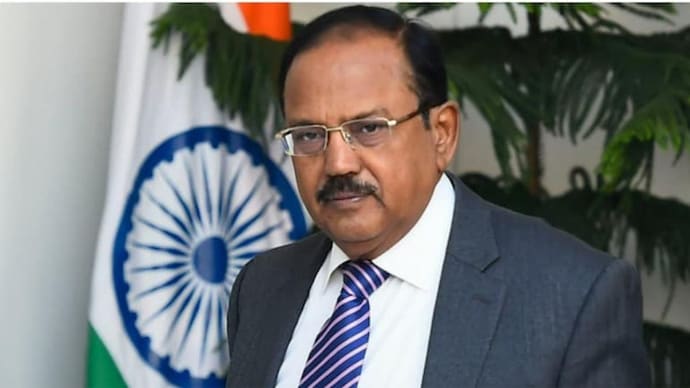
National Security Advisor Ajit Doval on Thursday raised concerns over the security of key global trade routes passing through the Strait of Hormuz and the Red Sea, warning that instability in West Asia could have far-reaching international consequences.
Speaking at the first International Security Forum and the 14th Meeting of High Representatives for Security Matters in Moscow, Russia, Doval said uninterrupted trade movement through critical waterways was essential amid rising geopolitical tensions in the region.
“It is essential to ensure the safe and uninterrupted movement of trade through international waterways, including the Strait of Hormuz and the Red Sea,” he said while calling for special attention to the situation in West Asia.
The meeting was hosted by Russian Security Council Secretary Sergei Shoigu and focused on “Challenges and Threats to International Security in the Context of the Emergence of the Multipolar World”.
TERRORISM AND ‘DOUBLE STANDARDS’
Alongside concerns over maritime security, Doval also delivered a sharp message on terrorism, saying there could not be “double standards” in tackling the threat.
“Responsible nations have to evaluate their choices and decide whether they support sponsors of terrorism or counter them with decisive action,” he said.
His remarks come amid continuing global debates over state-backed terror networks and international responses to cross-border terrorism.
CALL FOR GLOBAL REFORMS
Doval also called for urgent reforms in global institutions created after the Second World War in 1945, arguing that existing structures needed to adapt to present-day security realities.
He said institutions dealing with international security must become more effective in responding to contemporary threats and should provide greater representation to countries from the Global South.
According to officials, Doval argued that the evolving multipolar world required decision-making structures that reflected current geopolitical dynamics rather than post-war arrangements.
BILATERAL TALKS ON SIDELINES
The National Security Advisor is also expected to hold bilateral meetings on the sidelines of the Moscow forum on May 28 and May 29.
The high-level gathering has brought together senior security officials from several countries to deliberate on emerging threats, regional conflicts and the changing global balance of power.
National Security Advisor Ajit Doval on Thursday raised concerns over the security of key global trade routes passing through the Strait of Hormuz and the Red Sea, warning that instability in West Asia could have far-reaching international consequences.
Speaking at the first International Security Forum and the 14th Meeting of High Representatives for Security Matters in Moscow, Russia, Doval said uninterrupted trade movement through critical waterways was essential amid rising geopolitical tensions in the region.
“It is essential to ensure the safe and uninterrupted movement of trade through international waterways, including the Strait of Hormuz and the Red Sea,” he said while calling for special attention to the situation in West Asia.
The meeting was hosted by Russian Security Council Secretary Sergei Shoigu and focused on “Challenges and Threats to International Security in the Context of the Emergence of the Multipolar World”.
TERRORISM AND ‘DOUBLE STANDARDS’
Alongside concerns over maritime security, Doval also delivered a sharp message on terrorism, saying there could not be “double standards” in tackling the threat.
“Responsible nations have to evaluate their choices and decide whether they support sponsors of terrorism or counter them with decisive action,” he said.
His remarks come amid continuing global debates over state-backed terror networks and international responses to cross-border terrorism.
CALL FOR GLOBAL REFORMS
Doval also called for urgent reforms in global institutions created after the Second World War in 1945, arguing that existing structures needed to adapt to present-day security realities.
He said institutions dealing with international security must become more effective in responding to contemporary threats and should provide greater representation to countries from the Global South.
According to officials, Doval argued that the evolving multipolar world required decision-making structures that reflected current geopolitical dynamics rather than post-war arrangements.
BILATERAL TALKS ON SIDELINES
The National Security Advisor is also expected to hold bilateral meetings on the sidelines of the Moscow forum on May 28 and May 29.
The high-level gathering has brought together senior security officials from several countries to deliberate on emerging threats, regional conflicts and the changing global balance of power.

