Must prepare for future Op Sindoor: CDS Chauhan calls for better sync among forces
The Chief of Defence Staff stressed that evolving geopolitical threats and rapid technological change require integrating new systems with legacy capabilities, as future challenges will differ significantly from past conflicts.
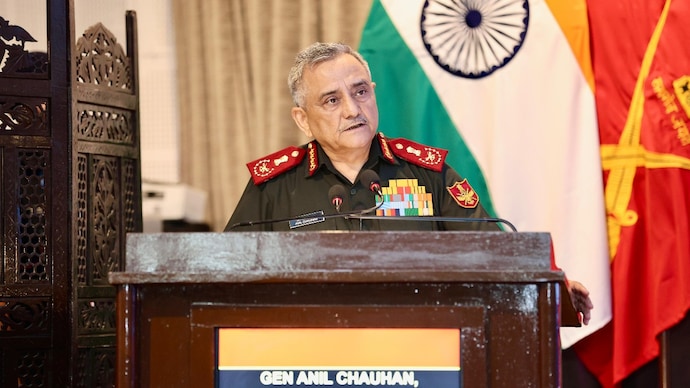
Chief of Defence Staff (CDS) General Anil Chauhan has underscored the need for India to prepare for the next phase of 'Operation Sindoor', stating that the armed forces must look beyond past operations and gear up for future challenges. In an exclusive conversation with India Today near the India-China border in Uttarakhand, he said, "We must not prepare for a repetition of the previous 'Sindoor', but for the future 'Sindoor'—the challenges yet to come".
Reflecting on Operation Sindoor, launched after the April 2025 Pahalgam terror attack and now nearing its first anniversary, General Chauhan described it as a "unique operation" conducted simultaneously across traditional and modern domains.
"It encompassed land, air and sea, while also integrating cyberspace, the electromagnetic spectrum and the cognitive domain," he noted. This multi-domain execution, he said, offers key lessons for the future of warfare.
In response to the Pahalgam terror attack, in which 26 civilians were killed, the Indian armed forces on May 7, 2025, launched 'Operation Sindoor', obliterating nine terror hideouts and killing over 100 terrorists deep inside Pakistan. The retaliation underlined India’s impeccable military prowess and defence capabilities.
The hostilities were paused three days later, following which Prime Minister Narendra Modi said that the operation had not ended, but was just paused.
Placing strong emphasis on evolving threats, the CDS highlighted the rapidly changing geopolitical environment and the accelerated pace of technological advancement.
"The challenges ahead will not resemble those of the past," he said, adding that new technologies and systems must be incorporated into the military framework while being seamlessly integrated with existing legacy systems.
A central point of his remarks was the need for deeper synergy between the Army, Navy and Air Force. "We must foster even greater coordination between the three services".
According to the CDS, while individual services continue to strengthen capabilities in traditional domains, efforts are simultaneously underway to build capacities in emerging domains. "These efforts must be harmonised into a cohesive whole," he stressed.
General Chauhan identified situational awareness as a critical component of future warfare.
"In the wars of the future, situational awareness must be of an exceptionally high order," he said, adding that the armed forces are prioritising integration and information dominance to maintain an operational edge.
On the long-pending Theatre Command reforms, the CDS expressed confidence that the initiative is nearing fruition.
He described the Theatre Command system as a "superior framework" for addressing future challenges, particularly because it separates the generation of forces from their application. "If we keep force generation and force application distinct, our readiness will always remain ahead of the curve," he explained.
The Defence Ministry has already accelerated plans to establish integrated Theatre Commands under the Department of Military Affairs, guided by CDS Chauhan.
Incorporating lessons from 'Operation Sindoor', groundwork for jointness among the services is largely complete. Proposed commands at Thiruvananthapuram, Jaipur and Lucknow will address maritime, western and northern threats, with increased inter-service consultations and cabinet-level approval expected soon.
CDS General Chauhan further noted that earlier differences among the services regarding Theatre Commands have been resolved. "We will soon move forward with this initiative," he said, indicating that structural integration is now within reach.
Highlighting the concept of a "new normal" in national security, General Chauhan emphasised constant preparedness. "We must remain ready 24 hours a day, 365 days a year, and always be prepared to employ force against the enemy," he said.
During his visit to border villages such as Harsil and Mana, the CDS also spoke about connecting civilians with frontier regions through initiatives like museums and tourism development.
However, his core message remained focused on military preparedness: that India’s future security will depend on how effectively it integrates traditional strength with modern capabilities, enhances jointness among Services, and prepares for conflicts that are increasingly multi-domain and technology-driven.
Chief of Defence Staff (CDS) General Anil Chauhan has underscored the need for India to prepare for the next phase of 'Operation Sindoor', stating that the armed forces must look beyond past operations and gear up for future challenges. In an exclusive conversation with India Today near the India-China border in Uttarakhand, he said, "We must not prepare for a repetition of the previous 'Sindoor', but for the future 'Sindoor'—the challenges yet to come".
Reflecting on Operation Sindoor, launched after the April 2025 Pahalgam terror attack and now nearing its first anniversary, General Chauhan described it as a "unique operation" conducted simultaneously across traditional and modern domains.
"It encompassed land, air and sea, while also integrating cyberspace, the electromagnetic spectrum and the cognitive domain," he noted. This multi-domain execution, he said, offers key lessons for the future of warfare.
In response to the Pahalgam terror attack, in which 26 civilians were killed, the Indian armed forces on May 7, 2025, launched 'Operation Sindoor', obliterating nine terror hideouts and killing over 100 terrorists deep inside Pakistan. The retaliation underlined India’s impeccable military prowess and defence capabilities.
The hostilities were paused three days later, following which Prime Minister Narendra Modi said that the operation had not ended, but was just paused.
Placing strong emphasis on evolving threats, the CDS highlighted the rapidly changing geopolitical environment and the accelerated pace of technological advancement.
"The challenges ahead will not resemble those of the past," he said, adding that new technologies and systems must be incorporated into the military framework while being seamlessly integrated with existing legacy systems.
A central point of his remarks was the need for deeper synergy between the Army, Navy and Air Force. "We must foster even greater coordination between the three services".
According to the CDS, while individual services continue to strengthen capabilities in traditional domains, efforts are simultaneously underway to build capacities in emerging domains. "These efforts must be harmonised into a cohesive whole," he stressed.
General Chauhan identified situational awareness as a critical component of future warfare.
"In the wars of the future, situational awareness must be of an exceptionally high order," he said, adding that the armed forces are prioritising integration and information dominance to maintain an operational edge.
On the long-pending Theatre Command reforms, the CDS expressed confidence that the initiative is nearing fruition.
He described the Theatre Command system as a "superior framework" for addressing future challenges, particularly because it separates the generation of forces from their application. "If we keep force generation and force application distinct, our readiness will always remain ahead of the curve," he explained.
The Defence Ministry has already accelerated plans to establish integrated Theatre Commands under the Department of Military Affairs, guided by CDS Chauhan.
Incorporating lessons from 'Operation Sindoor', groundwork for jointness among the services is largely complete. Proposed commands at Thiruvananthapuram, Jaipur and Lucknow will address maritime, western and northern threats, with increased inter-service consultations and cabinet-level approval expected soon.
CDS General Chauhan further noted that earlier differences among the services regarding Theatre Commands have been resolved. "We will soon move forward with this initiative," he said, indicating that structural integration is now within reach.
Highlighting the concept of a "new normal" in national security, General Chauhan emphasised constant preparedness. "We must remain ready 24 hours a day, 365 days a year, and always be prepared to employ force against the enemy," he said.
During his visit to border villages such as Harsil and Mana, the CDS also spoke about connecting civilians with frontier regions through initiatives like museums and tourism development.
However, his core message remained focused on military preparedness: that India’s future security will depend on how effectively it integrates traditional strength with modern capabilities, enhances jointness among Services, and prepares for conflicts that are increasingly multi-domain and technology-driven.

