Collegium recommends 4 chief justices, V Mohana for elevation to Supreme Court
The Collegium, headed by Chief Justice of India Surya Kant, recommended the names during meetings held on May 22 and May 27. The judges recommended for elevation are Justice Sheel Nagu of the Punjab and Haryana High Court, Justice Shree Chandrashekhar of the Bombay High Court, Justice Sanjeev Sachdeva of the Madhya Pradesh High Court and Justice Arun Palli of the High Court of Jammu and Kashmir and Ladakh.
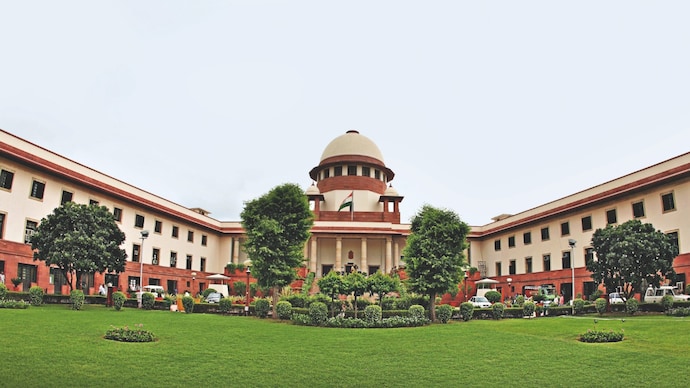


The Supreme Court Collegium has proposed the elevation of five individuals to the apex court, including four sitting High Court Chief Justices and senior advocate V Mohana, who is the only woman and the sole direct recommendation from the Bar among the names proposed for appointment.
The Collegium, headed by Chief Justice of India Surya Kant, recommended the names during meetings held on May 22 and May 27. The judges recommended for elevation are Justice Sheel Nagu of the Punjab and Haryana High Court, Justice Shree Chandrashekhar of the Bombay High Court, Justice Sanjeev Sachdeva of the Madhya Pradesh High Court and Justice Arun Palli of the High Court of Jammu and Kashmir and Ladakh.
Mohana’s recommendation is being viewed as significant for women’s representation in the higher judiciary. If approved by the Centre, she would join Justice B V Nagarathna as the only sitting women judges in the Supreme Court.
A first-generation lawyer with no legal lineage, Mohana was part of the inaugural batch of India’s first five-year integrated law programme introduced after higher secondary education in 1983. She graduated from Coimbatore Law College — now Government Law College, Coimbatore — in 1988 and began practice under civil lawyer M. Panchapakesan in Coimbatore.
She later moved to Delhi in 1992 and worked in the office of future Supreme Court judge Indu Malhotra, who was then practising as an Advocate-on-Record. She subsequently trained in the chambers of senior advocate CS Vaidyanathan.
Over the years, Mohana built a diverse legal practice covering constitutional, civil and service law matters and was designated as a Senior Advocate by the Supreme Court in 2015, becoming one of the few women to receive the honour.
She has appeared in several important matters, including cases related to the Amratlal Prajivandas (SAFEMA) ruling and proceedings before the Jain Commission. More recently, she represented women Army officers challenging their termination despite Supreme Court directions granting Permanent Commission.
Mohana also appeared in the Karnataka hijab matter, where she argued in favour of the restriction while representing teachers, contending that the measure promoted uniformity in educational institutions.
Apart from private practice, she served as a panel counsel for the Union government and handled matters relating to constitutional law, corruption, narcotics, criminal law, service disputes and civil litigation.
The recommendations come at a time when the Supreme Court is functioning with 32 judges, including the CJI, against the sanctioned strength of 34. Two judges are due to retire next month.
Earlier this month, the Union government increased the sanctioned strength of the apex court from 34 to 38 judges, including the Chief Justice of India, through an ordinance notified by the Law Ministry on May 16 following Cabinet approval.
The Supreme Court Collegium has proposed the elevation of five individuals to the apex court, including four sitting High Court Chief Justices and senior advocate V Mohana, who is the only woman and the sole direct recommendation from the Bar among the names proposed for appointment.
The Collegium, headed by Chief Justice of India Surya Kant, recommended the names during meetings held on May 22 and May 27. The judges recommended for elevation are Justice Sheel Nagu of the Punjab and Haryana High Court, Justice Shree Chandrashekhar of the Bombay High Court, Justice Sanjeev Sachdeva of the Madhya Pradesh High Court and Justice Arun Palli of the High Court of Jammu and Kashmir and Ladakh.
Mohana’s recommendation is being viewed as significant for women’s representation in the higher judiciary. If approved by the Centre, she would join Justice B V Nagarathna as the only sitting women judges in the Supreme Court.
A first-generation lawyer with no legal lineage, Mohana was part of the inaugural batch of India’s first five-year integrated law programme introduced after higher secondary education in 1983. She graduated from Coimbatore Law College — now Government Law College, Coimbatore — in 1988 and began practice under civil lawyer M. Panchapakesan in Coimbatore.
She later moved to Delhi in 1992 and worked in the office of future Supreme Court judge Indu Malhotra, who was then practising as an Advocate-on-Record. She subsequently trained in the chambers of senior advocate CS Vaidyanathan.
Over the years, Mohana built a diverse legal practice covering constitutional, civil and service law matters and was designated as a Senior Advocate by the Supreme Court in 2015, becoming one of the few women to receive the honour.
She has appeared in several important matters, including cases related to the Amratlal Prajivandas (SAFEMA) ruling and proceedings before the Jain Commission. More recently, she represented women Army officers challenging their termination despite Supreme Court directions granting Permanent Commission.
Mohana also appeared in the Karnataka hijab matter, where she argued in favour of the restriction while representing teachers, contending that the measure promoted uniformity in educational institutions.
Apart from private practice, she served as a panel counsel for the Union government and handled matters relating to constitutional law, corruption, narcotics, criminal law, service disputes and civil litigation.
The recommendations come at a time when the Supreme Court is functioning with 32 judges, including the CJI, against the sanctioned strength of 34. Two judges are due to retire next month.
Earlier this month, the Union government increased the sanctioned strength of the apex court from 34 to 38 judges, including the Chief Justice of India, through an ordinance notified by the Law Ministry on May 16 following Cabinet approval.

