The last round at the Gymkhana
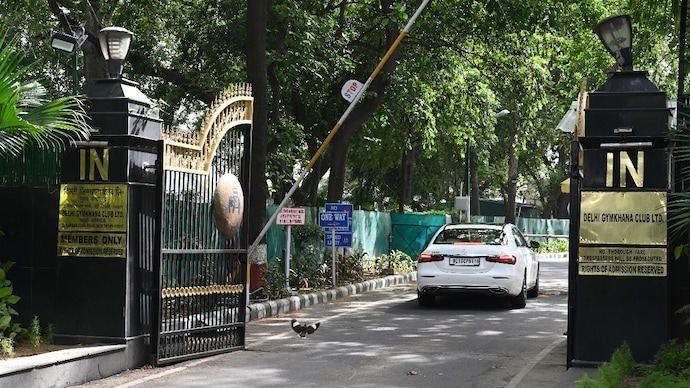
The Delhi Gymkhana Club has been asked to vacate its 27.3-acre site in Lutyens' Delhi. The move has revived debate over the club's colonial legacy, exclusivity and hold over public land.
Some things deserve to be mourned. That doesn't mean they deserve to survive.
There is a swimming pool at 2, Safdarjung Road that tells you everything you need to know about the Delhi Gymkhana Club. In the early 1930s, the wife of the Viceroy of India found herself unable to swim. Neither the club she frequented nor the Viceregal House being built for her husband had a pool.
Impatient, she solved the problem the only way she knew how — she donated Rs 21,000 to fast-track construction, and had her name inscribed in marble above the water: "Lady Willingdon Swimming Bath."
The British Empire, condensed into a plaque.
Now, nearly a century later, the Delhi Gymkhana Club has been asked to vacate its 27.3 acres in the heart of Lutyens' Delhi. The order has caused predictable outrage among its members — retired generals, former bureaucrats, Supreme Court judges, and the odd celebrity name — all of whom speak of the club as though losing it would be like losing a limb.
The waiting list, they remind you, stretches back to the early 1970s. The membership fee has climbed to Rs 20 lakh. The tennis courts, they insist, are the finest east of Wimbledon.
Perhaps. But let us be honest about what is really ending here — and what isn't.
BUILT FOR AN OCCUPATION
The Gymkhana was not built for India. It was built for an occupation. Founded in 1913 as the "Imperial Delhi Gymkhana Club," its explicit purpose was to give British colonists a place to socialise, away from the country they were extracting.
The few Indians admitted in those early years were expected, in the words of a club history, to learn "to eat eggs, sausages and mash for breakfast, do the foxtrot and ballroom dancing, and empty glasses of Bloody Marys on a Sunday afternoon."
The name itself is a colonial mishearing — the British ears that heard gend-khana, the Hindi for "ball house," transformed it into something that sounded reassuringly like "gymnasium." Empire, summarised in a mispronunciation.
After 1947, independent India did what newly independent countries often do: it inherited the machinery of its oppressor and learned to operate it with considerable enthusiasm. The "Imperial" was dropped from the name; the foxtrot and the Bloody Marys stayed.
A new class of Indian army officers and civil servants, many of whom had spent careers being excluded from this very club, now stormed through its gates — not to dismantle what they found, but to possess it.
The Gymkhana became the ultimate trophy of arrival. As the FT's Benjamin Parkin noted in a piece published in 2023, when you joined the managing committee, "the entire club of 15,000 members knew you. You had connections, you could pick up a telephone and get things done."
That is precisely the problem.
HOTBED OF GOSSIP
For decades, the Gymkhana functioned as an informal second government. Its bar, according to some club veterans, was "the hotbed of gossip in the capital" — the place where deals were made, favours dispensed and reputations built or buried, all beyond public scrutiny.
The waiting list was, in practice, a loyalty test. The green card system — which allowed members' children to jump the queue if they applied at 21 — turned a club ostensibly open to merit into a multigenerational inheritance scheme.
When India's government eventually filed its case against the club's management, the 5,000-page report detailed backdoor entries, financial mismanagement, and an institution that had, in the court's own phrase, become "a family fiefdom."
None of this is surprising. It is, in fact, the natural endpoint of any institution that mistakes exclusivity for virtue. The Gymkhana was never really about tennis or ballroom dancing or even the Lady Willingdon Bath. It was about who got to define the terms of belonging in the capital of a democracy — and who didn't.
In 2013, the club made headlines by turning away a high-ranking Bhutanese monk because he was in a robe. The same institution that had once turned away Indians for being Indian was now turning away guests for wearing the wrong clothes. The colonial logic had simply found new targets.
And yet.
It would be dishonest to pretend that nothing of value is being lost. The writer Renuka Narayanan, in a piece collected in Khushwant Singh's City Improbable, wrote of learning to swim in the Gymkhana's "gloomy pillared pool," of sedate lunches with "delightfully batty aunties elegant in chiffon saris," of teenage kisses witnessed by hedgerows of lantana and henna.
For several generations of Delhiites, the Gymkhana was simply the texture of growing up — unremarkable, beloved, irreplaceable in the way that only places you took for granted can be.
Retired army major Atul Dev, who has been a member for over 55 years, told the FT he watches the old-timers arrive each morning to play bridge, staying until evening, when they "pack up their dinner and go back." There is something genuinely tender in that image. Whatever the Gymkhana was politically, it was also, for many people, simply home.
That deserves to be acknowledged. And then set aside.
NO PLACE IN “NEW” INDIA?
The India that is emerging — imperfect, frequently chaotic, occasionally authoritarian in its own right — is not obligated to preserve the architecture of a colonial social order simply because some of its inhabitants learned to love it.
Public land in the heart of the capital, held on a perpetual lease since 1928 at effectively nominal cost, cannot remain the private preserve of 15,000 privileged families indefinitely. Not in a country where, a few kilometres from those manicured lawns, people still queue for water.
The manner of the Gymkhana's end is, admittedly, tainted. Some say the BJP, India’s ruling party, has taken over. But this “takeover” has less to do with democratic principle than with replacing one elite's playground with another's.
The Prime Minister attending a wedding reception there in an olive green kurta in 2023 is not exactly a revolution. When power evicts privilege, it rarely does so out of altruism.
But the question of how something ends is separate from the question of whether it should.
The Lady Willingdon Swimming Bath still gleams. The lantana hedges still nod. The bridge players will find somewhere else to be. And Delhi — ungovernable, layered, relentlessly itself — will swallow all of it, as it has swallowed every empire that ever tried to leave its name in marble.
The Gymkhana was many things: a colonial remnant, a social ladder, a second home, a symbol. What it was not, and never could be, was permanent. Nothing in Delhi is.
Some things deserve to be mourned. That doesn't mean they deserve to survive.
There is a swimming pool at 2, Safdarjung Road that tells you everything you need to know about the Delhi Gymkhana Club. In the early 1930s, the wife of the Viceroy of India found herself unable to swim. Neither the club she frequented nor the Viceregal House being built for her husband had a pool.
Impatient, she solved the problem the only way she knew how — she donated Rs 21,000 to fast-track construction, and had her name inscribed in marble above the water: "Lady Willingdon Swimming Bath."
The British Empire, condensed into a plaque.
Now, nearly a century later, the Delhi Gymkhana Club has been asked to vacate its 27.3 acres in the heart of Lutyens' Delhi. The order has caused predictable outrage among its members — retired generals, former bureaucrats, Supreme Court judges, and the odd celebrity name — all of whom speak of the club as though losing it would be like losing a limb.
The waiting list, they remind you, stretches back to the early 1970s. The membership fee has climbed to Rs 20 lakh. The tennis courts, they insist, are the finest east of Wimbledon.
Perhaps. But let us be honest about what is really ending here — and what isn't.
BUILT FOR AN OCCUPATION
The Gymkhana was not built for India. It was built for an occupation. Founded in 1913 as the "Imperial Delhi Gymkhana Club," its explicit purpose was to give British colonists a place to socialise, away from the country they were extracting.
The few Indians admitted in those early years were expected, in the words of a club history, to learn "to eat eggs, sausages and mash for breakfast, do the foxtrot and ballroom dancing, and empty glasses of Bloody Marys on a Sunday afternoon."
The name itself is a colonial mishearing — the British ears that heard gend-khana, the Hindi for "ball house," transformed it into something that sounded reassuringly like "gymnasium." Empire, summarised in a mispronunciation.
After 1947, independent India did what newly independent countries often do: it inherited the machinery of its oppressor and learned to operate it with considerable enthusiasm. The "Imperial" was dropped from the name; the foxtrot and the Bloody Marys stayed.
A new class of Indian army officers and civil servants, many of whom had spent careers being excluded from this very club, now stormed through its gates — not to dismantle what they found, but to possess it.
The Gymkhana became the ultimate trophy of arrival. As the FT's Benjamin Parkin noted in a piece published in 2023, when you joined the managing committee, "the entire club of 15,000 members knew you. You had connections, you could pick up a telephone and get things done."
That is precisely the problem.
HOTBED OF GOSSIP
For decades, the Gymkhana functioned as an informal second government. Its bar, according to some club veterans, was "the hotbed of gossip in the capital" — the place where deals were made, favours dispensed and reputations built or buried, all beyond public scrutiny.
The waiting list was, in practice, a loyalty test. The green card system — which allowed members' children to jump the queue if they applied at 21 — turned a club ostensibly open to merit into a multigenerational inheritance scheme.
When India's government eventually filed its case against the club's management, the 5,000-page report detailed backdoor entries, financial mismanagement, and an institution that had, in the court's own phrase, become "a family fiefdom."
None of this is surprising. It is, in fact, the natural endpoint of any institution that mistakes exclusivity for virtue. The Gymkhana was never really about tennis or ballroom dancing or even the Lady Willingdon Bath. It was about who got to define the terms of belonging in the capital of a democracy — and who didn't.
In 2013, the club made headlines by turning away a high-ranking Bhutanese monk because he was in a robe. The same institution that had once turned away Indians for being Indian was now turning away guests for wearing the wrong clothes. The colonial logic had simply found new targets.
And yet.
It would be dishonest to pretend that nothing of value is being lost. The writer Renuka Narayanan, in a piece collected in Khushwant Singh's City Improbable, wrote of learning to swim in the Gymkhana's "gloomy pillared pool," of sedate lunches with "delightfully batty aunties elegant in chiffon saris," of teenage kisses witnessed by hedgerows of lantana and henna.
For several generations of Delhiites, the Gymkhana was simply the texture of growing up — unremarkable, beloved, irreplaceable in the way that only places you took for granted can be.
Retired army major Atul Dev, who has been a member for over 55 years, told the FT he watches the old-timers arrive each morning to play bridge, staying until evening, when they "pack up their dinner and go back." There is something genuinely tender in that image. Whatever the Gymkhana was politically, it was also, for many people, simply home.
That deserves to be acknowledged. And then set aside.
NO PLACE IN “NEW” INDIA?
The India that is emerging — imperfect, frequently chaotic, occasionally authoritarian in its own right — is not obligated to preserve the architecture of a colonial social order simply because some of its inhabitants learned to love it.
Public land in the heart of the capital, held on a perpetual lease since 1928 at effectively nominal cost, cannot remain the private preserve of 15,000 privileged families indefinitely. Not in a country where, a few kilometres from those manicured lawns, people still queue for water.
The manner of the Gymkhana's end is, admittedly, tainted. Some say the BJP, India’s ruling party, has taken over. But this “takeover” has less to do with democratic principle than with replacing one elite's playground with another's.
The Prime Minister attending a wedding reception there in an olive green kurta in 2023 is not exactly a revolution. When power evicts privilege, it rarely does so out of altruism.
But the question of how something ends is separate from the question of whether it should.
The Lady Willingdon Swimming Bath still gleams. The lantana hedges still nod. The bridge players will find somewhere else to be. And Delhi — ungovernable, layered, relentlessly itself — will swallow all of it, as it has swallowed every empire that ever tried to leave its name in marble.
The Gymkhana was many things: a colonial remnant, a social ladder, a second home, a symbol. What it was not, and never could be, was permanent. Nothing in Delhi is.

