Mamata's aide Firhad Hakim meets rebel MLA Ritabrata amid shifting TMC equations
Firhad Hakim entered Leader of Opposition Ritabrata Banerjee's chamber in the Assembly after being led there by rebel MLA Sandipan Saha. The meeting has sharpened speculation over Hakim's position amid the Trinamool Congress power struggle.
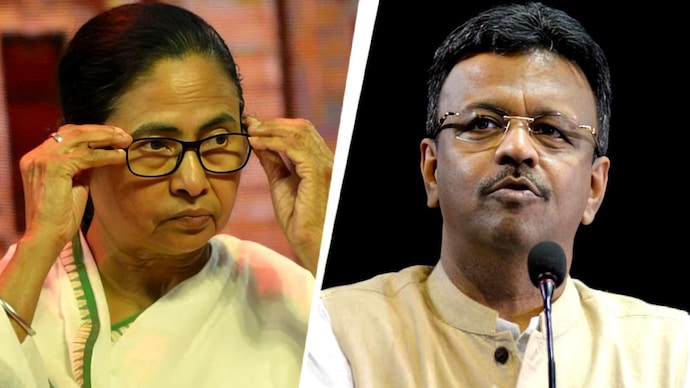
Amid the Trinamool Congress' (TMC) crisis since the defeat in 2026 West Bengal Assembly elections, MLA and party's senior leader Firhad Hakim was seen entering the chamber of Leader of Opposition Ritabrata Banerjee in the Assembly on Monday.
The development comes days after Hakim stepped down as Mayor of Kolkata and amid an ongoing power struggle within the TMC. According to reports, Hakim arrived at the Assembly as usual and was seated in the lobby when rebel TMC MLA Sandipan Saha, a key face of the dissident camp, approached him and invited him to another room.
Moments later, Hakim was seen walking with Saha into the chamber of Ritabrata Banerjee, who is leading the rebel faction that has challenged the party's official legislative leadership. Although Hakim mentioned it as a courtesy visit, it has triggered intense speculation about Hakim's political future and whether he could be moving closer to the dissident camp.
The incident has attracted attention as it comes at a time when the TMC is grappling with internal divisions and reports of growing discontent within its ranks. Questions are now being raised over whether Hakim, a longtime confidant of Mamata Banerjee and one of the party's most prominent leaders, is distancing himself from the party leadership.
The speculation had already intensified after Hakim resigned as Kolkata Mayor on June 5. Adding to the buzz, Ritabrata Banerjee had indicated that he could reach out to Hakim in the future, though he did not elaborate on the nature of any possible discussions.
ANOTHER TMC RAJYA SABHA MP QUITS
TMC, on Monday morning, also faced yet another setback after veteran Rajya Sabha MP Sukhendu Sekhar Roy stepped down from his post and quit the party.
In his resignation letter addressed to TMC chief Mamata Banerjee, Sukhendu said the people of West Bengal had rejected the party over what he described as "rampant corruption, extreme oppression of women, and utter failure" in governance. He also cited what he called widespread anarchy across key sectors, including education, healthcare, industry, employment and law and order.
TMC MPs PREPARING TO FORM REBEL GROUP
In a development that mirrors last week's split within the Trinamool Congress legislature party in West Bengal, signs of a similar rebellion appear to be emerging in the party's parliamentary wing. A photograph exclusively accessed by India Today showed at least five TMC MPs standing alongside Sukhendu shortly after he tendered his resignation.
According to sources, around 20 Trinamool Congress MPs are preparing to form a separate rebel group within the party, signalling a fresh escalation in the internal crisis gripping the TMC.
The dissident MPs are reportedly in favour of appointing Kakoli Ghosh Dastidar as their leader in the Lok Sabha instead of Abhishek Banerjee.
Sources said the rebel faction is likely to formally distance itself from the original TMC parliamentary group in the coming days. However, any move related to recognition of the group may have to wait, as the Lok Sabha Speaker is currently in Chandigarh and away from Delhi.
MAMATA BANERJEE'S TMC UNDER SEVERE CRISIS
In an effort to contain the growing turmoil within the Trinamool Congress, Mamata Banerjee has undertaken a major organisational reshuffle aimed at strengthening the party ahead of a likely legal battle over its symbol and identity.
While she stopped short of removing Abhishek Banerjee from a key leadership role or accepting one of the rebel camp's principal demands, the restructuring is widely being viewed as an attempt to dilute his influence within the organisation.
Significantly, Abhishek Banerjee is no longer the party's only national general secretary. Rajya Sabha MPs Derek O'Brien and Dola Sen have also been appointed as national general secretaries, a move seen as an effort to recalibrate internal power equations and accommodate competing factions.
What began as a rebellion within the party's Bengal unit now appears to have spread to Delhi, deepening the crisis for the TMC leadership. The latest developments have cast a shadow over Mamata Banerjee's visit to the national capital, as the party grapples with mounting dissent, shifting loyalties and an increasingly uncertain organisational future.
Amid the Trinamool Congress' (TMC) crisis since the defeat in 2026 West Bengal Assembly elections, MLA and party's senior leader Firhad Hakim was seen entering the chamber of Leader of Opposition Ritabrata Banerjee in the Assembly on Monday.
The development comes days after Hakim stepped down as Mayor of Kolkata and amid an ongoing power struggle within the TMC. According to reports, Hakim arrived at the Assembly as usual and was seated in the lobby when rebel TMC MLA Sandipan Saha, a key face of the dissident camp, approached him and invited him to another room.
Moments later, Hakim was seen walking with Saha into the chamber of Ritabrata Banerjee, who is leading the rebel faction that has challenged the party's official legislative leadership. Although Hakim mentioned it as a courtesy visit, it has triggered intense speculation about Hakim's political future and whether he could be moving closer to the dissident camp.
The incident has attracted attention as it comes at a time when the TMC is grappling with internal divisions and reports of growing discontent within its ranks. Questions are now being raised over whether Hakim, a longtime confidant of Mamata Banerjee and one of the party's most prominent leaders, is distancing himself from the party leadership.
The speculation had already intensified after Hakim resigned as Kolkata Mayor on June 5. Adding to the buzz, Ritabrata Banerjee had indicated that he could reach out to Hakim in the future, though he did not elaborate on the nature of any possible discussions.
ANOTHER TMC RAJYA SABHA MP QUITS
TMC, on Monday morning, also faced yet another setback after veteran Rajya Sabha MP Sukhendu Sekhar Roy stepped down from his post and quit the party.
In his resignation letter addressed to TMC chief Mamata Banerjee, Sukhendu said the people of West Bengal had rejected the party over what he described as "rampant corruption, extreme oppression of women, and utter failure" in governance. He also cited what he called widespread anarchy across key sectors, including education, healthcare, industry, employment and law and order.
TMC MPs PREPARING TO FORM REBEL GROUP
In a development that mirrors last week's split within the Trinamool Congress legislature party in West Bengal, signs of a similar rebellion appear to be emerging in the party's parliamentary wing. A photograph exclusively accessed by India Today showed at least five TMC MPs standing alongside Sukhendu shortly after he tendered his resignation.
According to sources, around 20 Trinamool Congress MPs are preparing to form a separate rebel group within the party, signalling a fresh escalation in the internal crisis gripping the TMC.
The dissident MPs are reportedly in favour of appointing Kakoli Ghosh Dastidar as their leader in the Lok Sabha instead of Abhishek Banerjee.
Sources said the rebel faction is likely to formally distance itself from the original TMC parliamentary group in the coming days. However, any move related to recognition of the group may have to wait, as the Lok Sabha Speaker is currently in Chandigarh and away from Delhi.
MAMATA BANERJEE'S TMC UNDER SEVERE CRISIS
In an effort to contain the growing turmoil within the Trinamool Congress, Mamata Banerjee has undertaken a major organisational reshuffle aimed at strengthening the party ahead of a likely legal battle over its symbol and identity.
While she stopped short of removing Abhishek Banerjee from a key leadership role or accepting one of the rebel camp's principal demands, the restructuring is widely being viewed as an attempt to dilute his influence within the organisation.
Significantly, Abhishek Banerjee is no longer the party's only national general secretary. Rajya Sabha MPs Derek O'Brien and Dola Sen have also been appointed as national general secretaries, a move seen as an effort to recalibrate internal power equations and accommodate competing factions.
What began as a rebellion within the party's Bengal unit now appears to have spread to Delhi, deepening the crisis for the TMC leadership. The latest developments have cast a shadow over Mamata Banerjee's visit to the national capital, as the party grapples with mounting dissent, shifting loyalties and an increasingly uncertain organisational future.

