Bihar cracks down on banned Thai Mangur fish trade in statewide raids
Bihar authorities are seizing and destroying Thai Mangur, a highly invasive and predatory fish species considered a threat to the environment, native fish populations and potentially human health.
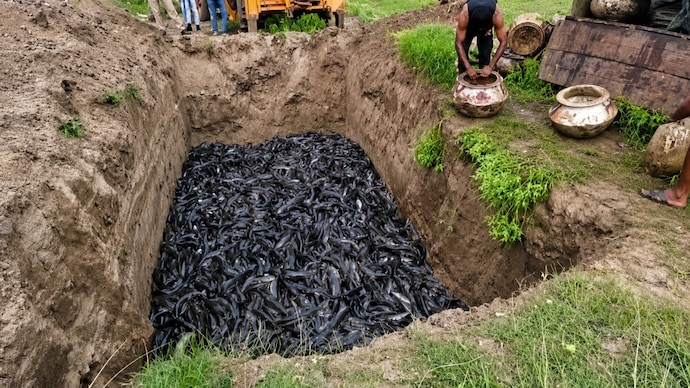
The Bihar Fisheries Department has intensified its crackdown on the illegal trade and sale of banned Thai Mangur fish across the state, carrying out raids and seizure operations against traders dealing in the prohibited species. Officials have been confiscating large consignments of the fish and disposing of them by burying the stock underground as part of the destruction process.
The Thai Mangur, also known as the walking catfish, is a highly predatory and invasive species banned in India as authorities consider it harmful to the environment, native fish populations and potentially to human health.
The state government has launched a statewide enforcement drive targeting traders and suppliers involved in the banned fish business, with raids being conducted at multiple locations linked to the illegal trade.
In Purnea district, authorities tightened surveillance on traders dealing in Thai Mangur fish, with the Fisheries Department conducting a major operation in the Baisi area. Officials seized consignments of Thai Mangur fish that were allegedly being transported from neighbouring West Bengal before burying the confiscated stock underground.
Officials said the crackdown is part of an ongoing campaign against the illegal sale of the prohibited fish. Raids and inspections are being conducted continuously to identify traders and suppliers involved in the business.
According to experts, Thai Mangur fish has been banned in several parts of the country over concerns related to public health and environmental impact. Officials said consumption of the prohibited species may lead to multiple health complications, while its farming and trade are also considered harmful to native aquatic biodiversity.
The intensified action by the Fisheries Department reflects the Bihar government's stricter enforcement approach, with officials now carrying out ground-level operations to curb the illegal trade network. Authorities have warned traders against stocking or transporting the banned fish and said strict action would continue against violators.
The Bihar Fisheries Department has intensified its crackdown on the illegal trade and sale of banned Thai Mangur fish across the state, carrying out raids and seizure operations against traders dealing in the prohibited species. Officials have been confiscating large consignments of the fish and disposing of them by burying the stock underground as part of the destruction process.
The Thai Mangur, also known as the walking catfish, is a highly predatory and invasive species banned in India as authorities consider it harmful to the environment, native fish populations and potentially to human health.
The state government has launched a statewide enforcement drive targeting traders and suppliers involved in the banned fish business, with raids being conducted at multiple locations linked to the illegal trade.
In Purnea district, authorities tightened surveillance on traders dealing in Thai Mangur fish, with the Fisheries Department conducting a major operation in the Baisi area. Officials seized consignments of Thai Mangur fish that were allegedly being transported from neighbouring West Bengal before burying the confiscated stock underground.
Officials said the crackdown is part of an ongoing campaign against the illegal sale of the prohibited fish. Raids and inspections are being conducted continuously to identify traders and suppliers involved in the business.
According to experts, Thai Mangur fish has been banned in several parts of the country over concerns related to public health and environmental impact. Officials said consumption of the prohibited species may lead to multiple health complications, while its farming and trade are also considered harmful to native aquatic biodiversity.
The intensified action by the Fisheries Department reflects the Bihar government's stricter enforcement approach, with officials now carrying out ground-level operations to curb the illegal trade network. Authorities have warned traders against stocking or transporting the banned fish and said strict action would continue against violators.

