UP Cabinet portfolio buzz likely end today after Yogi Adityanath meets Amit Shah
As suspense continues over portfolio allocation in the expanded Uttar Pradesh cabinet, Chief Minister Yogi Adityanath held meetings in Delhi with Amit Shah and BJP leaders.
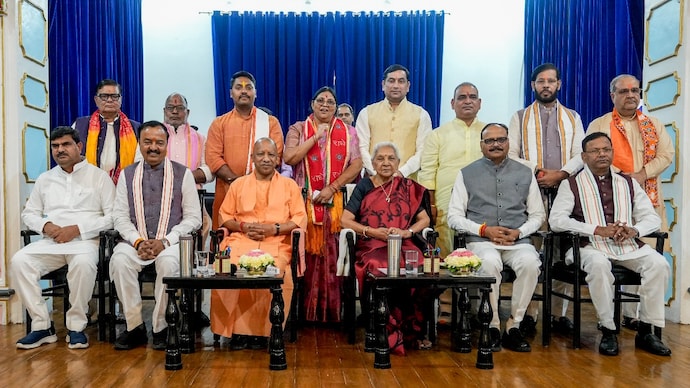
Four days after the expansion of the Uttar Pradesh cabinet, suspense over the allocation of portfolios is likely to end on Friday following Chief Minister Yogi Adityanath’s meetings in Delhi with Union Home Minister Amit Shah and BJP national president Nitin Navin. Sources said discussions centred on the pending distribution of ministries and the formation of a new organisational team in the state BJP unit.
The delay in announcing portfolios after the cabinet expansion had triggered intense speculation, particularly over who would get the crucial Public Works Department (PWD), which is currently held by the Chief Minister. It remains unclear whether Yogi Adityanath will retain the department or hand it over to one of the newly inducted cabinet ministers.
Party insiders said extensive lobbying is underway among ministers, with several members of the Yogi cabinet camping in Delhi in the hope of securing influential portfolios. The BJP leadership is also believed to be weighing social and caste equations while finalising the distribution of ministries.
The latest cabinet expansion is being viewed as part of the BJP’s broader strategy to counter the Samajwadi Party’s PDA narrative ahead of the 2027 Uttar Pradesh Assembly elections. PDA, coined by the SP, stands for Pichda (backwards), Dalits and Alpsankhyak (minorities), a social coalition the opposition party has been aggressively pitching since the 2024 Lok Sabha elections.
Of the six BJP leaders inducted into the Yogi Adityanath government, three are from OBC communities and two are Dalits, signalling the saffron party’s focus on consolidating non-Yadav OBCs and non-Jatav Dalits. The new OBC ministers include Bhupendra Chaudhary from the Jat community, Kailash Rajput from the Lodh community and Hansraj Vishwakarma from the Lohar community. Krishna Paswan from the Pasi community and Surendra Singh Daler from the Valmiki community represent Dalit groups, while Manoj Kumar Pandey is a Brahmin face in the reshuffle.
Additionally, Ajit Pal and Somendra Tomar, both non-Yadav OBC leaders, were promoted as ministers of state with independent charge.
The expansion comes after the BJP suffered setbacks in Uttar Pradesh during the 2024 Lok Sabha elections, where the SP-Congress alliance won 43 of the state’s 80 seats, reducing the BJP-led NDA tally to 36 from 64 in 2019. One of the most significant blows for the BJP was the loss of the Ayodhya seat to SP leader Awadhesh Prasad, the first Dalit leader from the Pasi community to win the constituency.
Prasad on Sunday claimed the BJP’s cabinet exercise reflected nervousness over the SP’s PDA strategy. “It is obvious that the BJP is rattled by the SP’s PDA push,” he told PTI, expressing confidence that the BJP would be voted out in 2027.
Senior BJP leaders, however, dismissed the SP’s claim and projected the BJP as the “real” representative of backward and Dalit communities. Deputy Chief Minister Keshav Prasad Maurya said the SP’s PDA pitch was “bogus” and asserted that the BJP truly cared for those communities.
The induction of Manoj Kumar Pandey is also being seen as politically significant. The former SP leader, who represents Unchahar in Rae Bareli, had rebelled against the SP ahead of the 2024 Lok Sabha polls and supported the BJP during Rajya Sabha elections. His inclusion is expected to help the BJP strengthen its outreach among Brahmins, a community the opposition claims has grown disillusioned with the ruling party.
The reshuffle also appeared to have a regional political message. Varanasi, Prime Minister Narendra Modi’s Lok Sabha constituency, now has four ministers in the state cabinet after the induction of Hansraj Vishwakarma. His elevation has also been linked to recent tensions involving the Lohar community in eastern Uttar Pradesh.
Similarly, Kailash Rajput’s induction has strengthened the BJP’s presence in Kannauj, the Lok Sabha constituency represented by SP chief Akhilesh Yadav.
Sources indicated that the meetings between Yogi Adityanath and Amit Shah largely focused on finalising portfolios in a way that balances administrative priorities with caste and political calculations ahead of the crucial 2027 Assembly elections.
Four days after the expansion of the Uttar Pradesh cabinet, suspense over the allocation of portfolios is likely to end on Friday following Chief Minister Yogi Adityanath’s meetings in Delhi with Union Home Minister Amit Shah and BJP national president Nitin Navin. Sources said discussions centred on the pending distribution of ministries and the formation of a new organisational team in the state BJP unit.
The delay in announcing portfolios after the cabinet expansion had triggered intense speculation, particularly over who would get the crucial Public Works Department (PWD), which is currently held by the Chief Minister. It remains unclear whether Yogi Adityanath will retain the department or hand it over to one of the newly inducted cabinet ministers.
Party insiders said extensive lobbying is underway among ministers, with several members of the Yogi cabinet camping in Delhi in the hope of securing influential portfolios. The BJP leadership is also believed to be weighing social and caste equations while finalising the distribution of ministries.
The latest cabinet expansion is being viewed as part of the BJP’s broader strategy to counter the Samajwadi Party’s PDA narrative ahead of the 2027 Uttar Pradesh Assembly elections. PDA, coined by the SP, stands for Pichda (backwards), Dalits and Alpsankhyak (minorities), a social coalition the opposition party has been aggressively pitching since the 2024 Lok Sabha elections.
Of the six BJP leaders inducted into the Yogi Adityanath government, three are from OBC communities and two are Dalits, signalling the saffron party’s focus on consolidating non-Yadav OBCs and non-Jatav Dalits. The new OBC ministers include Bhupendra Chaudhary from the Jat community, Kailash Rajput from the Lodh community and Hansraj Vishwakarma from the Lohar community. Krishna Paswan from the Pasi community and Surendra Singh Daler from the Valmiki community represent Dalit groups, while Manoj Kumar Pandey is a Brahmin face in the reshuffle.
Additionally, Ajit Pal and Somendra Tomar, both non-Yadav OBC leaders, were promoted as ministers of state with independent charge.
The expansion comes after the BJP suffered setbacks in Uttar Pradesh during the 2024 Lok Sabha elections, where the SP-Congress alliance won 43 of the state’s 80 seats, reducing the BJP-led NDA tally to 36 from 64 in 2019. One of the most significant blows for the BJP was the loss of the Ayodhya seat to SP leader Awadhesh Prasad, the first Dalit leader from the Pasi community to win the constituency.
Prasad on Sunday claimed the BJP’s cabinet exercise reflected nervousness over the SP’s PDA strategy. “It is obvious that the BJP is rattled by the SP’s PDA push,” he told PTI, expressing confidence that the BJP would be voted out in 2027.
Senior BJP leaders, however, dismissed the SP’s claim and projected the BJP as the “real” representative of backward and Dalit communities. Deputy Chief Minister Keshav Prasad Maurya said the SP’s PDA pitch was “bogus” and asserted that the BJP truly cared for those communities.
The induction of Manoj Kumar Pandey is also being seen as politically significant. The former SP leader, who represents Unchahar in Rae Bareli, had rebelled against the SP ahead of the 2024 Lok Sabha polls and supported the BJP during Rajya Sabha elections. His inclusion is expected to help the BJP strengthen its outreach among Brahmins, a community the opposition claims has grown disillusioned with the ruling party.
The reshuffle also appeared to have a regional political message. Varanasi, Prime Minister Narendra Modi’s Lok Sabha constituency, now has four ministers in the state cabinet after the induction of Hansraj Vishwakarma. His elevation has also been linked to recent tensions involving the Lohar community in eastern Uttar Pradesh.
Similarly, Kailash Rajput’s induction has strengthened the BJP’s presence in Kannauj, the Lok Sabha constituency represented by SP chief Akhilesh Yadav.
Sources indicated that the meetings between Yogi Adityanath and Amit Shah largely focused on finalising portfolios in a way that balances administrative priorities with caste and political calculations ahead of the crucial 2027 Assembly elections.

