Ground Report: Wedding hall in Murshidabad now a holding centre for detainees
A holding centre for detained Bangladeshi nationals has been set up on the top floor of Padma Bhawan in Lalgola, Murshidabad. The ground report shows how a hall once used for weddings now serves as a border detention facility.
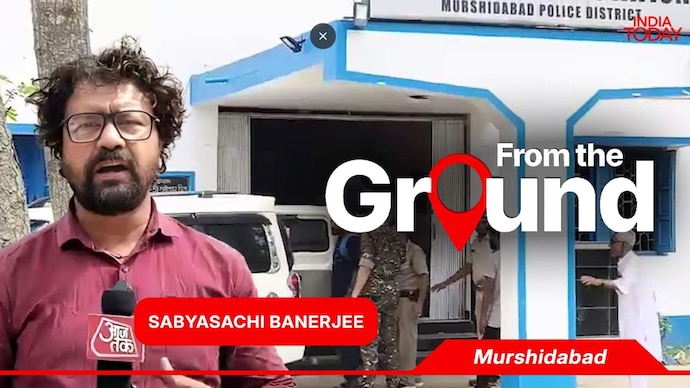
As West Bengal’s "detect, delete and deport" drive moves from political messaging to on-ground enforcement, Murshidabad has emerged as one of the first districts where the administration has operationalised dedicated holding centres for suspected illegal Bangladeshi nationals. A team from India Today TV reached the site and took stock of the situation on the ground and the mood that encompasses the air.
In Lalgola, barely 10 to 12 kilometres from the Bangladesh border, a wedding hall that once hosted celebrations now functions under tight police security as a temporary detention facility for those accused of entering India illegally.
The holding centre has been established on the top floor of 'Padma Bhawan', a three-storey building in Lalgola.
A hall measuring nearly 60x40 feet, previously used for wedding ceremonies and social gatherings, has now been converted into a detention space where apprehended Bangladeshi nationals are being housed before eventual deportation procedures begin.
HOLDING CENTRE FORTIFIED
When the India Today TV team reached the premises, heavy police deployment was visible across the building. A medical team, including a doctor and healthcare workers, was also stationed there.
During the visit, police personnel brought in a man accused of being an illegal Bangladeshi national.
Speaking in Bengali on our camera, the detainee said, "I arrived in India from Bangladesh a year ago, and I have even gotten married here. My name is Mohammad Shahidul Islam".
He claimed to be from Shivganj Kalipur in Bangladesh and said he had married Rekha Bibi in the Shuti area of Murshidabad before settling there.
Officials said more such detainees are being picked up from different parts of the district and shifted to the holding centre as part of the ongoing verification exercise.
FACILITIES THAT THE DETAINEES GET
Inside the facility, the detainees are provided four meals a day in tiffin carriers. Drinking water arrangements have been made, while toilet facilities have also been set up within the premises.
Every person brought to the centre undergoes a medical examination upon arrival, with doctors and healthcare workers conducting regular health check-ups.
A cook has also been appointed to manage food preparation for those being housed there.
According to administrative sources, seven Bangladeshi nationals have already been detained and brought to the centre so far, while preparations are underway to shift seven more individuals from the Jalangi area.
Officials said individuals apprehended from police station areas including Lalgola, Bhagwangola and Suti on suspicion of being Bangladeshi nationals will also be housed at the same facility.
The district administration said two of the detainees were apprehended near the Lalgola border area, while another was detained in Bhagwangola.
Sources added that over the past 48 hours, police arrested three individuals from Chapainawabganj and Rajshahi districts of Bangladesh while they were allegedly attempting to enter India illegally through the Lalgola and Bhagwangola border outposts.
Two of the apprehended individuals have been identified as Raju Sheikh and Naid Sheikh, while the third individual, detained in Bhagwangola, is also said to be a resident of Chapainawabganj.
According to the administration’s preliminary assessment, the arrested men are suspected to have links with a smuggling network.
Administrative officials said the holding centres are meant to temporarily house Bangladeshi nationals and Rohingyas who allegedly entered India illegally.
Authorities said if detainees fail to produce valid citizenship documents during verification, further legal action and deportation procedures will follow. The entire process, officials estimate, could take nearly 30 days.
DETECT, DELETE, DEPORT POLICY
The initiative follows Chief Minister Suvendu Adhikari’s recent directive that "mere arrest is insufficient" in cases involving illegal infiltrators.
He instructed that arrested foreign nationals be immediately handed over to the Border Security Force and that repatriation procedures be initiated without delay.
Weekly reports on such cases are also to be submitted to the Chief Minister’s Office.
The Murshidabad holding centres near the Lalgola and Bhagwangola border outposts are among the first facilities established under the state’s “detect, delete and deport” campaign.
The drive comes amid increased focus on illegal immigration and border surveillance in West Bengal, with authorities now moving towards a more visible enforcement phase involving detentions, verification exercises and eventual deportation proceedings.
As West Bengal’s "detect, delete and deport" drive moves from political messaging to on-ground enforcement, Murshidabad has emerged as one of the first districts where the administration has operationalised dedicated holding centres for suspected illegal Bangladeshi nationals. A team from India Today TV reached the site and took stock of the situation on the ground and the mood that encompasses the air.
In Lalgola, barely 10 to 12 kilometres from the Bangladesh border, a wedding hall that once hosted celebrations now functions under tight police security as a temporary detention facility for those accused of entering India illegally.
The holding centre has been established on the top floor of 'Padma Bhawan', a three-storey building in Lalgola.
A hall measuring nearly 60x40 feet, previously used for wedding ceremonies and social gatherings, has now been converted into a detention space where apprehended Bangladeshi nationals are being housed before eventual deportation procedures begin.
HOLDING CENTRE FORTIFIED
When the India Today TV team reached the premises, heavy police deployment was visible across the building. A medical team, including a doctor and healthcare workers, was also stationed there.
During the visit, police personnel brought in a man accused of being an illegal Bangladeshi national.
Speaking in Bengali on our camera, the detainee said, "I arrived in India from Bangladesh a year ago, and I have even gotten married here. My name is Mohammad Shahidul Islam".
He claimed to be from Shivganj Kalipur in Bangladesh and said he had married Rekha Bibi in the Shuti area of Murshidabad before settling there.
Officials said more such detainees are being picked up from different parts of the district and shifted to the holding centre as part of the ongoing verification exercise.
FACILITIES THAT THE DETAINEES GET
Inside the facility, the detainees are provided four meals a day in tiffin carriers. Drinking water arrangements have been made, while toilet facilities have also been set up within the premises.
Every person brought to the centre undergoes a medical examination upon arrival, with doctors and healthcare workers conducting regular health check-ups.
A cook has also been appointed to manage food preparation for those being housed there.
According to administrative sources, seven Bangladeshi nationals have already been detained and brought to the centre so far, while preparations are underway to shift seven more individuals from the Jalangi area.
Officials said individuals apprehended from police station areas including Lalgola, Bhagwangola and Suti on suspicion of being Bangladeshi nationals will also be housed at the same facility.
The district administration said two of the detainees were apprehended near the Lalgola border area, while another was detained in Bhagwangola.
Sources added that over the past 48 hours, police arrested three individuals from Chapainawabganj and Rajshahi districts of Bangladesh while they were allegedly attempting to enter India illegally through the Lalgola and Bhagwangola border outposts.
Two of the apprehended individuals have been identified as Raju Sheikh and Naid Sheikh, while the third individual, detained in Bhagwangola, is also said to be a resident of Chapainawabganj.
According to the administration’s preliminary assessment, the arrested men are suspected to have links with a smuggling network.
Administrative officials said the holding centres are meant to temporarily house Bangladeshi nationals and Rohingyas who allegedly entered India illegally.
Authorities said if detainees fail to produce valid citizenship documents during verification, further legal action and deportation procedures will follow. The entire process, officials estimate, could take nearly 30 days.
DETECT, DELETE, DEPORT POLICY
The initiative follows Chief Minister Suvendu Adhikari’s recent directive that "mere arrest is insufficient" in cases involving illegal infiltrators.
He instructed that arrested foreign nationals be immediately handed over to the Border Security Force and that repatriation procedures be initiated without delay.
Weekly reports on such cases are also to be submitted to the Chief Minister’s Office.
The Murshidabad holding centres near the Lalgola and Bhagwangola border outposts are among the first facilities established under the state’s “detect, delete and deport” campaign.
The drive comes amid increased focus on illegal immigration and border surveillance in West Bengal, with authorities now moving towards a more visible enforcement phase involving detentions, verification exercises and eventual deportation proceedings.

