What keeps Hawa Mahal cool in 45°C heat? Home cooling tips from a 225-year-old design
As temperatures in Jaipur touch 45°C, Hawa Mahal remains airy and comfortable without air conditioners. Its natural cooling system offers practical lessons that remain relevant for homes even today.
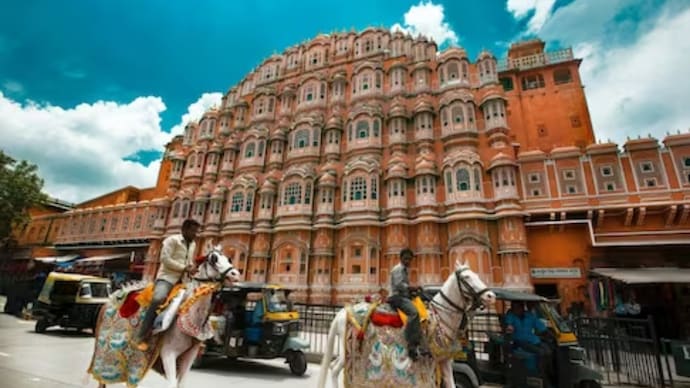
While much of Jaipur struggles through summer temperatures nearing 45°C, Hawa Mahal remains noticeably cooler inside. Built in 1799, the iconic Palace of Winds achieves this without air conditioners, coolers or electricity.
Instead, it relies on natural ventilation, smart design and an understanding of airflow that was far ahead of its time.
More than 225 years later, the building is not just a heritage attraction but also a reminder that good architecture can work with nature to tackle extreme heat.
Some of its cooling ideas can even inspire modern homes today.
THE SCIENCE BEHIND HAWA MAHAL'S COOL INTERIORS
The palace's cooling system is based largely on the Venturi Effect, a principle that causes air to move faster when it passes through narrow openings.
Hawa Mahal's famous faade contains 953 jharokhas (windows). When wind hits the structure, air is pushed through these small openings and circulates throughout the building.
The honeycomb-shaped faade, curved windows and intricate lattice work help keep air moving continuously across corridors and rooms.
The result is a naturally breezy and more comfortable indoor environment, even during Rajasthan's harsh summers.
DESIGNED FOR PRIVACY, WITH AN EXTRA BENEFIT
Hawa Mahal was commissioned by Maharaja Sawai Pratap Singh and designed by architect Lal Chand Ustad.
The windows were originally created to allow royal women to observe daily life, festivals and processions in Johari Bazaar without being seen, following the purdah tradition.
At the same time, these openings created excellent airflow, turning the structure into a naturally ventilated building.
OTHER FEATURES THAT HELP KEEP IT COOL
Several design choices add to the cooling effect:
- Limestone and pink sandstone help reduce heat absorption.
- The building's relatively thin profile allows air to move through easily.
- Open floors and ramps improve circulation across all five storeys.
- Fountains in courtyards and chambers once provided additional evaporative cooling.
Together, these elements help maintain a cooler atmosphere inside the palace.
WHAT MODERN HOMES CAN LEARN
While most homes cannot have 953 windows, some of Hawa Mahal's principles remain useful today:
- Encourage cross-ventilation by creating airflow between opposite openings.
- Use perforated screens or jali-style designs where suitable.
- Keep common spaces open to improve air circulation.
- Add shaded openings that allow air in while reducing direct heat.
- Incorporate courtyards, water features or greenery where possible to support natural cooling.
These ideas can help reduce dependence on air conditioners, especially during hot summer months.
ALSO READ: Did you know? You can transport your car by train in India. Here's the cost
A LESSON FROM THE PAST
Known as the 'Palace of Winds', Hawa Mahal continues to show how traditional cooling techniques can work in extreme climates.
As Indian cities face rising temperatures and growing energy demands, this 225-year-old example of climate-responsive architecture offers a simple message: smart design can often be as important as modern technology.
That is what keeps Hawa Mahal cool in 45°C heat, and why its lessons still matter today.
While much of Jaipur struggles through summer temperatures nearing 45°C, Hawa Mahal remains noticeably cooler inside. Built in 1799, the iconic Palace of Winds achieves this without air conditioners, coolers or electricity.
Instead, it relies on natural ventilation, smart design and an understanding of airflow that was far ahead of its time.
More than 225 years later, the building is not just a heritage attraction but also a reminder that good architecture can work with nature to tackle extreme heat.
Some of its cooling ideas can even inspire modern homes today.
THE SCIENCE BEHIND HAWA MAHAL'S COOL INTERIORS
The palace's cooling system is based largely on the Venturi Effect, a principle that causes air to move faster when it passes through narrow openings.
Hawa Mahal's famous faade contains 953 jharokhas (windows). When wind hits the structure, air is pushed through these small openings and circulates throughout the building.
The honeycomb-shaped faade, curved windows and intricate lattice work help keep air moving continuously across corridors and rooms.
The result is a naturally breezy and more comfortable indoor environment, even during Rajasthan's harsh summers.
DESIGNED FOR PRIVACY, WITH AN EXTRA BENEFIT
Hawa Mahal was commissioned by Maharaja Sawai Pratap Singh and designed by architect Lal Chand Ustad.
The windows were originally created to allow royal women to observe daily life, festivals and processions in Johari Bazaar without being seen, following the purdah tradition.
At the same time, these openings created excellent airflow, turning the structure into a naturally ventilated building.
OTHER FEATURES THAT HELP KEEP IT COOL
Several design choices add to the cooling effect:
- Limestone and pink sandstone help reduce heat absorption.
- The building's relatively thin profile allows air to move through easily.
- Open floors and ramps improve circulation across all five storeys.
- Fountains in courtyards and chambers once provided additional evaporative cooling.
Together, these elements help maintain a cooler atmosphere inside the palace.
WHAT MODERN HOMES CAN LEARN
While most homes cannot have 953 windows, some of Hawa Mahal's principles remain useful today:
- Encourage cross-ventilation by creating airflow between opposite openings.
- Use perforated screens or jali-style designs where suitable.
- Keep common spaces open to improve air circulation.
- Add shaded openings that allow air in while reducing direct heat.
- Incorporate courtyards, water features or greenery where possible to support natural cooling.
These ideas can help reduce dependence on air conditioners, especially during hot summer months.
ALSO READ: Did you know? You can transport your car by train in India. Here's the cost
A LESSON FROM THE PAST
Known as the 'Palace of Winds', Hawa Mahal continues to show how traditional cooling techniques can work in extreme climates.
As Indian cities face rising temperatures and growing energy demands, this 225-year-old example of climate-responsive architecture offers a simple message: smart design can often be as important as modern technology.
That is what keeps Hawa Mahal cool in 45°C heat, and why its lessons still matter today.

