What is Thai Mangur, the banned catfish still reaching Indian markets?
Thai Mangur fish is a banned invasive catfish that grows quickly and survives in harsh conditions. While profitable for fish farmers, it has raised environmental and health concerns across India.
Thai Mangur fish has once again entered public discussion after Bihar intensified raids against its illegal trade. The fish, also called Thai Magur, is banned in India but still reaches markets through illegal supply chains because of its low farming cost and fast growth. While some traders and fish farmers continue to see it as profitable, authorities and environmental experts consider it a threat to biodiversity and a possible public health concern.
The recent Bihar action only briefly put the spotlight back on a larger issue: why a banned fish species continues to circulate so widely across states despite years of warnings and restrictions.
WHAT IS THAI MANGUR FISH?
Thai Mangur is an exotic species of catfish commonly identified as Clarias gariepinus, also known as the African catfish. It was introduced because of its commercial advantages in fish farming.
Unlike many native fish species, Thai Mangur grows very quickly, survives in crowded ponds and can tolerate poor water quality.
Farmers can rear it at comparatively lower costs and still produce large quantities within a short period. That made it popular in parts of India over the years.
The fish is dark in colour, has long whisker-like barbels and can survive even in low-oxygen conditions. In many cases, it is sold cheaply in local markets, increasing its demand among buyers looking for affordable fish varieties.
WHY IS THAI MANGUR BANNED?
India banned Thai Mangur fish mainly because of environmental concerns. Authorities believe the species is highly invasive and harmful to native aquatic ecosystems.
Experts say the fish is aggressive by nature and competes with local fish species for food and habitat. Since it adapts quickly and survives easily, it can spread rapidly in rivers, ponds and lakes if released into natural water bodies. This threatens indigenous fish populations and disturbs ecological balance.
Concerns have also been raised about unhealthy farming practices linked to the species. Some reports have warned consumers against eating Thai Mangur because of possible health risks and poor rearing conditions.
During the monsoon season especially, warnings around the fish often become more visible due to rising demand in local markets.
One report cited concerns that invasive species like Thai Mangur contributed heavily to the decline of native fish populations in affected areas.
WHY DO FARMERS STILL REAR IT?
Despite the ban, Thai Mangur remains attractive to illegal fish farmers and traders because it is easy to rear and commercially rewarding.
The fish grows faster than many native varieties and requires less investment in farming conditions. For traders, that means quicker profits. Its ability to survive transport and poor storage conditions also makes illegal supply chains easier to maintain.
This profit-driven demand is one of the biggest reasons the banned species continues to appear in markets across different states.
WHAT HAPPENED IN BIHAR?
The issue recently returned to attention after Bihar’s Fisheries Department carried out raids against illegal Thai Mangur consignments.
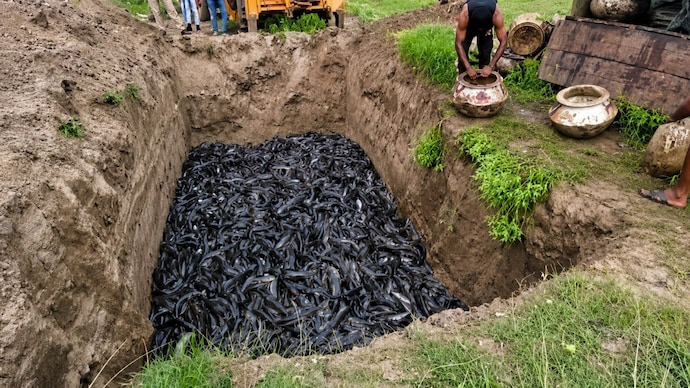
In Purnia district, officials reportedly seized stock brought from West Bengal and buried the confiscated fish underground as part of the disposal process.
The raids created panic among traders and signalled stricter enforcement on the ground. Authorities are continuing inspections to identify suppliers and illegal traders involved in the business.
THE BIGGER ISSUE
The Thai Mangur story is no longer only about one banned fish. It also exposes how difficult it is to stop illegal inter-state trade when profits remain high.
Even after repeated bans, warnings and seizures, the fish continues to move through supply networks and reach local markets. For regulators, the challenge is not only banning the species on paper but also stopping its farming, transport and sale at every level.
Thai Mangur fish has once again entered public discussion after Bihar intensified raids against its illegal trade. The fish, also called Thai Magur, is banned in India but still reaches markets through illegal supply chains because of its low farming cost and fast growth. While some traders and fish farmers continue to see it as profitable, authorities and environmental experts consider it a threat to biodiversity and a possible public health concern.
The recent Bihar action only briefly put the spotlight back on a larger issue: why a banned fish species continues to circulate so widely across states despite years of warnings and restrictions.
WHAT IS THAI MANGUR FISH?
Thai Mangur is an exotic species of catfish commonly identified as Clarias gariepinus, also known as the African catfish. It was introduced because of its commercial advantages in fish farming.
Unlike many native fish species, Thai Mangur grows very quickly, survives in crowded ponds and can tolerate poor water quality.
Farmers can rear it at comparatively lower costs and still produce large quantities within a short period. That made it popular in parts of India over the years.
The fish is dark in colour, has long whisker-like barbels and can survive even in low-oxygen conditions. In many cases, it is sold cheaply in local markets, increasing its demand among buyers looking for affordable fish varieties.
WHY IS THAI MANGUR BANNED?
India banned Thai Mangur fish mainly because of environmental concerns. Authorities believe the species is highly invasive and harmful to native aquatic ecosystems.
Experts say the fish is aggressive by nature and competes with local fish species for food and habitat. Since it adapts quickly and survives easily, it can spread rapidly in rivers, ponds and lakes if released into natural water bodies. This threatens indigenous fish populations and disturbs ecological balance.
Concerns have also been raised about unhealthy farming practices linked to the species. Some reports have warned consumers against eating Thai Mangur because of possible health risks and poor rearing conditions.
During the monsoon season especially, warnings around the fish often become more visible due to rising demand in local markets.
One report cited concerns that invasive species like Thai Mangur contributed heavily to the decline of native fish populations in affected areas.
WHY DO FARMERS STILL REAR IT?
Despite the ban, Thai Mangur remains attractive to illegal fish farmers and traders because it is easy to rear and commercially rewarding.
The fish grows faster than many native varieties and requires less investment in farming conditions. For traders, that means quicker profits. Its ability to survive transport and poor storage conditions also makes illegal supply chains easier to maintain.
This profit-driven demand is one of the biggest reasons the banned species continues to appear in markets across different states.
WHAT HAPPENED IN BIHAR?
The issue recently returned to attention after Bihar’s Fisheries Department carried out raids against illegal Thai Mangur consignments.
In Purnia district, officials reportedly seized stock brought from West Bengal and buried the confiscated fish underground as part of the disposal process.
The raids created panic among traders and signalled stricter enforcement on the ground. Authorities are continuing inspections to identify suppliers and illegal traders involved in the business.
THE BIGGER ISSUE
The Thai Mangur story is no longer only about one banned fish. It also exposes how difficult it is to stop illegal inter-state trade when profits remain high.
Even after repeated bans, warnings and seizures, the fish continues to move through supply networks and reach local markets. For regulators, the challenge is not only banning the species on paper but also stopping its farming, transport and sale at every level.

