Why Feviquick sticks to everything but not to its own bottle
Feviquick, superglue, cyanoacrylate adhesive and instant glue all work because of a simple reaction with moisture. That same reaction also explains why the glue stays liquid inside its sealed bottle.
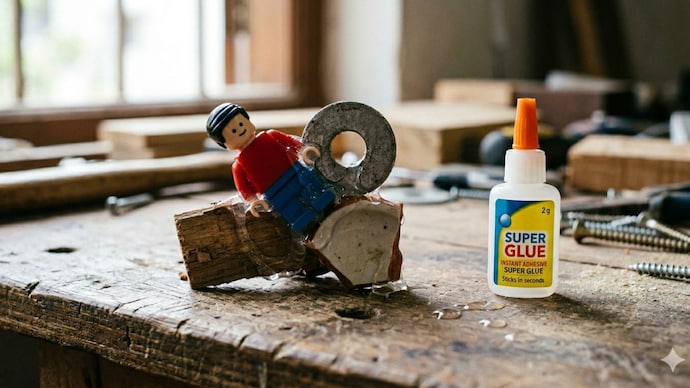
If Feviquick can stick metal, plastic, rubber and even skin within seconds, why doesn’t it stick to the inside of its own bottle? It sounds surprising, but the answer is simple science.
Feviquick, also known as super glue or cyanoacrylate adhesive, needs moisture to start working. Inside its sealed bottle, there is almost no moisture available, so the glue remains liquid.
Add a few stabilisers and moisture-resistant packaging, and you get a product that stays usable for months while still delivering the instant bonding that superglue is known for.
WHAT IS INSIDE FEVIQUICK?
The main ingredient in Feviquick is ethyl cyanoacrylate, a chemical that quickly forms strong bonds when exposed to moisture. The formulation also contains stabilisers that prevent the glue from hardening too early while it is stored inside the bottle.
HOW SUPER GLUE WORKS
When a drop of Feviquick comes in contact with air or a surface, it encounters tiny amounts of moisture.
This triggers a reaction called polymerisation, where small molecules join together to form long, strong chains. The liquid glue rapidly turns into a hard and transparent layer that bonds surfaces together. The reaction also releases a small amount of heat.
WHY IT DOESN’T HARDEN INSIDE THE BOTTLE
There are several reasons why Feviquick remains liquid inside its container:
The bottle is designed to keep moisture out.
Stabilisers slow down unwanted reactions.
The plastic container does not react with the glue.
The contents remain sealed from outside air.
However, if the bottle is left open for too long, moisture from the air can enter and cause the glue to harden or clog the nozzle.
WHY THE CAP OFTEN GETS STUCK
A tiny amount of glue usually remains on the nozzle after use. When that glue comes into contact with moisture in the air, it hardens and can seal the cap shut. Closing the cap tightly after every use helps reduce this problem.
FEVICOL VS FEVIQUICK
Although both are adhesives, they work differently.
Fevicol is mainly made from polyvinyl acetate (PVA) and water. It dries as water slowly evaporates.
Feviquick, on the other hand, is a cyanoacrylate adhesive that hardens almost instantly when it comes into contact with moisture.
A HAPPY ACCIDENT THAT CREATED SUPER GLUE
The story of super glue began in 1942 when Harry Coover Jr. was working on materials for gun sights during World War II. The chemical he created stuck too strongly to surfaces and was initially rejected.
In 1951, Coover and Fred Joyner revisited the material and realised its commercial value. The first super glue product, Eastman #910, reached the market in 1958. Coover later became known as “Mr. Super Glue”.
COMMON USES
Feviquick is widely used for:
- Household repairs
- Electronics
- Automotive parts
- Footwear and leather repairs
- Jewellery repairs
- Medical-grade wound closure products based on cyanoacrylate technology
SAFETY TIPS
- Avoid contact with skin and eyes.
- Do not use near cotton or wool, as the reaction can generate heat.
- Acetone-based nail polish remover can help remove hardened glue.
- Seek medical help if glue enters the eyes.
ALSO READ: Tourists can face heavy fines for wearing heels in this country. Know why
SHELF LIFE
- Up to 15 months when refrigerated at around 13°C and unopened.
- Around one year at room temperature when unopened.
- Best used within about 30 days after opening.
Feviquick does not stick to its own bottle because it needs moisture to start bonding. Airtight packaging, stabilisers and suitable container materials keep the glue stable inside the bottle. The moment it meets moisture in the air, the familiar superglue reaction begins, creating the fast, strong bond that makes Feviquick so effective.
If Feviquick can stick metal, plastic, rubber and even skin within seconds, why doesn’t it stick to the inside of its own bottle? It sounds surprising, but the answer is simple science.
Feviquick, also known as super glue or cyanoacrylate adhesive, needs moisture to start working. Inside its sealed bottle, there is almost no moisture available, so the glue remains liquid.
Add a few stabilisers and moisture-resistant packaging, and you get a product that stays usable for months while still delivering the instant bonding that superglue is known for.
WHAT IS INSIDE FEVIQUICK?
The main ingredient in Feviquick is ethyl cyanoacrylate, a chemical that quickly forms strong bonds when exposed to moisture. The formulation also contains stabilisers that prevent the glue from hardening too early while it is stored inside the bottle.
HOW SUPER GLUE WORKS
When a drop of Feviquick comes in contact with air or a surface, it encounters tiny amounts of moisture.
This triggers a reaction called polymerisation, where small molecules join together to form long, strong chains. The liquid glue rapidly turns into a hard and transparent layer that bonds surfaces together. The reaction also releases a small amount of heat.
WHY IT DOESN’T HARDEN INSIDE THE BOTTLE
There are several reasons why Feviquick remains liquid inside its container:
The bottle is designed to keep moisture out.
Stabilisers slow down unwanted reactions.
The plastic container does not react with the glue.
The contents remain sealed from outside air.
However, if the bottle is left open for too long, moisture from the air can enter and cause the glue to harden or clog the nozzle.
WHY THE CAP OFTEN GETS STUCK
A tiny amount of glue usually remains on the nozzle after use. When that glue comes into contact with moisture in the air, it hardens and can seal the cap shut. Closing the cap tightly after every use helps reduce this problem.
FEVICOL VS FEVIQUICK
Although both are adhesives, they work differently.
Fevicol is mainly made from polyvinyl acetate (PVA) and water. It dries as water slowly evaporates.
Feviquick, on the other hand, is a cyanoacrylate adhesive that hardens almost instantly when it comes into contact with moisture.
A HAPPY ACCIDENT THAT CREATED SUPER GLUE
The story of super glue began in 1942 when Harry Coover Jr. was working on materials for gun sights during World War II. The chemical he created stuck too strongly to surfaces and was initially rejected.
In 1951, Coover and Fred Joyner revisited the material and realised its commercial value. The first super glue product, Eastman #910, reached the market in 1958. Coover later became known as “Mr. Super Glue”.
COMMON USES
Feviquick is widely used for:
- Household repairs
- Electronics
- Automotive parts
- Footwear and leather repairs
- Jewellery repairs
- Medical-grade wound closure products based on cyanoacrylate technology
SAFETY TIPS
- Avoid contact with skin and eyes.
- Do not use near cotton or wool, as the reaction can generate heat.
- Acetone-based nail polish remover can help remove hardened glue.
- Seek medical help if glue enters the eyes.
ALSO READ: Tourists can face heavy fines for wearing heels in this country. Know why
SHELF LIFE
- Up to 15 months when refrigerated at around 13°C and unopened.
- Around one year at room temperature when unopened.
- Best used within about 30 days after opening.
Feviquick does not stick to its own bottle because it needs moisture to start bonding. Airtight packaging, stabilisers and suitable container materials keep the glue stable inside the bottle. The moment it meets moisture in the air, the familiar superglue reaction begins, creating the fast, strong bond that makes Feviquick so effective.

