Who is Nitin Gupta, IIT Kanpur professor who left technology for neuroscience?
IIT-JEE Rank 1, but no tech job,why did Nitin Gupta choose neuroscience? His unexpected career shift is now making waves in brain research. Here's how he went from IIT Kanpur to decoding human behaviour.
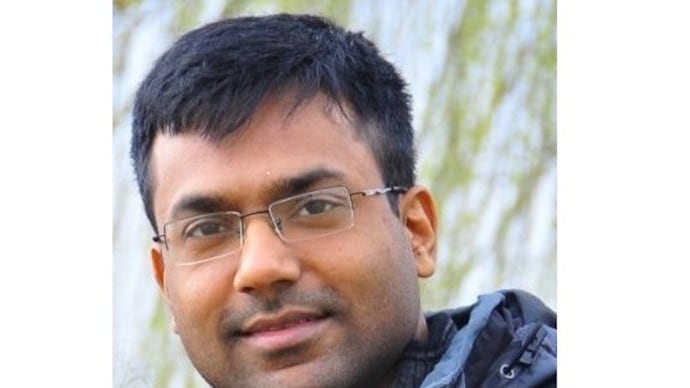
IIT-JEE Rank 1, but no tech job. Why did Nitin Gupta choose neuroscience? His unexpected career shift is now making waves in brain research. Here’s how he went from IIT Kanpur to decoding human behaviour.
Not every IIT topper follows the predictable route into tech or corporate leadership. Some choose to pursue deeper scientific questions that go beyond conventional career paths. Nitin Gupta is one such academic, whose journey reflects a shift from engineering to decoding how the brain works.
When he secured All India Rank 1 in IIT-JEE in 2000 and joined IIT Kanpur, a career in technology seemed almost certain. Instead, he moved steadily toward neuroscience, an area that combines biology, computation, and behaviour.
FROM IIT KANPUR TO GLOBAL RESEARCH LABS
Professor completed his BTech in Computer Science from IIT Kanpur in 2004. His early academic training was rooted in engineering, but his interests gradually expanded into biology and data science.
According to his professional profile, he went on to pursue a PhD at the University of California, San Diego (UCSD) between 2004 and 2009, specialising in Bioinformatics and Systems Biology.
During this period, his work focused on computational mass spectrometry, where he developed algorithms for identifying proteins and improving the reliability of biological data.
His research contributed to the emerging field of proteogenomics, which aims to better understand how genes translate into proteins.
He also gained industry exposure through roles at biotechnology and pharmaceutical firms such as Amgen and Genomatica, where computational research meets real-world applications.
SHIFTING FOCUS: FROM DATA TO THE HUMAN BRAIN
Gupta’s transition into neuroscience began during his postdoctoral research at UC San Diego, where he worked in a cognitive neuroscience lab. Here, he used tools like Transcranial Magnetic Stimulation (TMS) to study how motivation and brain activity are linked.
He later joined the National Institutes of Health (NIH), where he worked extensively on electrophysiology, studying how neurones communicate and how patterns of neural activity lead to perception. This phase marked a clear shift from analysing biological datasets to directly studying brain circuits.
BUILDING A NEUROSCIENCE PROGRAMME AT IIT KANPUR
Returning to IIT Kanpur in 2014, Gupta joined as a faculty member and went on to become an Associate Professor in 2020. His work today sits at the intersection of neuroscience, computation, and behaviour.
His lab focusses on how sensory inputs are processed by the brain to produce behaviour.
A major part of his research involves studying olfaction (sense of smell) using insect models like mosquitoes. By analysing how these organisms respond to different cues, such as human odours or repellents, his research maps how neural signals translate into actions.
This work has broader implications, particularly in understanding disease vectors and improving public health strategies.
EXTENDING RESEARCH BEYOND THE LAB
Beyond core neuroscience, Gupta has also contributed to mental health innovation. He has been involved in developing digital tools like “TreadWill,” a platform based on cognitive behavioural therapy (CBT), aimed at improving access to mental health care.
His teaching and research now also include areas such as stress management and mental well-being, showing a growing focus on applying neuroscience in everyday contexts.
A CAREER DRIVEN BY CURIOSITY
Gupta’s journey stands out for its interdisciplinary nature. From computer science to computational biology and then to neuroscience, his career has been shaped by a willingness to explore fundamental questions rather than follow conventional paths.
At its core, his work revolves around a single idea: understanding how the brain converts signals into behaviour. By combining multiple fields, he continues to push the boundaries of how we understand decision-making, perception, and human action.
IIT-JEE Rank 1, but no tech job. Why did Nitin Gupta choose neuroscience? His unexpected career shift is now making waves in brain research. Here’s how he went from IIT Kanpur to decoding human behaviour.
Not every IIT topper follows the predictable route into tech or corporate leadership. Some choose to pursue deeper scientific questions that go beyond conventional career paths. Nitin Gupta is one such academic, whose journey reflects a shift from engineering to decoding how the brain works.
When he secured All India Rank 1 in IIT-JEE in 2000 and joined IIT Kanpur, a career in technology seemed almost certain. Instead, he moved steadily toward neuroscience, an area that combines biology, computation, and behaviour.
FROM IIT KANPUR TO GLOBAL RESEARCH LABS
Professor completed his BTech in Computer Science from IIT Kanpur in 2004. His early academic training was rooted in engineering, but his interests gradually expanded into biology and data science.
According to his professional profile, he went on to pursue a PhD at the University of California, San Diego (UCSD) between 2004 and 2009, specialising in Bioinformatics and Systems Biology.
During this period, his work focused on computational mass spectrometry, where he developed algorithms for identifying proteins and improving the reliability of biological data.
His research contributed to the emerging field of proteogenomics, which aims to better understand how genes translate into proteins.
He also gained industry exposure through roles at biotechnology and pharmaceutical firms such as Amgen and Genomatica, where computational research meets real-world applications.
SHIFTING FOCUS: FROM DATA TO THE HUMAN BRAIN
Gupta’s transition into neuroscience began during his postdoctoral research at UC San Diego, where he worked in a cognitive neuroscience lab. Here, he used tools like Transcranial Magnetic Stimulation (TMS) to study how motivation and brain activity are linked.
He later joined the National Institutes of Health (NIH), where he worked extensively on electrophysiology, studying how neurones communicate and how patterns of neural activity lead to perception. This phase marked a clear shift from analysing biological datasets to directly studying brain circuits.
BUILDING A NEUROSCIENCE PROGRAMME AT IIT KANPUR
Returning to IIT Kanpur in 2014, Gupta joined as a faculty member and went on to become an Associate Professor in 2020. His work today sits at the intersection of neuroscience, computation, and behaviour.
His lab focusses on how sensory inputs are processed by the brain to produce behaviour.
A major part of his research involves studying olfaction (sense of smell) using insect models like mosquitoes. By analysing how these organisms respond to different cues, such as human odours or repellents, his research maps how neural signals translate into actions.
This work has broader implications, particularly in understanding disease vectors and improving public health strategies.
EXTENDING RESEARCH BEYOND THE LAB
Beyond core neuroscience, Gupta has also contributed to mental health innovation. He has been involved in developing digital tools like “TreadWill,” a platform based on cognitive behavioural therapy (CBT), aimed at improving access to mental health care.
His teaching and research now also include areas such as stress management and mental well-being, showing a growing focus on applying neuroscience in everyday contexts.
A CAREER DRIVEN BY CURIOSITY
Gupta’s journey stands out for its interdisciplinary nature. From computer science to computational biology and then to neuroscience, his career has been shaped by a willingness to explore fundamental questions rather than follow conventional paths.
At its core, his work revolves around a single idea: understanding how the brain converts signals into behaviour. By combining multiple fields, he continues to push the boundaries of how we understand decision-making, perception, and human action.

