Why Myntra, Amazon, and 30-minute deliveries haven't changed how I shop for clothes
Each piece of clothing in my wardrobe has a story because I didn't just randomly buy it online.
NGL, 30-minute clothes delivery has been a lifesaver. One evening in November 2025, I urgently needed a black blazer for an event. I simply didn’t have the time to make a trip to a mall or local market. That’s when Myntra Now came to the rescue. By the time the blazer arrived, I had finished my makeup and was almost ready to head out.
That was the first and the last time I used an instant clothes delivery service. Not because the service disappointed me. In fact, it worked exactly as promised. The blazer arrived quickly, fit well, and saved me from a last-minute wardrobe crisis. But that kind of urgency never arose again. More importantly, I simply don't enjoy shopping for clothes online.
That evening in November 2025 was, in fact, the last time I ordered a clothing item online. Since then, every addition to my wardrobe has come from a physical store. As fashion retail races towards 30-minute deliveries and one-click purchases, I find myself holding on to a surprisingly old-school habit—I still prefer shopping for clothes in person.
Online shopping has undoubtedly brought the world's best fashion to our doorsteps. It saves us from braving crowded malls and markets on weekends. I have seen the elderly in my family continue to upgrade their wardrobes independently, without having to step out frequently, thanks to the ease of shopping on their phones. It also, no doubt, offers a far wider range of brands, styles, and sizes than most physical stores can stock. For those living in smaller towns, online platforms have democratised access to fashion that was once limited to metro cities.
The convenience is hard to argue with. With endless options, discounts, reviews, and now even 30-minute deliveries, buying clothes has never been easier. And yet, despite all these advantages, I still find myself drawn to physical stores.
Why? The reasons are many.
To begin with, physical shopping feels lighter on the pocket. It’s not every day that I can take out the time to visit a market or a mall. But with a phone in hand, every day can easily become a shopping day.
All it takes is a carefully curated notification - "Pay Day Sale", "10 Hours of Mega Deals", or "Limited Stock Alert" - and before you know it, you're browsing items you never intended to buy. Sometimes, it's not even the products that draw you in but stress. Online shopping makes retail therapy incredibly easy to indulge in.
Physical shopping comes with a natural brake. Visiting a market or a mall requires planning, time, and effort, so I rarely do it on a whim. More often than not, I head out with a specific need in mind and return with exactly that. Without push notifications and flash sales constantly competing for attention, the shopping feels far more intentional.
No hidden surprises
Then there is the uncertainty that comes with online shopping. No matter how many pictures, videos, reviews, and size guides a website provides, there is always an element of surprise (an unpleasant one) involved.
The colour is sometimes different from what it looked like on the screen. The size may not fit as expected. The fabric can feel nothing like what the product description promised. And the garment simply doesn't sit on your body the way you imagined it would.
What makes it particularly frustrating is the amount of effort that goes into the purchase. You spend time browsing dozens of options, comparing styles, reading reviews, checking size charts, and finally placing the order. Then comes the wait for the package to arrive. And when it finally does, the result can be nothing but disappointment. Sure, most platforms make returns and exchanges fairly easy. But that doesn't change the fact that your time and effort have already been spent.
I still remember ordering a turquoise-and-yellow saree that I was excited to wear to an office Diwali party. The colours looked vibrant and beautiful online, and I spent quite some time deciding on it. But when the saree arrived, it wasn't even remotely close to what had been shown on the website. Mind you, this was purchased from a reputed platform and a well-known saree brand.
The disappointment wasn't just about the saree itself. By then, I had already mentally planned my outfit around it. In the end, I had to fall back on an old saree for the event.
In a physical store, I know exactly what I am getting. I get to feel the fabric, see the true colour, check the stitching quality and try the garment before paying for it. The decision is made with far fewer surprises, and that certainty is something I value.
And if you've had the privilege of living in the same city - or even the same neighbourhood - for years, chances are you have a few go-to shops that feel almost like an extension of your wardrobe. The owners know your preferences, keep an eye out for new collections that match your taste, and often offer prices that are better than what you'd find elsewhere.
Whenever there is any family wedding, I know I'm heading to Arora Sarees in Sarojini Nagar with my father. Over the years, they've come to understand exactly what we like. They not only give us great rates but are also honest enough to tell us when a piece isn't worth buying. That kind of trust and personal relationship is difficult to replicate online.
And that brings me to the emotional value of clothes. When I think of the most treasured pieces in my wardrobe, they are rarely the ones that cost the most. Instead, they are the clothes I bought with my parents from local markets.
Whether it's the birthday dresses they bought me when I turned 11, a kurta my father picked out from a section of a store because he thought it would suit me, or the glitzy golden lehenga fabric we all went to buy from Lajpat Nagar, those outfits carry memories of entire evenings spent browsing shops, debating colours and fabrics, and ending the trip with a meal together.
That's the thing about shopping in person - clothes become more than just clothes. They become reminders of a particular day, a particular place, and the people you were with. Had those purchases simply been the result of endless scrolling on my phone, I doubt they would hold the same meaning.
And then there is decision fatigue. What starts as a search for a simple black top can quickly turn into an hour-long exercise in comparing dozens of similar options. One has better reviews, another offers a bigger discount, and a third seems to have nicer fabric. Instead of making shopping easier, all those choices often leave me overthinking the purchase.
Ironically, what many consider online shopping's biggest strength - its endless variety - is often what works against it for me. There always seems to be one more product to consider, one more page to browse, and one more recommendation to evaluate.
Physical shopping isn't free of decision-making either, but it comes with natural limits. The market closes, my feet start hurting, or I simply decide it's time to head home. Online, the choices never seem to end.
But when online shopping does make sense to me, it really does.
One area where I genuinely appreciate it is when it comes to discovering homegrown brands. Many of these labels don't have physical stores across the country, and some operate entirely online. Without e-commerce, I would probably never come across their work. Online shopping has given countless independent designers and small businesses a chance to reach customers far beyond their own cities, making unique products accessible to people across India.
I've often found that shopping on the websites of such brands feels different from browsing large marketplaces. The experience is more focused, the selection is curated, and there is a stronger sense of the people and craftsmanship behind the product. In many cases, online platforms have helped level the playing field, allowing smaller labels to compete with established fashion giants.
And then there are situations like the black blazer incident. Sometimes life gets busy, deadlines pile up, events sneak up unexpectedly, and convenience becomes the priority. In those moments, being able to browse, order, and receive something without leaving home can feel nothing short of magical.
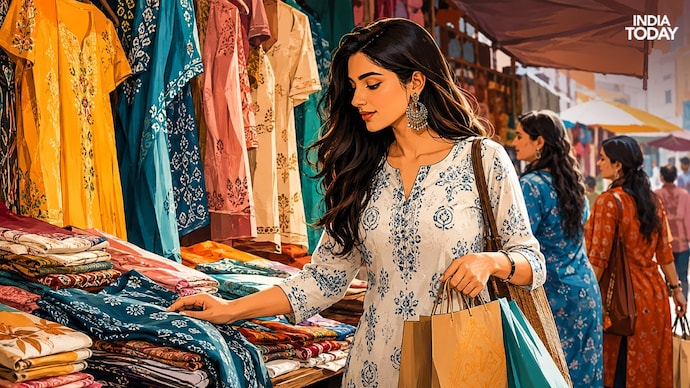
But I would still prefer the joy of discovering an underrated brand at a Dastkar Bazaar and hearing the story behind a design directly from the seller. I would rather stumble upon a quirky, eye-catching top hidden among heaps of clothes in a local market than find it through an algorithm.
NGL, 30-minute clothes delivery has been a lifesaver. One evening in November 2025, I urgently needed a black blazer for an event. I simply didn’t have the time to make a trip to a mall or local market. That’s when Myntra Now came to the rescue. By the time the blazer arrived, I had finished my makeup and was almost ready to head out.
That was the first and the last time I used an instant clothes delivery service. Not because the service disappointed me. In fact, it worked exactly as promised. The blazer arrived quickly, fit well, and saved me from a last-minute wardrobe crisis. But that kind of urgency never arose again. More importantly, I simply don't enjoy shopping for clothes online.
That evening in November 2025 was, in fact, the last time I ordered a clothing item online. Since then, every addition to my wardrobe has come from a physical store. As fashion retail races towards 30-minute deliveries and one-click purchases, I find myself holding on to a surprisingly old-school habit—I still prefer shopping for clothes in person.
Online shopping has undoubtedly brought the world's best fashion to our doorsteps. It saves us from braving crowded malls and markets on weekends. I have seen the elderly in my family continue to upgrade their wardrobes independently, without having to step out frequently, thanks to the ease of shopping on their phones. It also, no doubt, offers a far wider range of brands, styles, and sizes than most physical stores can stock. For those living in smaller towns, online platforms have democratised access to fashion that was once limited to metro cities.
The convenience is hard to argue with. With endless options, discounts, reviews, and now even 30-minute deliveries, buying clothes has never been easier. And yet, despite all these advantages, I still find myself drawn to physical stores.
Why? The reasons are many.
To begin with, physical shopping feels lighter on the pocket. It’s not every day that I can take out the time to visit a market or a mall. But with a phone in hand, every day can easily become a shopping day.
All it takes is a carefully curated notification - "Pay Day Sale", "10 Hours of Mega Deals", or "Limited Stock Alert" - and before you know it, you're browsing items you never intended to buy. Sometimes, it's not even the products that draw you in but stress. Online shopping makes retail therapy incredibly easy to indulge in.
Physical shopping comes with a natural brake. Visiting a market or a mall requires planning, time, and effort, so I rarely do it on a whim. More often than not, I head out with a specific need in mind and return with exactly that. Without push notifications and flash sales constantly competing for attention, the shopping feels far more intentional.
No hidden surprises
Then there is the uncertainty that comes with online shopping. No matter how many pictures, videos, reviews, and size guides a website provides, there is always an element of surprise (an unpleasant one) involved.
The colour is sometimes different from what it looked like on the screen. The size may not fit as expected. The fabric can feel nothing like what the product description promised. And the garment simply doesn't sit on your body the way you imagined it would.
What makes it particularly frustrating is the amount of effort that goes into the purchase. You spend time browsing dozens of options, comparing styles, reading reviews, checking size charts, and finally placing the order. Then comes the wait for the package to arrive. And when it finally does, the result can be nothing but disappointment. Sure, most platforms make returns and exchanges fairly easy. But that doesn't change the fact that your time and effort have already been spent.
I still remember ordering a turquoise-and-yellow saree that I was excited to wear to an office Diwali party. The colours looked vibrant and beautiful online, and I spent quite some time deciding on it. But when the saree arrived, it wasn't even remotely close to what had been shown on the website. Mind you, this was purchased from a reputed platform and a well-known saree brand.
The disappointment wasn't just about the saree itself. By then, I had already mentally planned my outfit around it. In the end, I had to fall back on an old saree for the event.
In a physical store, I know exactly what I am getting. I get to feel the fabric, see the true colour, check the stitching quality and try the garment before paying for it. The decision is made with far fewer surprises, and that certainty is something I value.
And if you've had the privilege of living in the same city - or even the same neighbourhood - for years, chances are you have a few go-to shops that feel almost like an extension of your wardrobe. The owners know your preferences, keep an eye out for new collections that match your taste, and often offer prices that are better than what you'd find elsewhere.
Whenever there is any family wedding, I know I'm heading to Arora Sarees in Sarojini Nagar with my father. Over the years, they've come to understand exactly what we like. They not only give us great rates but are also honest enough to tell us when a piece isn't worth buying. That kind of trust and personal relationship is difficult to replicate online.
And that brings me to the emotional value of clothes. When I think of the most treasured pieces in my wardrobe, they are rarely the ones that cost the most. Instead, they are the clothes I bought with my parents from local markets.
Whether it's the birthday dresses they bought me when I turned 11, a kurta my father picked out from a section of a store because he thought it would suit me, or the glitzy golden lehenga fabric we all went to buy from Lajpat Nagar, those outfits carry memories of entire evenings spent browsing shops, debating colours and fabrics, and ending the trip with a meal together.
That's the thing about shopping in person - clothes become more than just clothes. They become reminders of a particular day, a particular place, and the people you were with. Had those purchases simply been the result of endless scrolling on my phone, I doubt they would hold the same meaning.
And then there is decision fatigue. What starts as a search for a simple black top can quickly turn into an hour-long exercise in comparing dozens of similar options. One has better reviews, another offers a bigger discount, and a third seems to have nicer fabric. Instead of making shopping easier, all those choices often leave me overthinking the purchase.
Ironically, what many consider online shopping's biggest strength - its endless variety - is often what works against it for me. There always seems to be one more product to consider, one more page to browse, and one more recommendation to evaluate.
Physical shopping isn't free of decision-making either, but it comes with natural limits. The market closes, my feet start hurting, or I simply decide it's time to head home. Online, the choices never seem to end.
But when online shopping does make sense to me, it really does.
One area where I genuinely appreciate it is when it comes to discovering homegrown brands. Many of these labels don't have physical stores across the country, and some operate entirely online. Without e-commerce, I would probably never come across their work. Online shopping has given countless independent designers and small businesses a chance to reach customers far beyond their own cities, making unique products accessible to people across India.
I've often found that shopping on the websites of such brands feels different from browsing large marketplaces. The experience is more focused, the selection is curated, and there is a stronger sense of the people and craftsmanship behind the product. In many cases, online platforms have helped level the playing field, allowing smaller labels to compete with established fashion giants.
And then there are situations like the black blazer incident. Sometimes life gets busy, deadlines pile up, events sneak up unexpectedly, and convenience becomes the priority. In those moments, being able to browse, order, and receive something without leaving home can feel nothing short of magical.
But I would still prefer the joy of discovering an underrated brand at a Dastkar Bazaar and hearing the story behind a design directly from the seller. I would rather stumble upon a quirky, eye-catching top hidden among heaps of clothes in a local market than find it through an algorithm.

