Led by the Himalayas, he reached the presidential table and Asia's 50 Best
Leaving behind the rush of Mumbai, chef Prateek Sadhu moved to Himachal to create something far more meaningful than just a dining experience with Naar.
For many of us, eating out is no longer a spontaneous plan where you walk into a restaurant and see how things unfold. It begins much earlier, with an Instagram post you can't scroll past, a friend who won't stop raving about a place, or yet another "must-try" list doing the rounds. We're drawn to what's buzzing: restaurants everyone's talking about, dishes that are breaking the internet, and cuisines that suddenly go viral.
But amid all that noise, one chef is creating a quieter, more meaningful kind of buzz, straight from the hills.
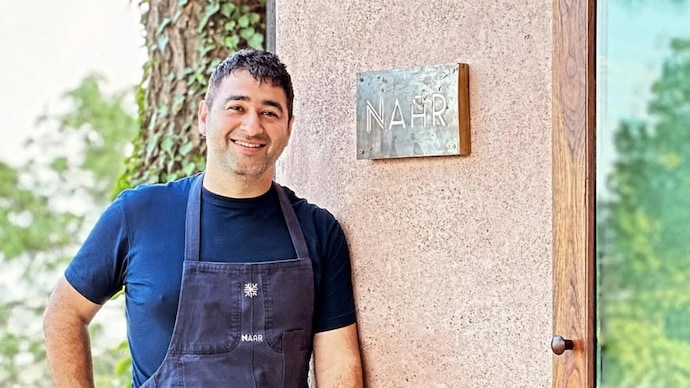
We're talking about Prateek Sadhu, whose brainchild, Naar, nestled in Kasauli, is bringing the Himalayas to life on a plate, and the world is taking notice, for all the right reasons. Translating to "fire" in Kashmiri, Naar recently secured the 30th spot on the Asia's 50 Best Restaurants 2026 list.
Before this, Sadhu was associated with Masque, widely regarded as one of India's most innovative restaurants, which also ranked 15th on the same list.
But then, in 2023, he chose to step away from the rush and relentless pace of Mumbai for the calm of the hills. Sadhu admits that Mumbai, and especially his time at Masque, played a defining role in shaping the chef he is today.
"It taught me discipline, scale, and ambition," he tells India Today. However, for him, the mountains weren't a business decision; they were instinct.
"I wanted to build something closer to who I am, not just what I do. I do miss Mumbai—the chaos, the energy, the constant movement. But here, I've found a different kind of clarity. And that's hard to walk away from."
Sadhu believes that at Naar, the relationship with the diner is very different.
"You don't just walk into Naar, you choose it. You travel for it. And that changes everything," he tells us, adding, "There's more openness, more patience. People arrive with intention, and that allows us to create something far more intimate and honest."
Nestled in Kasauli, Naar naturally raises a question: even as it's often touted as one of the country's most ambitious destination dining experiences, who really travels that far just for a meal?
According to Prateek Sadhu, it began with diners who were deeply invested in food. But that's no longer the whole picture. Today, it's also people seeking something harder to define: a pause, a shift, a feeling.
"We see artists, writers, travellers, people celebrating something, or sometimes just people trying to reconnect with themselves," he says.
The food then becomes part of a larger journey, not the only reason for it.
When it comes to what guests are served, Naar offers a menu that reimagines produce, flavours, and techniques from the Himalayan region, creating dishes that feel both inventive and deeply rooted. Ingredients are sourced exclusively from the belt, allowing each plate to reflect a strong sense of place.
For Sadhu, the idea is to push boundaries while still honouring the flavours and stories of the world's greatest mountain range.
Everything here is guided by the rhythm of nature. As the landscape shifts outside, so do the plates, evolving to represent the different seasons of the Himalayas.
Sadhu tells us, "I think we've spent a lot of time trying to reinterpret India for the world. Maybe it's time to just understand it better ourselves. When you go deep into a place, its ingredients, its people, its memory, the food naturally becomes relevant beyond borders. It doesn't need to be dressed up; it just needs to be honest."
With the buzz around Naar, it's only natural to wonder what sets their take on Himalayan cuisine apart. But for chef Prateek Sadhu, the intent isn't to elevate; it's to listen.
The focus isn't on making dishes appear sophisticated, but on understanding them deeply enough that every element feels deliberate. Sometimes, it's restraint, doing less, but with greater care, that transforms everything.
It's perhaps this very philosophy that has earned Naar a spot on Asia's 50 Best Restaurants. For Sadhu, seeing his dream project recognised brought a quiet sense of validation. "It felt quiet. Not loud or celebratory, just a sense of reassurance," he says.
When you choose to build something away from the mainstream, doubt is inevitable, he adds. But moments like these feel like being seen, without having to change who you are.
And that's not the only feather in the chef's cap. Earlier this year, Sadhu and his team curated a historic, Himalayan-themed state dinner at Rashtrapati Bhavan for India's President and European Union leaders.
He describes it as one of those rare moments that feel larger than oneself.
"Cooking at Rashtrapati Bhavan wasn't just about the food; it was about representing a way of thinking, a part of the country, a story. There's a certain weight to that responsibility, but also a lot of pride."
Meanwhile, in conversation with us, Sadhu also opened up about his earliest memories of food and how that relationship has evolved over time.
"Growing up in Kashmir, food was never separate from life. It was part of everything: family, seasons, even silence," he says.
Over the years, it has become more than just nourishment for him; it has turned into a language, a way to hold on to where he comes from, and to share that with others.
And, when it comes to comfort, he always goes back to simple Kashmiri meals: slow-cooked, familiar food that doesn't try too hard; it just feels like home.
At Naar, though, picking a favourite dish isn't that easy. It changes every day, depending on what the land offers. "That unpredictability keeps me grounded," he adds.
For Sadhu, local produce carries memory of the soil, the season, and the people who grew it. Cooking with it isn't just about creating a dish, but continuing something that already exists.
Before signing off, we asked what dining at Naar would feel like.
"It wouldn't feel like a typical restaurant meal," he says.
"You arrive in the mountains, and slowly, things begin to quiet down—the noise, the rush, the distractions. And then the meal starts to unfold, gently, almost like a conversation. By the end of it, I hope you don't just remember the food; you remember how it made you feel to be here."
For many of us, eating out is no longer a spontaneous plan where you walk into a restaurant and see how things unfold. It begins much earlier, with an Instagram post you can't scroll past, a friend who won't stop raving about a place, or yet another "must-try" list doing the rounds. We're drawn to what's buzzing: restaurants everyone's talking about, dishes that are breaking the internet, and cuisines that suddenly go viral.
But amid all that noise, one chef is creating a quieter, more meaningful kind of buzz, straight from the hills.
We're talking about Prateek Sadhu, whose brainchild, Naar, nestled in Kasauli, is bringing the Himalayas to life on a plate, and the world is taking notice, for all the right reasons. Translating to "fire" in Kashmiri, Naar recently secured the 30th spot on the Asia's 50 Best Restaurants 2026 list.
Before this, Sadhu was associated with Masque, widely regarded as one of India's most innovative restaurants, which also ranked 15th on the same list.
But then, in 2023, he chose to step away from the rush and relentless pace of Mumbai for the calm of the hills. Sadhu admits that Mumbai, and especially his time at Masque, played a defining role in shaping the chef he is today.
"It taught me discipline, scale, and ambition," he tells India Today. However, for him, the mountains weren't a business decision; they were instinct.
"I wanted to build something closer to who I am, not just what I do. I do miss Mumbai—the chaos, the energy, the constant movement. But here, I've found a different kind of clarity. And that's hard to walk away from."
Sadhu believes that at Naar, the relationship with the diner is very different.
"You don't just walk into Naar, you choose it. You travel for it. And that changes everything," he tells us, adding, "There's more openness, more patience. People arrive with intention, and that allows us to create something far more intimate and honest."
Nestled in Kasauli, Naar naturally raises a question: even as it's often touted as one of the country's most ambitious destination dining experiences, who really travels that far just for a meal?
According to Prateek Sadhu, it began with diners who were deeply invested in food. But that's no longer the whole picture. Today, it's also people seeking something harder to define: a pause, a shift, a feeling.
"We see artists, writers, travellers, people celebrating something, or sometimes just people trying to reconnect with themselves," he says.
The food then becomes part of a larger journey, not the only reason for it.
When it comes to what guests are served, Naar offers a menu that reimagines produce, flavours, and techniques from the Himalayan region, creating dishes that feel both inventive and deeply rooted. Ingredients are sourced exclusively from the belt, allowing each plate to reflect a strong sense of place.
For Sadhu, the idea is to push boundaries while still honouring the flavours and stories of the world's greatest mountain range.
Everything here is guided by the rhythm of nature. As the landscape shifts outside, so do the plates, evolving to represent the different seasons of the Himalayas.
Sadhu tells us, "I think we've spent a lot of time trying to reinterpret India for the world. Maybe it's time to just understand it better ourselves. When you go deep into a place, its ingredients, its people, its memory, the food naturally becomes relevant beyond borders. It doesn't need to be dressed up; it just needs to be honest."
With the buzz around Naar, it's only natural to wonder what sets their take on Himalayan cuisine apart. But for chef Prateek Sadhu, the intent isn't to elevate; it's to listen.
The focus isn't on making dishes appear sophisticated, but on understanding them deeply enough that every element feels deliberate. Sometimes, it's restraint, doing less, but with greater care, that transforms everything.
It's perhaps this very philosophy that has earned Naar a spot on Asia's 50 Best Restaurants. For Sadhu, seeing his dream project recognised brought a quiet sense of validation. "It felt quiet. Not loud or celebratory, just a sense of reassurance," he says.
When you choose to build something away from the mainstream, doubt is inevitable, he adds. But moments like these feel like being seen, without having to change who you are.
And that's not the only feather in the chef's cap. Earlier this year, Sadhu and his team curated a historic, Himalayan-themed state dinner at Rashtrapati Bhavan for India's President and European Union leaders.
He describes it as one of those rare moments that feel larger than oneself.
"Cooking at Rashtrapati Bhavan wasn't just about the food; it was about representing a way of thinking, a part of the country, a story. There's a certain weight to that responsibility, but also a lot of pride."
Meanwhile, in conversation with us, Sadhu also opened up about his earliest memories of food and how that relationship has evolved over time.
"Growing up in Kashmir, food was never separate from life. It was part of everything: family, seasons, even silence," he says.
Over the years, it has become more than just nourishment for him; it has turned into a language, a way to hold on to where he comes from, and to share that with others.
And, when it comes to comfort, he always goes back to simple Kashmiri meals: slow-cooked, familiar food that doesn't try too hard; it just feels like home.
At Naar, though, picking a favourite dish isn't that easy. It changes every day, depending on what the land offers. "That unpredictability keeps me grounded," he adds.
For Sadhu, local produce carries memory of the soil, the season, and the people who grew it. Cooking with it isn't just about creating a dish, but continuing something that already exists.
Before signing off, we asked what dining at Naar would feel like.
"It wouldn't feel like a typical restaurant meal," he says.
"You arrive in the mountains, and slowly, things begin to quiet down—the noise, the rush, the distractions. And then the meal starts to unfold, gently, almost like a conversation. By the end of it, I hope you don't just remember the food; you remember how it made you feel to be here."

