Helicopters | The great rush for rotorcraft
As India faces an unprecedented demand for both military and civil helicopters, private firms are tying up with foreign companies to meet it. It could be an important moment for India's ambitions as a self-reliant aerospace base
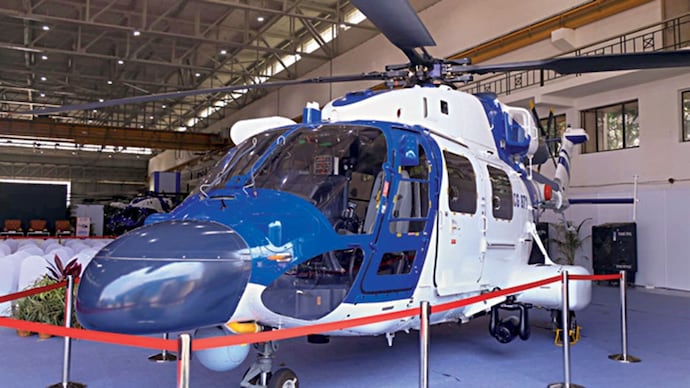
India is heading into a helicopter supercycle—and this time, much of the demand is to be met not through foreign procurement, but via foreign partnership with top Indian defence firms. That is because a majority of the Indian military’s current rotary-wing inventory, inducted between the 1960s and 1990s, is nearing obsolescence. With demand for over 1,000 helicopters over the next decade, the armed forces have to replace a rapidly ageing fleet and build the capacity to meet operational needs across land, sea and high-altitude frontiers. From light utility helicopters supplying troops in extreme Himalayan conditions to multi-role and maritime platforms supporting an expanding security footprint, rotary aviation is becoming central to India’s defence modernisation.
India is heading into a helicopter supercycle—and this time, much of the demand is to be met not through foreign procurement, but via foreign partnership with top Indian defence firms. That is because a majority of the Indian military’s current rotary-wing inventory, inducted between the 1960s and 1990s, is nearing obsolescence. With demand for over 1,000 helicopters over the next decade, the armed forces have to replace a rapidly ageing fleet and build the capacity to meet operational needs across land, sea and high-altitude frontiers. From light utility helicopters supplying troops in extreme Himalayan conditions to multi-role and maritime platforms supporting an expanding security footprint, rotary aviation is becoming central to India’s defence modernisation.
In a parallel development, the need for regional connectivity and emergency services has widened the market in the civilian sector as well. This has made helicopters critical infrastructure rather than niche assets for use by the rich and VIPs.
The surge in demand has seen global manufacturers scrambling for a piece of the action—Airbus Helicopters (France), Leonardo S.p.A. (Italy), Bell Textron (US) and Sikorsky (US) are deepening their footprint in India. Partnerships between Airbus Helicopters and Tata Advanced Systems Limited (TASL) and Leonardo S.p.A. with Adani Defence & Aerospace signal a shift toward local manufacturing ecosystems.
Noting that India currently accounts for less than 2 per cent of the global helicopter market, Ashish Rajvanshi, CEO of Adani Defence, says meeting this demand will require a strong domestic ecosystem that combines the strengths of public sector institutions, private industry and global technology partners. “Our focus is on building long-term aerospace manufacturing capacity in India so that critical platforms can be designed and produced and sustained within our nation, contributing to the broader vision of Aatmanirbhar Bharat,” he says.
According to industry estimates, India’s helicopter market is projected to grow from $1.58 billion (Rs 14, 975 crore) in 2024 to $2.88 billion (Rs 27,296 crore) by 2032.
THE DEFENCE IMPERATIVE
For decades, the armed forces have relied on Cheetah and Chetak helicopters—French-origin workhorses manufactured under licence in India by state-owned Hindustan Aeronautics Limited (HAL). Over 600 of these platforms are now nearing the end of their service lives.
The urgent need to replace the old machines is most visible in the Reconnaissance and Surveillance Helicopter (RSH) programme. Originally launched in 2008, the project has regained momentum following a fresh Request for Information (RFI) issued by the Union ministry of defence in 2025, valued at an estimated Rs 15,000-20,000 crore. The requirement is for 200 light helicopters for high altitude operations—120 for the Indian Army and 80 for the Indian Air Force. The emphasis is on Make in India through a joint venture between an Indian and foreign firm. The competition for the RSH programme reflects the frenetic activity in the sector.
Airbus Helicopters, for instance, will produce its H125 single-engine, light utility, high-altitude helicopters from 2027 through a joint venture with TASL, with a final assembly line being set up in Vemagal, Karnataka, which was inaugurated by Prime Minister Narendra Modi and French President Emmanuel Macron in February. As the first helicopter assembly line involving the private sector, it is a significant shift.
Also responding to the RSH programme, Mumbai-based Max Aerospace and Aviation have tied up with US manufacturer Bell Textron. They propose to assemble the single-engine light helicopter Bell 407GXi, with plans to set up an assembly line in Nagpur.
Maritime requirements are a pressing matter as well. The Naval Utility Helicopter (NUH) programme aims to replace ageing Chetaks used by the Indian Navy and Coast Guard. In August 2025, the MoD issued an RFI for 76 helicopters—51 for the navy and 25 for the Coast Guard—estimated at around Rs 5,000 crore. Expected to have a maximum take-off weight (MTOW) of 5.5 tonnes, these helicopters will support missions including search and rescue, medical evacuation and surveillance. Interestingly, HAL’s indigenous Utility Helicopter-Maritime (UH-M), which is designed for an MTOW of 5.8 tonnes, is also a contender, with the navy planning to acquire it when it is available from 2027.
Private sector alternatives are gaining traction here too. For the NUH programme, the Tata-Airbus partnership plans to offer the multi-role H160M. In February, Adani Defence & Aerospace announced a strategic partnership by signing a memorandum of understanding with Leonardo to develop a complete helicopter manufacturing ecosystem in India, from production and assembly to flight training. They are expected to offer the light, twin-engine, multirole AW 169M or similar platforms.
Separately, in 2024, the MoD signed a deal worth Rs 5,083 crore for the procurement of six ALH (Advanced Light Helicopter) Mk-III Maritime Role helicopters for the Coast Guard from HAL. Four were delivered in April 2026.
What does the entry of large private sector players like Tata and Adani and their tie-ups with foreign original equipment manufacturers (OEMs) mean for HAL, the backbone of India’s helicopter ecosystem? HAL has designed and manufactured acclaimed platforms such as the Advanced Light Helicopter (ALH) Dhruv and the Light Combat Helicopter (LCH) Prachand. Gopal Sutar, a former HAL official, says that India has entered an elite group of countries capable of end-to-end helicopter design, with HAL at the core of this capability. “These collaborations are bringing new capital, manufacturing practices and global supply chain integration into the Indian ecosystem,” Sutar says, adding that this shift is not a threat to HAL but a catalyst. Increased competition, he suggests, will push HAL to improve efficiency, accelerate production and innovate more aggressively.
HAL’s future will be anchored in advanced programmes like the Indian Multi-Role Helicopter (IMRH)—a medium-lift helicopter that will replace some of India’s large fleet of Russian-origin Mi17 transport copters—being developed in collaboration with French firm Safran, as well as its expansion into the civilian market with platforms like the Dhruv NG. Sutar, however, highlights such challenges as continued dependence on foreign engine supply chains and a looming shortage of skilled manpower.
THE CIVIL FRONTIER
While the military demand grabs headlines, the civilian helicopter market may hold greater long-term potential. India operates around 270 registered civil helicopters—a remarkably small fleet for a country of its size. At 0.18 helicopters per million people, India’s penetration is far below global benchmarks. The US has about 28 helicopters per million people, while Canada has 68.
The government is working to unlock potential in this sector through policy initiatives. The UDAN 5.1 scheme, for instance, focuses on helicopter routes to improve connectivity in remote and underserved regions. These services will enhance regional transportation, disaster response, emergency medical services, law enforcement and tourism.
Here, too, the industrial partnerships are becoming vital. The Tata-Airbus tie-up to produce the H125 will also manufacture civil versions of the rotorcraft. The Bell 407GXi, AW 169 and H 160 all have civil versions. HAL, too, will offer its Dhruv NG, a light, twin-engine multirole helicopter, representing the company’s first foray into the civilian-certified helicopter market.
Group Captain R.K. Narang (retd), a senior fellow at the Mnohar Parrikar Institute for Defence Studies and Analyses, identifies a key limitation of HAL: its platforms, primarily designed for military use, are often too costly and inefficient for civilian markets. “I suggest a risk-sharing approach, with HAL holding a 70-30 per cent stake and private players 20-30 per cent. Foreign OEMs should play an advisory role, not dominate manufacturing,” he says. Alternatively, Indian private sector collaborating with global OEMs should have ownership of IPR (intellectual property rights), a roadmap for manufacturing of critical components in India in a timebound manner, and the ability to modify, upgrade and develop future variants without needing the approval of OEMs, he adds. Narang further warns against over-reliance on licenced production models that lock India into long-term dependence—a familiar pattern in aircraft manufacturing in India.
India faces a strategic choice about how the huge demand for helicopters will be met. Only progressive policy choices and the ability of stakeholders to collaborate effectively will see India emerge as a global hub for helicopter manufacturing, with strong indigenous design capabilities and a competitive private sector.

