Operation Sindoor | The red lines get sharper
A year on from the conflict, Operation Sindoor has led India to adopt a tech-driven military modernisation, while Pakistan has been jolted into mending the cracks in its operational readiness and command structure
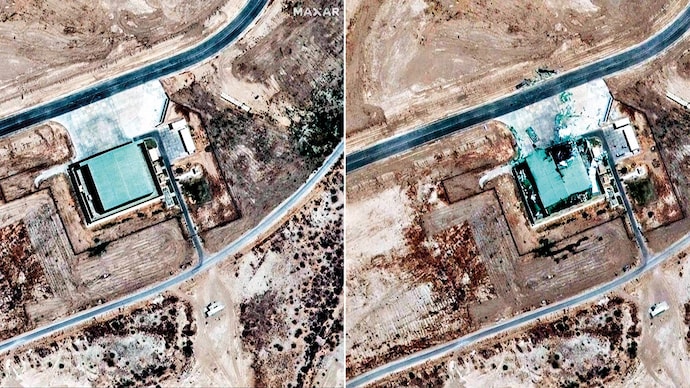
Operation Sindoor, which began with India’s missile strikes on nine terrorist hubs in Pakistan-occupied Kashmir (PoK) and its Punjab province, has just had its first anniversary. What lessons were learnt by the two adversaries from this 88-hour-long face-off over four intense days (May 7-10)? Airpower and air defences (AD), along with long-range artillery, were key factors, and electronic warfare (EW) and coordination between fighter aircraft, ground radars and Airborne Warning and Control System (AWACS) aircraft made this a truly smart war. Another new element was the introduction of asymmetric warfare tactics, with low-cost drones as well as cyber-attacks used by Pakistan, which were repelled effectively by India. After the first day, when Pakistan claimed to have shot down Indian fighter jets, the conflict swung in India’s favour, and Pakistan had no answer to the barrage of Indian BrahMos and SCALP missiles that hit deep and hard at eight of its air bases, leading to a ceasefire. Operation Sindoor was a short and sharp affair, and represents a paradigm shift in India-Pakistan conflicts.
Operation Sindoor, which began with India’s missile strikes on nine terrorist hubs in Pakistan-occupied Kashmir (PoK) and its Punjab province, has just had its first anniversary. What lessons were learnt by the two adversaries from this 88-hour-long face-off over four intense days (May 7-10)? Airpower and air defences (AD), along with long-range artillery, were key factors, and electronic warfare (EW) and coordination between fighter aircraft, ground radars and Airborne Warning and Control System (AWACS) aircraft made this a truly smart war. Another new element was the introduction of asymmetric warfare tactics, with low-cost drones as well as cyber-attacks used by Pakistan, which were repelled effectively by India. After the first day, when Pakistan claimed to have shot down Indian fighter jets, the conflict swung in India’s favour, and Pakistan had no answer to the barrage of Indian BrahMos and SCALP missiles that hit deep and hard at eight of its air bases, leading to a ceasefire. Operation Sindoor was a short and sharp affair, and represents a paradigm shift in India-Pakistan conflicts.
It demonstrated India’s ability to impose a calibrated escalation and penetrate deep into Pakistan, while revealing cracks within Pakistan’s operational readiness, command structure and deterrence credibility. In the following months, the Indian military sped up its modernisation, whereas Pakistan was pushed into urgent command restructuring, defence pacts and emergency procurements from China and Turkey.
INDIA GEARS UP
Op. Sindoor marked a decisive change in India’s military doctrine—a transition towards technology-driven and integrated warfare. The conflict also altered India’s strategic doctrine. A formal “zero-tolerance” policy now treats any major terrorist attack on Indian soil as an act of war.
Speaking on the anniversary of the conflict on May 7, Deputy Chief of the Army Staff (Strategy) Lt Gen. Rajiv Ghai, who was director general military operations during Op. Sindoor, said no terror sanctuary across the LOC was safe. “We will hit everythinggo after everything.... But the conditions, timing and method will be ours,” Lt Gen. Ghai said.
For India, the past year has seen a massive emphasis on air defence and counter-drone warfare. Though Pakistani drones and missiles were intercepted, this is considered an evolving threat—India has accelerated deployment of S-400 air defence systems, advanced the indigenous Project Kusha (a long-range surface-to-air missile programme) and further intensified the AD integration between the army’s Akashteer system, the IAF’s Integrated Air Command and Control System (IACCS), and the Navy’s TRIGUN. Mission Sudarshan Chakra aims to build a unified national air defence shield. The conflict also demonstrated the efficacy of decades-old artillery pieces like the Bofors L70 anti-aircraft guns and Pechora S-125 surface-to-air missiles, which provided a shield against Pakistani drones.
Drone warfare moved to the centre of military planning after Op. Sindoor highlighted the importance of loitering munitions, kamikaze drones, swarm systems and surveillance platforms, leading to an increased investment in indigenous low-cost Unmanned Aeral Vehicles (UAVs) and AI-enabled autonomous, EW-resistant systems. India has also accelerated the development of precision-guided munitions and deep-strike missiles beyond the 300 km range.
THE MILITARY PIVOTS
With PAF fighter jets posing a threat during Op. Sindoor, the IAF is prioritising beyond-visual-range combat, integrated air battlespace management and network-centric warfare. Combat aircraft modernisation received a boost—there is focus on more Rafale acquisitions and on the indigenous multi-role stealth Advanced Medium Combat Aircraft (AMCA) programme.
The conflict reinforced the growing importance of cyber warfare and digital infrastructure security. India is now integrating cyber defence and counter-disinformation operations more closely into military planning.
Organisationally, the army moved the fastest. It raised Bhairav Battalions—light commando units trained for rapid cross-border and mountain operations with integrated drone expertise. Rudra Brigades emerged as combined formations integrating infantry, armour, artillery, drones and AD. Ashni Drone Platoons were introduced across infantry battalions, embedding drones into frontline combat formations.
Finally, triservice integration has become central to India’s military doctrine. Joint operational planning, integrated execution, logistics modernisation and surveillance expansion have accelerated.
PAKISTAN’S RECALIBRATION
A number of Pakistan’s vulnerabilities were exposed as India struck its air bases at will. Those attacks, especially the strike on the Nur Khan air base near the Pakistan army’s general headquarters in Rawalpindi, conveyed the impression that India was prepared to dismantle the Pakistani command-and-control edifice by severing functional linkages between GHQ, corps headquarters and subordinate formations through the destruction of key personnel and infrastructure. Pakistan asked for a ceasefire on May 10 because it calculated this risk, feel Indian government sources.
Another weakness lay underneath the establishment in August 2025 of the Pakistan Army Rocket Force Command (ARFC), which is built around the FATAH-series of missiles/ rocket systems. The restructuring of artillery formations at Gujranwala and Pano Aqil into ARF Division (North) and ARF Division (South), along with the induction of additional missile regiments under direct GHQ control indicates past deficiencies in long-range strike capability and battlefield deterrence. Similarly, Pakistan’s air defences had underperformed during Op. Sindoor. The Pakistan Air Force’s (PAF) purchase of Turkish KORKUT air defence systems suggests a need to improve its aerial threat protection.
By consolidating the authority of the Pakistan army chief under the new post of the Chief of Defence Forces and abolishing the office of the chairman of the joint chiefs of staff committee, Pakistan appears to have acknowledged weaknesses in inter-services coordination. Pakistan army chief Field Marshal Asim Munir is the new CDS, with overall command of all the three services. The establishment of the National Strategic Command under an army lieutenant general also suggests an effort to restore credibility to Pakistan’s nuclear posture and deterrence, which has weakened due to India’s willingness to undertake military operations, brushing aside Islamabad’s age-old nuclear threat. Pakistan’s Strategic Mutual Defence Agreement (SMDA) with Saudi Arabia, which formalises decades-old security ties and has a clause of mutual assistance during conflict, is also seen as a deterrent against any fresh Indian action like Op. Sindoor.
A NEW DRONE FORCE
With most of its UAVs unable to penetrate India’s AD systems, Pakistan wants to beef up its drone force. Its subsequent defence contracts with China for the long-range CH-4 and CH-5 drones and SA-180 loitering munitions indicate this. The push to develop a UAV force underscores deficiencies in intelligence, surveillance and reconnaissance (ISR) and battlefield awareness. The emphasis on ISR drones suggests that Pakistanis acknowledge their inadequate surveillance and precision engagement capabilities.
Pakistan’s military purchases go far beyond the type of equipment used in Op. Sindoor—a wide range of hardware is being acquired to paper over various shortcomings, say the sources. If the procurement of Turkish OMTAS and ERYX anti-tank missile systems points toward deficiencies in anti-armour capability identified during operational assessments, the induction of Chinese Z-10ME attack helicopters indicates the need to bolster close air support abilities. Pakistani efforts to establish a new 155 mm artillery ammunition production facility point to concerns over dependence on external supply chains. The phased acquisition of over 25 regiments of Chinese SH-15 mounted gun systems is believed to reflect worries about artillery mobility and India’s accurate targeting of Pakistani artillery units.
Operation Sindoor has reshaped the military posture of India and Pakistan.

