Exclusive interview with CDS Gen. Anil Chauhan | 'Operation Sindoor was our first network centric war'
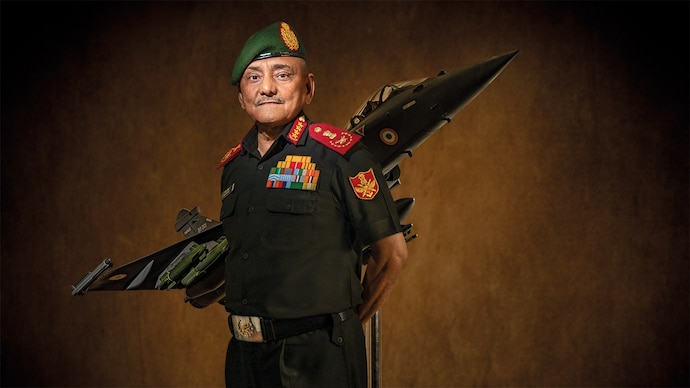
India's military stands at a moment of profound transition. The rules of warfare are being rewritten in real time—by drones and artificial intelligence, cyber conflict and electronic warfare, contested borders and rapidly shifting geopolitical fault lines. For the man at the centre of that transformation, Chief of Defence Staff General Anil Chauhan, the challenge has been not just preparing for the next war, but redesigning India's military for a new era of conflict. In a wide-ranging interview with India Today Group Editorial Director Raj Chengappa and Deputy Editor Pradip R. Sagar, just days before demitting office after a four-year stint, Gen. Chauhan reflects on the defining challenges of his tenure and outlines how India's armed forces are preparing for this radically changing battlespace—from Operation Sindoor and the China challenge to theatre commands, drones, cyber warfare and AI. Excerpts:


Q. How did Operation Sindoor change India’s thinking in terms of deterrence and military response?
Operation Sindoor was fundamentally different from the kind of operations or warfare we had witnessed earlier. In many ways, it represented our first truly multi-domain operation. All three services worked together in an integrated manner, but beyond that, we also brought in elements of cyberspace and information warfare as part of the operational framework. This level of coordination was not achieved overnight. It was the result of sustained efforts over the past three to four years towards greater jointness and integration among the services. During the operation, that integration played out exceptionally well. At several levels, the coordination and understanding between the services were remarkable. For me, this operation was a strong reaffirmation that the path we have taken towards integration and jointness is the correct one.
Q. What were the biggest lessons of Operation Sindoor?
One strategic lesson is that nations today increasingly find it easier to use force because technology allows highly precise strikes with limited collateral damage. Earlier, there was greater hesitation because war meant large-scale destruction and civilian casualties. Precision warfare has altered that calculation. But while countries may know how to start conflicts, many still struggle with understanding when and how to stop. In Sindoor, we won because we understood when to do so. One important aspect of our own operations was that we knew how to calibrate the use of force at the appropriate time and when to disengage.
Q. Why do you think India won Sindoor decisively?
A tremendous amount of preparation went into the operation before the first strike. Intelligence agencies, military intelligence and operational planners were continuously updating target information because terrorist elements were shifting locations. Precise geospatial targeting data was prepared for every strike. Resources were repositioned from the eastern sector, air assets were moved and forces mobilised. India’s intention from the beginning was clear: conduct precise punitive strikes on terror targets, demonstrate capability and avoid unnecessary escalation. We were able to do that because we had better networks and superior situational awareness. We knew what we had hit, what effect it had created, and we knew when Pakistani strikes had been neutralised. That gave us escalation control. We could escalate or de-escalate at will because we understood the battlefield better than the adversary.
Q. How did India achieve escalation dominance during Sindoor?
We disrupted Pakistan’s radar systems heavily through our strikes. These attacks created major dilemmas for their air defence network. They had to switch off many of their radars to avoid being targeted by us. Pakistan became blind. That opened operational corridors for Indian strikes deep inside Pakistan. Pakistan believed many of its strikes had succeeded because it lacked accurate battle damage assessment. In fact, after the operation, they were reportedly trying to source imagery from open sources and foreign providers because they did not have clarity on the actual effects. That informational superiority gave us the operational edge. By the time they initiated contact for talks, they realised India retained escalation dominance. That was one of the principal reasons why they sought an immediate ceasefire. Pakistan had expected operations to continue for a much longer duration, but within a far shorter period, they realised they were being hit at strategic depths and that they did not possess a clear understanding of the operational picture.
Q. Pakistan claimed India suffered losses. Is that true?
No war is entirely one-sided. There are some losses in every conflict. But losses matter only if they affect morale or reduce operational capability. In our case, they did not. None of it impacted us in a way that would deter us. Indian operations continued aggressively—aircraft kept flying, strikes continued and the operational tempo remained high. Pakistan, on the other hand, could not fly as it increasingly relied on ground-launched systems. India conducted offensive air operations throughout till cessation of hostilities was announced.
Q. Was there concern that Pakistan would resort to nuclear escalation?
No such signalling was observed from Pakistan during the operation. India’s doctrine remains based on two pillars—No First Use and massive retaliation. Ironically, that doctrine creates greater space for conventional military operations because Pakistan knows that if they resorted to even one tactical nuclear attack, we would respond with massive retaliation across its territory. We have sent them strong messaging that every terror strike would be increasingly counterproductive for them. If Pakistan thinks it acquired nuclear weapons to nullify the conventional asymmetry in India’s favour, they are mistaken. India is constantly improving and expanding the depth of our conventional response to their terror attacks, as illustrated from the strikes after Uri, Balakot and now Operation Sindoor. So, that’s a major challenge for them.
Q. Did China actively support Pakistan in the conflict?
There are facts, reasonable assumptions and speculation. The fact is that nearly 70 per cent of Pakistan’s military inventory today is of Chinese origin. It is also natural that original equipment manufacturers support equipment during wartime. Commercial satellite imagery is widely available today. Whether intelligence-sharing crossed into deeper operational cooperation is difficult to conclusively establish. There were instances that raised suspicions. For example, Pakistan appeared aware of some Indian land deployments, but that is more likely due to human intelligence. I do not believe China would open a classic second front during such a conflict. Support may come through technology, intelligence, cyber or strategic domains rather than through a direct land war. Any future India-China conflict is also likely to remain localised rather than escalate into a full-scale front-wide war.
Q. After the 2020 Galwan crisis and the larger Chinese intrusions along the Line of Actual Control, what is the possibility of similar situations arising again? What has changed on the ground since then?
What has fundamentally changed is the density of deployment and the level of surveillance along the LAC. Earlier, deployments on both sides were relatively thin. Patrols would move through extremely difficult terrain—forests, mountains and remote tracks—and, often, the two sides would not even encounter each other physically. In those days, patrols would sometimes only discover signs that the other side had passed through the area—cigarette packets, food tins, rum bottles, markings or temporary indicators deliberately left behind to mark territory. Today, however, the situation is very different. Infrastructure has improved significantly, troop density has increased and technology has transformed surveillance capabilities. There are now sensors, cameras, UAVs and better monitoring systems. As a result, movement is detected far more quickly, and both sides are far more aware of activity along the frontier.
Q. What is the impact of this improved monitoring system at the LAC?
Because of this, the probability of face-to-face encounters has naturally increased. Any such interaction can remain routine and benign, or it can become tense, depending on the sensitivity of the area and the circumstances at that moment. That is why confidence-building measures (CBMs), protocols and disciplined military engagement mechanisms remain extremely important. At the tactical level, local commanders and patrols on both sides operate under pressure because every patrol seeks to assert its own territorial perception. Therefore, maintaining established protocols and communication channels is essential to prevent local incidents from escalating unnecessarily.
Q. Where do things stand today in terms of disengagement and de-escalation with China on the LAC?
Physical disengagement has taken place in many places, and troops have stepped back from immediate face-offs. The next stage is de-escalation and eventual de-induction of the large force levels that had been mobilised after 2020. Some movement in that direction has already taken place, particularly unilaterally on the Chinese side, where certain offensive formations have reportedly gone back to peacetime locations. However, a broader and formal understanding on force levels—similar to earlier agreements where military exercises and deployments were regulated through mutual notification mechanisms—is still evolving through diplomatic and military dialogue channels. Ultimately, if the situation continues to stabilise, force levels may reduce gradually and naturally as both sides assess that such large deployments are no longer necessary. But that process will depend on continued stability and mutual confidence on the ground.
Q. What about better preparedness at the LAC?
That’s another major lesson from Galwan: the importance of preparedness and sustained deployment capability. Over the past few years, we have carried out a major rebalancing of forces towards the northern borders. That has involved the deployment of additional infantry, armour, aviation assets, logistics support, ammunition stocking, habitat creation and infrastructure development for long-duration deployment in high-altitude areas. Large quantities of reserves, rations, ammunition and winter stocking had to be created and sustained. We also validated several operational concepts through exercises and deployments over multiple winters. At the same time, our surveillance and information systems have improved significantly. Infrastructure development along the border has accelerated, mobility has improved and our ability to monitor developments in real time is far stronger today. The overall level of preparedness, operationally and logistically, is much higher now. The effort to strengthen infrastructure and capabilities along the northern borders is continuing.
Q. What are the other major learnings from these two conflicts—with Pakistan, and earlier, with China?
One is that warfare is shifting rapidly. Earlier warfare was platform-centric—tanks, aircraft and ships operating largely in separate domains. Today, warfare is network-centric. There are sensors everywhere—satellites, UAVs, mobile phones, cameras, civilian infrastructure—and they enable us to strike with greater precision and speed. The battlefield has become transparent. We are now transitioning from network-centric warfare to data-centric warfare and eventually toward AI-driven intelligent warfare. AI will increasingly assist commanders by analysing historical data, predicting outcomes and helping decision-making. The battlefield is no longer confined to land, sea and air. Warfare now includes cyber, space, information and cognitive domains. Air warfare itself has expanded vertically—from low-altitude drone warfare to hypersonic systems operating near space. Maritime warfare includes seabed warfare. Urban and subterranean warfare has become a critical lesson from conflicts like Gaza. At the same time, lower airspace has become saturated with drones, loitering munitions and autonomous systems. Beyond the physical domains, entirely new battlefronts have emerged—cyber, space, information warfare and the cognitive domain. Modern conflict is increasingly being fought not only in the physical realm, but also in the informational, digital and psychological realms. If our armed forces fail to adapt rapidly to these changes, they risk becoming obsolete. Our greatest challenge today, therefore, is not merely acquiring new systems, but also understanding these changes, integrating technologies across services, educating personnel and building a coherent roadmap for the future.
Q. There is also a concern about low-cost drones being used against high-value military assets. How is India adapting to this challenge?
That is a very important point. The cost asymmetry is real—relatively inexpensive drones can potentially threaten high-value targets if not properly countered. Earlier, air bases and forward infrastructure were built keeping in mind the range of aircraft and missiles of that era. But today, the reach of long-range missiles and drones has increased significantly. This changes the entire logic of base location, protection and survivability. We cannot simply relocate infrastructure at will. Airfields, logistics hubs and operational bases are tied to geography, terrain and strategic requirements. The answer is not just mobility, but resilience. We need a layered approach. First, a robust counter-UAS (Unmanned Aerial System) and air defence network that can detect, track and neutralise incoming drones and aerial threats. This must be integrated across multiple layers of surveillance and weapon systems. Second, passive protection measures become equally important—camouflage, concealment, dispersion, hardened shelters, underground facilities and redundancy of assets. Both active and passive measures must work together. Third, we will need greater civil-military coordination and infrastructure integration. In many cases, dual-use infrastructure and civil-military fusion will become important to optimise resources while enhancing resilience. Ultimately, the future battlefield will require integrated systems where drones, air defence, surveillance and command networks operate as a single ecosystem. Only then can we manage the offensive and defensive challenges posed by these rapidly evolving technologies.
Q. You have been planning to establish the theatre command system. Why is there a delay in implementation?
This reform is not merely administrative; it is fundamentally about warfighting. The challenge was never conceptual agreement but integration. The services historically operated on separate networks, communication systems, maintenance protocols and organisational cultures. Jointness, in my view, is first a mindset. It is the confidence and willingness of officers and commanders across services to work together seamlessly. Integration is the next stage—physically connecting systems, networks, logistics and operational structures so that the three services can function as one cohesive force. Only after that can theatre commands truly succeed operationally. Earlier, each service chief was individually responsible for threats emerging in his own domain. Modern warfare has become multi-domain and extremely complex. Land, air, sea, cyber, space, electronic warfare and information operations are now deeply interconnected. No single service can fight effectively in isolation anymore. That realisation helped overcome much of the earlier resistance. Today, I would say there is broad consensus among the services on the way ahead. Some issues still remain under discussion, but the overall framework has largely matured. Recommendations have already been made to move forward with implementation. I believe that once formally approved, theatre commands could become operational within roughly two years.
Q. How would you assess the effectiveness of the Agniveer scheme?
The way we describe modern warfare, there could hardly be a better concept than the Agniveer scheme. It ensures that there is a cycle of renewal every four years in the force. In earlier structures, a soldier might serve for 15-16 years without that level of systematic rotation and technological refresh, and as the battlefield event changes, he risks being out of sync with the current realities of war. With Agniveer, the force is continuously infused with new-age personnel who are more aligned with evolving technologies and doctrines, while still maintaining a blend with experienced soldiers. This creates a healthy mix of experience and fresh perspective. Conceptually, it is a strong model for modern warfare, where adaptability and rapid learning are essential. It brings continuous renewal into the force structure and, in principle, it should succeed.
Q. How do you balance self-reliance with urgent operational needs for equipment purchases?
Self-reliance today is no longer a separate objective—it is an operational necessity. In modern warfare, you are not just buying equipment; you are buying an ecosystem. If that ecosystem is externally controlled, it affects operational flexibility, security, upgrades and surprise. That is why self-reliance is directly linked to operational effectiveness. It ensures control over integration, upgrades and innovation within our own warfighting network. There is also a security dimension. In a network-centric battlefield, systems continuously generate and transmit data. External dependence can create constraints on autonomy and visibility. Aatmanirbharta, therefore, is essential for future military effectiveness. n
Q. How did Operation Sindoor change India’s thinking in terms of deterrence and military response?
Operation Sindoor was fundamentally different from the kind of operations or warfare we had witnessed earlier. In many ways, it represented our first truly multi-domain operation. All three services worked together in an integrated manner, but beyond that, we also brought in elements of cyberspace and information warfare as part of the operational framework. This level of coordination was not achieved overnight. It was the result of sustained efforts over the past three to four years towards greater jointness and integration among the services. During the operation, that integration played out exceptionally well. At several levels, the coordination and understanding between the services were remarkable. For me, this operation was a strong reaffirmation that the path we have taken towards integration and jointness is the correct one.
Q. What were the biggest lessons of Operation Sindoor?
One strategic lesson is that nations today increasingly find it easier to use force because technology allows highly precise strikes with limited collateral damage. Earlier, there was greater hesitation because war meant large-scale destruction and civilian casualties. Precision warfare has altered that calculation. But while countries may know how to start conflicts, many still struggle with understanding when and how to stop. In Sindoor, we won because we understood when to do so. One important aspect of our own operations was that we knew how to calibrate the use of force at the appropriate time and when to disengage.
Q. Why do you think India won Sindoor decisively?
A tremendous amount of preparation went into the operation before the first strike. Intelligence agencies, military intelligence and operational planners were continuously updating target information because terrorist elements were shifting locations. Precise geospatial targeting data was prepared for every strike. Resources were repositioned from the eastern sector, air assets were moved and forces mobilised. India’s intention from the beginning was clear: conduct precise punitive strikes on terror targets, demonstrate capability and avoid unnecessary escalation. We were able to do that because we had better networks and superior situational awareness. We knew what we had hit, what effect it had created, and we knew when Pakistani strikes had been neutralised. That gave us escalation control. We could escalate or de-escalate at will because we understood the battlefield better than the adversary.
Q. How did India achieve escalation dominance during Sindoor?
We disrupted Pakistan’s radar systems heavily through our strikes. These attacks created major dilemmas for their air defence network. They had to switch off many of their radars to avoid being targeted by us. Pakistan became blind. That opened operational corridors for Indian strikes deep inside Pakistan. Pakistan believed many of its strikes had succeeded because it lacked accurate battle damage assessment. In fact, after the operation, they were reportedly trying to source imagery from open sources and foreign providers because they did not have clarity on the actual effects. That informational superiority gave us the operational edge. By the time they initiated contact for talks, they realised India retained escalation dominance. That was one of the principal reasons why they sought an immediate ceasefire. Pakistan had expected operations to continue for a much longer duration, but within a far shorter period, they realised they were being hit at strategic depths and that they did not possess a clear understanding of the operational picture.
Q. Pakistan claimed India suffered losses. Is that true?
No war is entirely one-sided. There are some losses in every conflict. But losses matter only if they affect morale or reduce operational capability. In our case, they did not. None of it impacted us in a way that would deter us. Indian operations continued aggressively—aircraft kept flying, strikes continued and the operational tempo remained high. Pakistan, on the other hand, could not fly as it increasingly relied on ground-launched systems. India conducted offensive air operations throughout till cessation of hostilities was announced.
Q. Was there concern that Pakistan would resort to nuclear escalation?
No such signalling was observed from Pakistan during the operation. India’s doctrine remains based on two pillars—No First Use and massive retaliation. Ironically, that doctrine creates greater space for conventional military operations because Pakistan knows that if they resorted to even one tactical nuclear attack, we would respond with massive retaliation across its territory. We have sent them strong messaging that every terror strike would be increasingly counterproductive for them. If Pakistan thinks it acquired nuclear weapons to nullify the conventional asymmetry in India’s favour, they are mistaken. India is constantly improving and expanding the depth of our conventional response to their terror attacks, as illustrated from the strikes after Uri, Balakot and now Operation Sindoor. So, that’s a major challenge for them.
Q. Did China actively support Pakistan in the conflict?
There are facts, reasonable assumptions and speculation. The fact is that nearly 70 per cent of Pakistan’s military inventory today is of Chinese origin. It is also natural that original equipment manufacturers support equipment during wartime. Commercial satellite imagery is widely available today. Whether intelligence-sharing crossed into deeper operational cooperation is difficult to conclusively establish. There were instances that raised suspicions. For example, Pakistan appeared aware of some Indian land deployments, but that is more likely due to human intelligence. I do not believe China would open a classic second front during such a conflict. Support may come through technology, intelligence, cyber or strategic domains rather than through a direct land war. Any future India-China conflict is also likely to remain localised rather than escalate into a full-scale front-wide war.
Q. After the 2020 Galwan crisis and the larger Chinese intrusions along the Line of Actual Control, what is the possibility of similar situations arising again? What has changed on the ground since then?
What has fundamentally changed is the density of deployment and the level of surveillance along the LAC. Earlier, deployments on both sides were relatively thin. Patrols would move through extremely difficult terrain—forests, mountains and remote tracks—and, often, the two sides would not even encounter each other physically. In those days, patrols would sometimes only discover signs that the other side had passed through the area—cigarette packets, food tins, rum bottles, markings or temporary indicators deliberately left behind to mark territory. Today, however, the situation is very different. Infrastructure has improved significantly, troop density has increased and technology has transformed surveillance capabilities. There are now sensors, cameras, UAVs and better monitoring systems. As a result, movement is detected far more quickly, and both sides are far more aware of activity along the frontier.
Q. What is the impact of this improved monitoring system at the LAC?
Because of this, the probability of face-to-face encounters has naturally increased. Any such interaction can remain routine and benign, or it can become tense, depending on the sensitivity of the area and the circumstances at that moment. That is why confidence-building measures (CBMs), protocols and disciplined military engagement mechanisms remain extremely important. At the tactical level, local commanders and patrols on both sides operate under pressure because every patrol seeks to assert its own territorial perception. Therefore, maintaining established protocols and communication channels is essential to prevent local incidents from escalating unnecessarily.
Q. Where do things stand today in terms of disengagement and de-escalation with China on the LAC?
Physical disengagement has taken place in many places, and troops have stepped back from immediate face-offs. The next stage is de-escalation and eventual de-induction of the large force levels that had been mobilised after 2020. Some movement in that direction has already taken place, particularly unilaterally on the Chinese side, where certain offensive formations have reportedly gone back to peacetime locations. However, a broader and formal understanding on force levels—similar to earlier agreements where military exercises and deployments were regulated through mutual notification mechanisms—is still evolving through diplomatic and military dialogue channels. Ultimately, if the situation continues to stabilise, force levels may reduce gradually and naturally as both sides assess that such large deployments are no longer necessary. But that process will depend on continued stability and mutual confidence on the ground.
Q. What about better preparedness at the LAC?
That’s another major lesson from Galwan: the importance of preparedness and sustained deployment capability. Over the past few years, we have carried out a major rebalancing of forces towards the northern borders. That has involved the deployment of additional infantry, armour, aviation assets, logistics support, ammunition stocking, habitat creation and infrastructure development for long-duration deployment in high-altitude areas. Large quantities of reserves, rations, ammunition and winter stocking had to be created and sustained. We also validated several operational concepts through exercises and deployments over multiple winters. At the same time, our surveillance and information systems have improved significantly. Infrastructure development along the border has accelerated, mobility has improved and our ability to monitor developments in real time is far stronger today. The overall level of preparedness, operationally and logistically, is much higher now. The effort to strengthen infrastructure and capabilities along the northern borders is continuing.
Q. What are the other major learnings from these two conflicts—with Pakistan, and earlier, with China?
One is that warfare is shifting rapidly. Earlier warfare was platform-centric—tanks, aircraft and ships operating largely in separate domains. Today, warfare is network-centric. There are sensors everywhere—satellites, UAVs, mobile phones, cameras, civilian infrastructure—and they enable us to strike with greater precision and speed. The battlefield has become transparent. We are now transitioning from network-centric warfare to data-centric warfare and eventually toward AI-driven intelligent warfare. AI will increasingly assist commanders by analysing historical data, predicting outcomes and helping decision-making. The battlefield is no longer confined to land, sea and air. Warfare now includes cyber, space, information and cognitive domains. Air warfare itself has expanded vertically—from low-altitude drone warfare to hypersonic systems operating near space. Maritime warfare includes seabed warfare. Urban and subterranean warfare has become a critical lesson from conflicts like Gaza. At the same time, lower airspace has become saturated with drones, loitering munitions and autonomous systems. Beyond the physical domains, entirely new battlefronts have emerged—cyber, space, information warfare and the cognitive domain. Modern conflict is increasingly being fought not only in the physical realm, but also in the informational, digital and psychological realms. If our armed forces fail to adapt rapidly to these changes, they risk becoming obsolete. Our greatest challenge today, therefore, is not merely acquiring new systems, but also understanding these changes, integrating technologies across services, educating personnel and building a coherent roadmap for the future.
Q. There is also a concern about low-cost drones being used against high-value military assets. How is India adapting to this challenge?
That is a very important point. The cost asymmetry is real—relatively inexpensive drones can potentially threaten high-value targets if not properly countered. Earlier, air bases and forward infrastructure were built keeping in mind the range of aircraft and missiles of that era. But today, the reach of long-range missiles and drones has increased significantly. This changes the entire logic of base location, protection and survivability. We cannot simply relocate infrastructure at will. Airfields, logistics hubs and operational bases are tied to geography, terrain and strategic requirements. The answer is not just mobility, but resilience. We need a layered approach. First, a robust counter-UAS (Unmanned Aerial System) and air defence network that can detect, track and neutralise incoming drones and aerial threats. This must be integrated across multiple layers of surveillance and weapon systems. Second, passive protection measures become equally important—camouflage, concealment, dispersion, hardened shelters, underground facilities and redundancy of assets. Both active and passive measures must work together. Third, we will need greater civil-military coordination and infrastructure integration. In many cases, dual-use infrastructure and civil-military fusion will become important to optimise resources while enhancing resilience. Ultimately, the future battlefield will require integrated systems where drones, air defence, surveillance and command networks operate as a single ecosystem. Only then can we manage the offensive and defensive challenges posed by these rapidly evolving technologies.
Q. You have been planning to establish the theatre command system. Why is there a delay in implementation?
This reform is not merely administrative; it is fundamentally about warfighting. The challenge was never conceptual agreement but integration. The services historically operated on separate networks, communication systems, maintenance protocols and organisational cultures. Jointness, in my view, is first a mindset. It is the confidence and willingness of officers and commanders across services to work together seamlessly. Integration is the next stage—physically connecting systems, networks, logistics and operational structures so that the three services can function as one cohesive force. Only after that can theatre commands truly succeed operationally. Earlier, each service chief was individually responsible for threats emerging in his own domain. Modern warfare has become multi-domain and extremely complex. Land, air, sea, cyber, space, electronic warfare and information operations are now deeply interconnected. No single service can fight effectively in isolation anymore. That realisation helped overcome much of the earlier resistance. Today, I would say there is broad consensus among the services on the way ahead. Some issues still remain under discussion, but the overall framework has largely matured. Recommendations have already been made to move forward with implementation. I believe that once formally approved, theatre commands could become operational within roughly two years.
Q. How would you assess the effectiveness of the Agniveer scheme?
The way we describe modern warfare, there could hardly be a better concept than the Agniveer scheme. It ensures that there is a cycle of renewal every four years in the force. In earlier structures, a soldier might serve for 15-16 years without that level of systematic rotation and technological refresh, and as the battlefield event changes, he risks being out of sync with the current realities of war. With Agniveer, the force is continuously infused with new-age personnel who are more aligned with evolving technologies and doctrines, while still maintaining a blend with experienced soldiers. This creates a healthy mix of experience and fresh perspective. Conceptually, it is a strong model for modern warfare, where adaptability and rapid learning are essential. It brings continuous renewal into the force structure and, in principle, it should succeed.
Q. How do you balance self-reliance with urgent operational needs for equipment purchases?
Self-reliance today is no longer a separate objective—it is an operational necessity. In modern warfare, you are not just buying equipment; you are buying an ecosystem. If that ecosystem is externally controlled, it affects operational flexibility, security, upgrades and surprise. That is why self-reliance is directly linked to operational effectiveness. It ensures control over integration, upgrades and innovation within our own warfighting network. There is also a security dimension. In a network-centric battlefield, systems continuously generate and transmit data. External dependence can create constraints on autonomy and visibility. Aatmanirbharta, therefore, is essential for future military effectiveness. n

