Energy | The fuel crunch
Supply disruptions are driving up energy costs in India, exposing deep import dependence and raising the risk of prolonged price and supply pressures
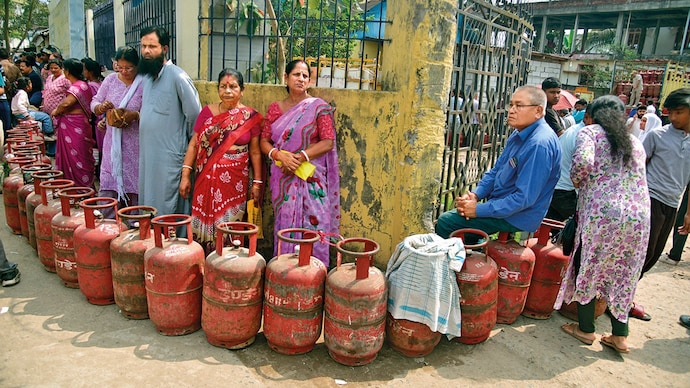
For Inderjeet Singh Banga, who runs the 20-outlet restaurant chain Pirates of Grill, the Middle East conflict arrived without warning. His outlets rely on high-flame cooking, each consuming about three liquefied petroleum gas (LPG) cylinders a day. When supplies tightened, they began running short within days. “In the first few days, we had to let go of 40 per cent of the business due to LPG shortage,” says Banga.
For Inderjeet Singh Banga, who runs the 20-outlet restaurant chain Pirates of Grill, the Middle East conflict arrived without warning. His outlets rely on high-flame cooking, each consuming about three liquefied petroleum gas (LPG) cylinders a day. When supplies tightened, they began running short within days. “In the first few days, we had to let go of 40 per cent of the business due to LPG shortage,” says Banga.
India’s exposure to the war is structural. The third largest energy consumer globally, it imports 85 per cent of its crude oil, 50 per cent of its natural gas and 60 per cent of its LPG. Shipping through the Strait of Hormuz, which carries about a fifth of global oil and gas flows, has slowed sharply. Strikes on energy infrastructure in Gulf countries have tightened flows further. For India, this is showing up in rising costs—its crude basket, the weighted average of the oils it imports, has surged to over $120 (Rs 11,150) a barrel in March from an average of $69 (Rs 6,400) in February, based on export-point prices before shipping and insurance. The landed cost—on reaching Indian ports—stood at $156 (Rs 14,500) on March 19, reflecting elevated risk premiums.
Similar pressures can be seen in gas supplies. LPG distribution has been hit across major cities, with delays of over 15 days amid reports of hoarding. “As much as 60 per cent of the LPG supply in India has been disrupted,” says Prashant Vasisht, senior vice-president and co-group head for corporate ratings at ICRA. Price transmission to consumers has begun. A non-subsidised domestic LPG cylinder now costs Rs 913 in Delhi after a Rs 60 hike. Commercial cylinders have risen by Rs 142.5 to Rs 1,883. Industrial diesel has been hiked by Rs 21.92 per litre, a 25 per cent increase. Premium petrol prices have been increased by Rs 2 per litre, though broader retail fuel prices remain unchanged—for now.
WHAT IS BEING DONE
On March 10, the Centre invoked the Essential Commodities Act to regulate gas production and distribution. A four-tier priority system now directs supply first to households, transport fuel, LPG production and pipeline operations, followed by fertilisers, with industrial and commercial users at the bottom. “Refiners are now producing 30–40 per cent more LPG than earlier,” says Vasisht, “but there is a limit to how much the capacity can be increased.”
On imports, India initiated talks with Iran to allow passage of its vessels. As of mid-March, two tankers—Shivalik and Nanda Devi—had crossed, carrying over 92,000 tonnes of LPG. On March 24, Iran allowed all “non-hostile” ships to transit the strait, albeit under strict “coordination”. A 30-day waiver from the US for Indian refiners to purchase Russian oil has also enabled a ramp-up in imports. On March 22, Aqua Titan, carrying 110,000 tonnes of Russian crude, docked at Mangaluru port.
WHAT MORE NEEDS TO BE DONE
India’s strategic petroleum reserves cover about 74 days of consumption, below the 90-day benchmark recommended by the International Energy Agency. That gap reduces the room for manoeuvre if disruptions persist. Fuel substitution capacity remains constrained. While LPG connections number around 330 million, only 16.5 million households have access to piped natural gas. Bridging that gap will require a far more aggressive scale-up of PNG networks. Over the longer term, say experts, reducing reliance on fossil fuels will need a decisive scale-up of alternative sources.

