Fertilisers and Agriculture | Urea cloud on Kharif
As fertiliser supply chains tighten and costs surge, risks build for India's farms, threatening output, margins and prices
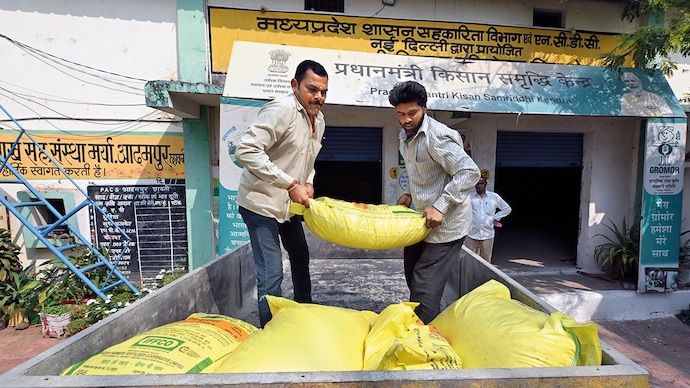
In mid-March, unseasonal weather linked to disturbances over the Caspian Sea brought spells of rain across North India, arriving at the worst possible time for farmers. Rabi crops were ready for harvest, and even brief showers raised the risk of damage to wheat and mustard still standing in the fields. At the same time, a more distant but potentially deeper threat was beginning to take shape: war in the Middle East. A prolonged conflict, coupled with disruptions in the Strait of Hormuz, could translate into higher input costs, tighter fertiliser availability for the Kharif season and renewed pressure on food inflation.
In mid-March, unseasonal weather linked to disturbances over the Caspian Sea brought spells of rain across North India, arriving at the worst possible time for farmers. Rabi crops were ready for harvest, and even brief showers raised the risk of damage to wheat and mustard still standing in the fields. At the same time, a more distant but potentially deeper threat was beginning to take shape: war in the Middle East. A prolonged conflict, coupled with disruptions in the Strait of Hormuz, could translate into higher input costs, tighter fertiliser availability for the Kharif season and renewed pressure on food inflation.
India’s exposure is significant: over 70 per cent of urea imports come from the Middle East. Even as domestic installed capacity has expanded to about 31 million tonnes (MT) by FY26, from roughly 21 MT in FY15, the fertiliser sector remains exposed to external shocks. For, the sector accounts for nearly 29 per cent of India’s gas consumption, with a substantial share imported as liquefied natural gas (LNG)—primarily from the Gulf, where Qatar alone supplies around 40 per cent. Any disruption in gas flows can therefore constrain domestic urea output, even when capacity appears sufficient. Early signals are visible: global fertiliser prices have risen 30–40 per cent, with urea crossing $650 (Rs 60,500) per tonne. Freight and insurance costs have risen, pushing up the landed price, i.e. the total cost of imports on reaching the Indian ports, even as export restrictions from countries such as China tighten global supply further.
For now, India has a cushion. Fertiliser stocks remain comfortable, with urea estimated at over 6 MT and DAP (Diammonium Phosphate) close to 2.5 MT, both above last year’s levels. But the system is likely to operate with a lag. March and April serve as a buffer between the Rabi harvest and Kharif sowing. If fresh imports are delayed, pressure could begin to build by May. By June–July, at peak Kharif demand, shortages may start to surface. Farmers could respond by cutting fertiliser use or shifting cropping patterns, raising yield risks—especially for paddy and maize. At the same time, fertilisers such as DAP and NPK, which are less tightly subsidised than urea, would remain exposed to global prices, amplifying cost pressures at the farm level.
This is where the risks could converge. Weather-related disruptions to the Rabi harvest may coincide with input-side stress for the Kharif crop. A combination of lower output and higher input costs could tighten food supply and push up prices.
WHAT IS BEING DONE
The government has moved to contain the risk. On March 22, Prime Minister Narendra Modi chaired a high-level review with key ministers, where fertilisers were identified as a “critical second-order concern”. The immediate focus is on continuity—ensuring supplies remain uninterrupted ahead of Kharif.
Import tenders have been advanced, and shipments are being closely monitored. Alternative sourcing from Russia, Belarus and Morocco is being explored to offset dependence on the Gulf. At the same time, gas allocation is being prioritised for fertiliser plants to sustain domestic urea production.
WHAT MORE NEEDS TO BE DONE
The response addresses the immediate risk, but structural exposure remains. Fertiliser imports and energy inputs are both tied to the Middle East, much of it routed through the Strait of Hormuz. A disruption lasting beyond eight weeks from mid-March pushes India into a risk zone. Expanding sourcing beyond the Middle East and strengthening domestic production capacity are critical to reducing vulnerability.
There is also a fiscal risk to manage. India’s fertiliser subsidy is already high, revised to Rs 1.86 lakh crore in FY26. If global prices keep rising, the government faces a choice: absorb the shock and expand the subsidy bill, or pass costs to farmers—risking a squeeze on already thin margins.

