Shipping, Trade and Exports | In dire straits
The Hormuz Strait wrangle has not just upended bilateral trade with one of our top partners, the UAE, but also hit exports to the West
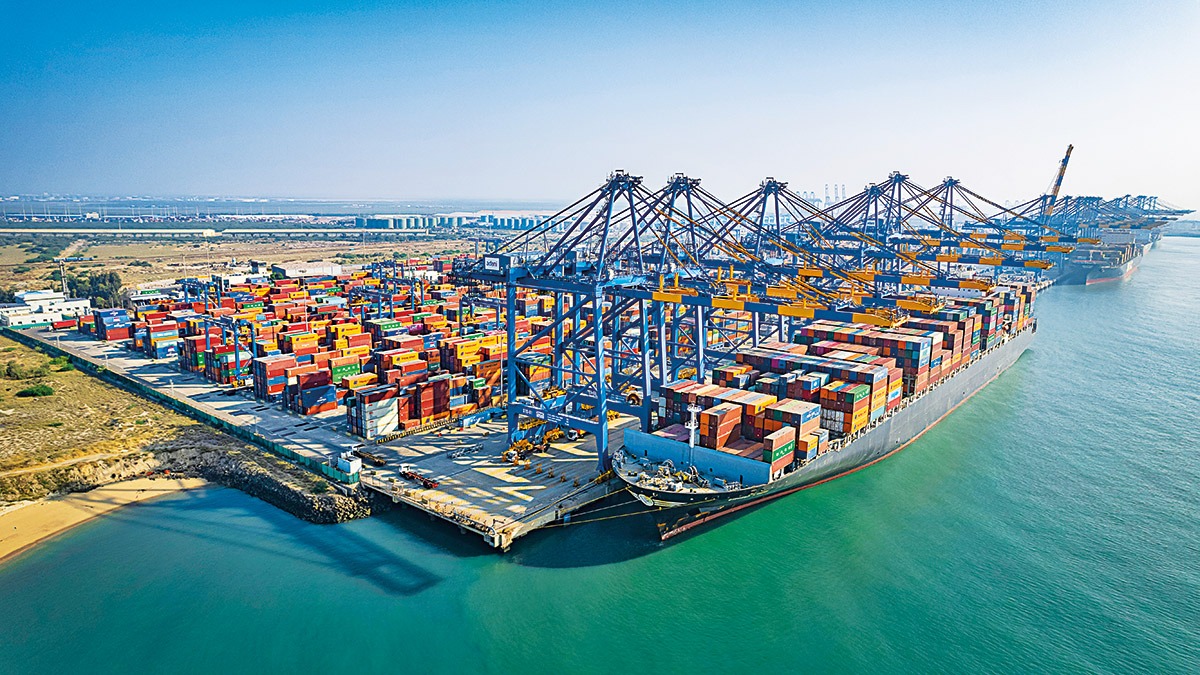
The Strait of Hormuz, with its outsized influence on global trade, is also critical for container shipping routes that sustain India’s export economy. Dubai, which lies on the southern coast of the Strait, is now India’s primary re-export gateway to global markets, anchored by world-class logistics infrastructure and free trade zones. Bilateral trade between India and the United Arab Emirates (UAE) is now worth over $100 billion (Rs 93,801 crore) annually, making the federation one of our top three trading partners. India’s exports to the UAE alone, spanning over 7,000 product categories, were estimated to be $39 billion (Rs 36,596 crore) in FY26.
The Strait of Hormuz, with its outsized influence on global trade, is also critical for container shipping routes that sustain India’s export economy. Dubai, which lies on the southern coast of the Strait, is now India’s primary re-export gateway to global markets, anchored by world-class logistics infrastructure and free trade zones. Bilateral trade between India and the United Arab Emirates (UAE) is now worth over $100 billion (Rs 93,801 crore) annually, making the federation one of our top three trading partners. India’s exports to the UAE alone, spanning over 7,000 product categories, were estimated to be $39 billion (Rs 36,596 crore) in FY26.
For India, the crisis is immediate. Some 15-20 per cent of our West-bound cargo depends on transshipment hubs in the Gulf, such as the UAE ports Jebel Ali and Khor Fakkan. These hubs are operational, but since mid-March have been constrained by the war.
“Large mother vessels are avoiding the region due to safety concerns, and that is altering cost structures,” says Pritam Banerjee, who heads the Centre for WTO Studies at the Indian Institute of Foreign Trade. Exporters shipping to northern Europe hubs such as Rotterdam and Antwerp are now facing surcharges of $1,800-2,200 (Rs 1.6 lakh-2.1 lakh) per container, while spot container freight rates on the India-Europe routes have risen by 12 to 25 per cent, reflecting both war risk premiums and reduced effective shipping capacity.
Meanwhile, the logistics chain is already feeling the heat. Shipping lines have either reduced frequency or rerouted vessels. Some are even bypassing the Red Sea and Suez corridor altogether and opting for the longer Cape of Good Hope route, significantly increasing both cost and transit time. The result is a tightening of global shipping capacity and a steady hike in freight rates. The trickledown effect has also meant container shortages and sky-high insurance costs. Since March 17, war risk premiums have risen sharply for Gulf-bound vessels, adding $50,000-200,000 per voyage depending on ship size and route.
The cumulative effect is visible. Delivered cost, rather than factory price, is increasingly determining market share. In sectors like textiles, engineering goods and chemicals, where logistics account for 5-15 per cent of export value, even a slight jump can erode margins. For MSMEs, the pressure is acute. Extended export cycles, delays in receivables (legally enforceable payment claims for goods given on credit), and higher upfront logistics costs are straining working capital.
WHAT IS BEING DONE
The Centre has announced a Rs 497 crore Resilience and Logistics Intervention for Export Facilitation (RELIEF) scheme for exporters, aimed as a cushion against logistics- and risk-related costs. The scheme prioritises MSMEs, focusing on the immediate pain points—insurance and freight rate hikes.
Diplomatic efforts have also helped nudge Tehran into letting shipments through, yet each one still requires separate parleys and payment mechanisms (the Iranians prefer yuan or rouble to the dollar). This means contingency surcharges of up to $4,000 per container and freight rates up by 40-50 per cent on key routes. A clear, institutional mechanism for transit would reduce the uncertainty—and costs—for exporters.
WHAT MORE NEEDS TO BE DONE
Ajay Sahai, director-general, Federation of Indian Export Organisations (FIEO), says, “Right now, what we are witnessing is more of shipment deferment and cost renegotiation rather than outright order cancellations.” The “seasonal buffer” is also playing a role. In the run-up to Ramzan, importers across Middle Eastern markets had built up big inventories, which is why shipments in February and early March were strong. Exporters say the full effect of the Hormuz disruption is likely to be felt in the coming weeks as post-Ramzan demand patterns normalise and inventory drawdowns begin.
Sahai points to the need for enhanced credit support, faster refund mechanisms and more responsive risk cover from export credit insurance agencies to prevent the current stress from translating into a broader slowdown. The disruption has also reignited debate around structural vulnerabilities in India’s export logistics. “This has exposed our continued dependence on external transshipment hubs,” Sahai says, adding that developing domestic capacities such as the Vizhinjam international seaport and a more resilient export logistics ecosystem have become critical.

