If stones could sing | Mohammad Ali Baig in 'Chand Tara'
Theatre personality Mohammad Ali Baig's debut feature film brings alive the legend of the 17th-century dancer-singer Taramati
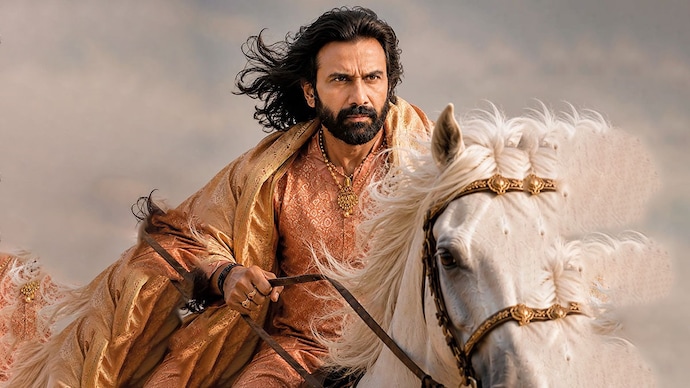
From the remotest theatre festivals in the French countryside to a trailer premiere at the prestigious Cannes Film Festival, Mohammad Ali Baig has taken Indian heritage to a global platform once again—this time, through the lens of a camera. The Padma Shri awardee’s debut feature film, Chand Tara, focuses on the legend of the 17th-century singer-dancer Taramati, a woman who refused to bow down to a Sultan’s decree. The Taramati Baradari near Golconda Fort, known for its architectural beauty and as an acoustic marvel, still stands as a testimony to her stature as an artist.
From the remotest theatre festivals in the French countryside to a trailer premiere at the prestigious Cannes Film Festival, Mohammad Ali Baig has taken Indian heritage to a global platform once again—this time, through the lens of a camera. The Padma Shri awardee’s debut feature film, Chand Tara, focuses on the legend of the 17th-century singer-dancer Taramati, a woman who refused to bow down to a Sultan’s decree. The Taramati Baradari near Golconda Fort, known for its architectural beauty and as an acoustic marvel, still stands as a testimony to her stature as an artist.
The Qutub Shahi era appears in all its grandeur on the screen, with Ranjana Srivastava portraying Taramati, while Baig plays Sultan Abdullah Qutub Shah. The film serves as both a cinematic tribute to his father—late theatre legend Qadir Ali Baig—and a defiant rejection of western imitation. “I take pride in my own heritage and Indian culture. For it to be celebrated at one of the world’s most revered film destinations is a pat on my back,” he says.
For Baig, Chand Tara is less of a historical biopic and more of an “ode to womanhood”. He challenges the traditional definition of a hero, asserting that strength isn’t a matter of gender but of spirit. “For me, a hero doesn’t have to be male,” he explains. “I saw strength and dignity in my mother after I lost my father at a young age, and that has shaped my protagonists.” In the film, this is reflected in the transformation of Sultan Abdullah. Initially portrayed as a flamboyant “mama’s boy”, his spiritual and intellectual bond with Taramati transforms him into an able administrator.
To capture the lyrical atmosphere of the era, Baig has assembled a powerhouse of talent, with the soundtrack composed by Karthik Raja, featuring the voices of Lucky Ali and Vasundhara Das, bringing 17th-century ragas and ghazals to a contemporary global audience. The cast is equally prestigious, featuring veterans like Anupam Kher and Mohan Agashe. Before the film makes its rounds of the international festival circuit, Baig has planned previews in Hyderabad and Mumbai starting from June 3.

