Andhra Pradesh | Digging for desi gold
India's first private gold mine commences operations in June, helping India cut its gold import bill
The famous Kolar gold fields in Karnataka, once India’s most productive mines, shut down 25 years ago. Now almost all of the gold extracted domestically—less than 2 tonnes per annum—comes from the Hutti Mines at Raichur in Karnataka, barely enough in a country where households count among the top consumers of gold in the world. To meet the voracious demand, some 750 tonnes of the precious metal is imported annually, largely driven by the jewellery market.
The famous Kolar gold fields in Karnataka, once India’s most productive mines, shut down 25 years ago. Now almost all of the gold extracted domestically—less than 2 tonnes per annum—comes from the Hutti Mines at Raichur in Karnataka, barely enough in a country where households count among the top consumers of gold in the world. To meet the voracious demand, some 750 tonnes of the precious metal is imported annually, largely driven by the jewellery market.
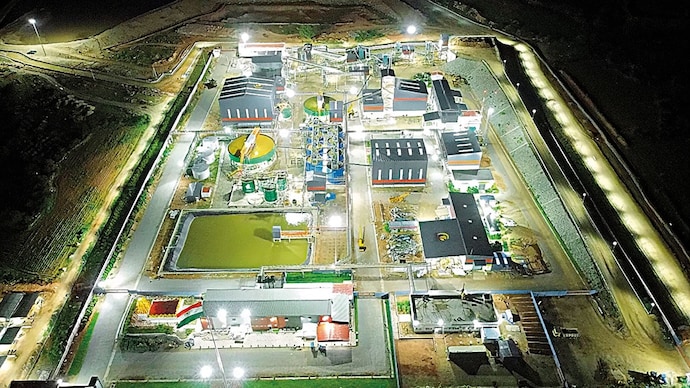
Call it opportune, but this is perhaps why the inauguration of India’s first privately operated gold mine is making so much news, especially with imports of the yellow metal being a conspicuous target in Prime Minister Narendra Modi’s austerity message to the nation. The Jonnagiri gold mine is not far from Hutti, in neighbouring Kurnool district in Andhra Pradesh’s rocky, arid Rayalaseema region.
Andhra chief minister Chandrababu Naidu says the mine, which has the potential to produce about 60 per cent of India’s total domestic output, will become operational in June. Geomysore Services, the firm operating it, says it has invested Rs 400 crore in the project. It aims to extract about 800 kg of gold in the first year (2026-27), with plans to scale it up to one tonne in subsequent years. Jonnagiri has certified gold resources of 13 tonnes, and explorations have indicated a much bigger potential. But even at its peak, the mine will barely make a dent, extracting just 0.1 per cent of India’s annual gold demand.
YELLOW METAL MANIA
Gold accounts for over nine per cent of India’s total imports. In 2025-26, the import bill hit an all-time high of $72 billion (Rs 6.9 lakh crore), more than double of what it was in 2020-21. This has severe implications on the country’s trade and current account deficit. Sourcing gold domestically has been a near- impossible task, although the National Mineral Inventory data estimates that India is sitting on some 502 million tonnes of gold ore reserves, with the largest resources located in Bihar (44 per cent), followed by Rajasthan (25 per cent), Karnataka (21 per cent), and West Bengal and Andhra Pradesh (both 3 per cent).
However, these vast resources remain unexplored and domestic production remains a trickle. Geomysore director B. Karthikeyan, who is overseeing the project activities, says the commencement will hence be a significant milestone for India’s gold mining sector. “Jonnagiri demonstrates the vast untapped potential of India’s mineral resources and shows what can be achieved with the right policy support and commitment,” says Karthikeyan, who is also the MD of Thriveni Earthmovers, a major shareholder in Geomysore, along with Lloyds Metals Ltd.
In 2008, the then united AP government had granted Geomysore a reconnaissance permit for gold, copper, lead, zinc and silver at Jonnagiri and Pagidirai blocks, which is part of the Eastern Dharwar Craton. A mining lease was granted in 2013, and after securing all statutory clearances, the project is now ready to transition to commercial production. The state will receive royalty according to the value of the gold extracted from the mine. The processing plant is currently handling around 1,000 tonnes per day (TPD) of gold-bearing ore.

