China-US reset: Why India should worry | Viewpoint by Vijay Gokhale
As Trump and Xi edge towards a de facto G2, India risks remaining a rule-taker and not a rule-maker in the global technological race
The much-watched Trump–Xi Jinping summit did not seem intended to produce dramatic breakthroughs. It was more a personal visit than one on substantive issues. The real objective was to create the necessary environment for a second meeting and put a floor under a relationship that has been in free fall for some time. Given US President Donald Trump’s unpredictability, global leaders, including Xi, have become extremely wary of believing any agreement will necessarily hold.
The discussions revolved around three baskets: economics, security and international relations. Economics ranged from chips and agricultural exports to rare earths and fentanyl. Security involved reviving military-to-military engagement. International issues centred largely on Iran and Taiwan. Yet the larger concern, especially for India, lies not in what was formally agreed but in what may emerge over time.
The first implication concerns South Asia. The key question is whether the US may gradually allow China to have a greater influence over the region because Washington may no longer see India as holding the same strategic importance as before. There is a precedent. In the early 1990s, the US effectively gave China greater space in South Asia because Beijing supported Washington’s non-proliferation agenda. Even a tentative reduction in interaction with India could create room for expanded Chinese influence in India’s immediate neighbourhood.
The second and perhaps more troubling issue revolves around Iran and the Strait of Hormuz. While China is unlikely to openly assist American military action, Beijing may eventually agree to help maintain maritime stability after any settlement. Such a move could legitimise the enhanced presence of the PLA Navy in the Arabian Sea and the Indian Ocean. There is a historical precedent. During Somali piracy in the late 2000s, international encouragement for Chinese anti-piracy patrols evolved into a near-permanent naval presence. China repeatedly used invitations from others as a means to establish long-term strategic footprints. The same pattern could now unfold in the Indian Ocean.
For India, the consequences would be direct. A sustained Chinese naval presence only 250 nautical miles from us would alter the strategic environment. Regional states may begin granting Chinese forces greater logistical rights and access. Countries like Pakistan would feel increasingly justified in deepening such arrangements because the Americans are with it. Given China’s rapidly expanding naval capacity, including a third carrier group now undergoing trials, this prospect can no longer be dismissed.
Then comes the stark verdict: the Quad is comatose. The US, Japan and Australia already possess treaty alliances and remain focused on balancing China in the Western Pacific. India was not really adding value to Western Pacific strategy. The US was always ambivalent about the Quad’s role in the Indian Ocean. With China no longer explicitly identified as the principal target in newer American strategic thinking, the logic sustaining the Quad weakens considerably.
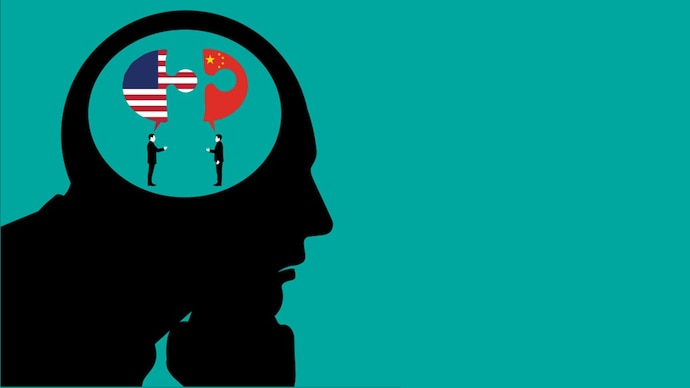
But the deepest concern lies elsewhere: the emergence of a de facto G2 between Washington and Beijing. Nobody formally is going to declare a G2, but both sides increasingly behave like major powers setting the terms of the global order. It is not so much about traditional military balance as about the global rules for technologies of the future. The rules of this new game are going to be written by these two.
Unlike nuclear weapons, missiles or maritime regimes, no comprehensive rules yet govern artificial intelligence, quantum computing, autonomous systems, cyber capabilities or underwater technologies. If Washington and Beijing shape these frameworks together, India risks once again becoming a rule-taker rather than a rule-maker. The warning is sobering: we are not preparing ourselves for the world these two will shape. For India, the challenge may no longer be managing China. It may be navigating a world where China and America increasingly decide the terms of the game.
—The author is a former foreign secretary and a former Indian ambassador to China
The much-watched Trump–Xi Jinping summit did not seem intended to produce dramatic breakthroughs. It was more a personal visit than one on substantive issues. The real objective was to create the necessary environment for a second meeting and put a floor under a relationship that has been in free fall for some time. Given US President Donald Trump’s unpredictability, global leaders, including Xi, have become extremely wary of believing any agreement will necessarily hold.
The discussions revolved around three baskets: economics, security and international relations. Economics ranged from chips and agricultural exports to rare earths and fentanyl. Security involved reviving military-to-military engagement. International issues centred largely on Iran and Taiwan. Yet the larger concern, especially for India, lies not in what was formally agreed but in what may emerge over time.
The first implication concerns South Asia. The key question is whether the US may gradually allow China to have a greater influence over the region because Washington may no longer see India as holding the same strategic importance as before. There is a precedent. In the early 1990s, the US effectively gave China greater space in South Asia because Beijing supported Washington’s non-proliferation agenda. Even a tentative reduction in interaction with India could create room for expanded Chinese influence in India’s immediate neighbourhood.
The second and perhaps more troubling issue revolves around Iran and the Strait of Hormuz. While China is unlikely to openly assist American military action, Beijing may eventually agree to help maintain maritime stability after any settlement. Such a move could legitimise the enhanced presence of the PLA Navy in the Arabian Sea and the Indian Ocean. There is a historical precedent. During Somali piracy in the late 2000s, international encouragement for Chinese anti-piracy patrols evolved into a near-permanent naval presence. China repeatedly used invitations from others as a means to establish long-term strategic footprints. The same pattern could now unfold in the Indian Ocean.
For India, the consequences would be direct. A sustained Chinese naval presence only 250 nautical miles from us would alter the strategic environment. Regional states may begin granting Chinese forces greater logistical rights and access. Countries like Pakistan would feel increasingly justified in deepening such arrangements because the Americans are with it. Given China’s rapidly expanding naval capacity, including a third carrier group now undergoing trials, this prospect can no longer be dismissed.
Then comes the stark verdict: the Quad is comatose. The US, Japan and Australia already possess treaty alliances and remain focused on balancing China in the Western Pacific. India was not really adding value to Western Pacific strategy. The US was always ambivalent about the Quad’s role in the Indian Ocean. With China no longer explicitly identified as the principal target in newer American strategic thinking, the logic sustaining the Quad weakens considerably.
But the deepest concern lies elsewhere: the emergence of a de facto G2 between Washington and Beijing. Nobody formally is going to declare a G2, but both sides increasingly behave like major powers setting the terms of the global order. It is not so much about traditional military balance as about the global rules for technologies of the future. The rules of this new game are going to be written by these two.
Unlike nuclear weapons, missiles or maritime regimes, no comprehensive rules yet govern artificial intelligence, quantum computing, autonomous systems, cyber capabilities or underwater technologies. If Washington and Beijing shape these frameworks together, India risks once again becoming a rule-taker rather than a rule-maker. The warning is sobering: we are not preparing ourselves for the world these two will shape. For India, the challenge may no longer be managing China. It may be navigating a world where China and America increasingly decide the terms of the game.
—The author is a former foreign secretary and a former Indian ambassador to China

