Dhurandhar 2's blockbuster month in cinemas: What it means for the industry
Within just a month at the box office, Dhurandhar: The Revenge has not just broken records. It has redefined the grammar of what a film's "good run" looks like.
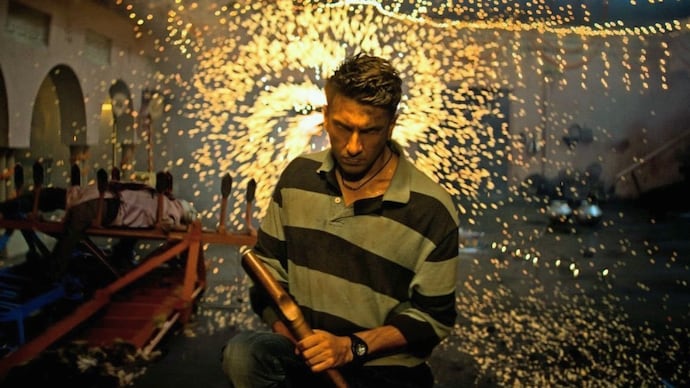
A month in theatres is usually when the frenzy around a film begins to flatten out, and the box office gets stagnant. Aditya Dhar and Ranveer Singh’s Dhurandhar: The Revenge, which released a month back, clearly has other plans.
Because a film that has crossed Rs 1300 crore net in India and is almost close to crossing Rs 1800 crore worldwide within four weeks isn’t just sustaining. It’s rewriting the grammar of what a film’s “good run” looks like. Even after a month, occupancies remain fairly strong. Weekend numbers are still kicking in and perhaps what’s most telling is that audiences are returning. Not out of curiosity, but out of genuine engagement and entertainment.
To understand why that matters, we have to first go back to December 5, last year, when the film's predecessor, Dhurandhar, released. It didn’t arrive as a pre-decided success. It built momentum over time, through word-of-mouth and repeat value.
That’s the part Bollywood had quietly lost in its obsession with opening weekends. Dhurandhar brought it back. People didn’t just watch the film; they experienced it, discussed it, revisited it and, in doing so, turned it into something bigger than a regular Friday release.
And then, Dhurandhar: The Revenge arrived on March 19, 2026, with that inherited goodwill. But what it did is far more interesting. The film didn’t merely ride the craze... it strengthened it. The repeat viewing culture that the first film reignited now feels almost embedded in the sequel’s success.
Theatres aren’t just seeing footfalls; they’re seeing second bookings and group outings. In an industry – and especially at a time when we have been conditioned to think of audiences as impatient and easily distracted – this kind of attention feels almost radical. And that shift is already forcing the industry to recalibrate.
Writers and directors are going back to their scripts with a different vision – not asking how to engineer a big opening, but how to build a film that people would want to sit through multiple times. There’s a renewed focus on characters, music, emotional payoffs and on narrative hooks that keep you intrigued. The 'Dhurandhar effect' isn’t about scale alone. It’s about keeping audiences glued.
Casting is also undergoing a similar rethink. One of the most striking aspects of both Dhurandhar films has been their refusal to reduce the narrative to a single hero. Every character holds weight, every performance registers, and that has translated into a more immersive viewing experience.
Casting directors are taking note, increasingly leaning towards actors who fit the world rather than just rank high on popularity charts. It’s a subtle shift, but an important one, because audiences have clearly responded to authenticity over mere familiarity.
Then there’s the now-viral conversation around peak detailing - a phrase that started off as a meme discussion but has since evolved into a genuine creative benchmark. Viewers spotted the intricacies, the callbacks and the precision of the world-building. Directors are now being nudged towards being more meticulous and detail-oriented.
Of course, the discourse around the film hasn’t been without some negativity. Both Dhurandhar and Dhurandhar: The Revenge have been labelled as leaning into rage bait and propaganda, sparking debates across platforms. Yet, the commercial numbers dismiss that narrative.
The same audiences that cringe at these films are also enjoying them. What emerges from this contradiction is a reminder of something far more fundamental: If a film is compelling enough, audiences are willing to engage with it on multiple levels - even when they disagree with parts of it.
Then, at the centre of it all, there is Ranveer Singh, whose trajectory has undergone a noticeable shift with this franchise. After a phase that didn’t quite align with his earlier highs, Dhurandhar and its sequel have repositioned him in a space that feels both commercially secure and creatively charged.
Similarly, Aditya Dhar has positioned himself as one of the most sought-after directors. He had proved his mettle with Uri: The Surgical Strike, but this film just strengthened his worth.
What Dhurandhar: The Revenge ultimately achieved a month into its run is something the industry has been searching for without quite voicing it out. It proves that audiences haven’t moved away from theatres - they’ve moved away from films that don’t give them enough reason to stay.
By bringing back repeat value, by investing in character-driven storytelling, by paying attention to detail, and by trusting that viewers are willing to engage deeply, the film has nudged Bollywood towards a more demanding, but far more rewarding, creative space. In doing so, it hasn’t just delivered a blockbuster... it has quietly reset the expectations of what a blockbuster can be.
A month in theatres is usually when the frenzy around a film begins to flatten out, and the box office gets stagnant. Aditya Dhar and Ranveer Singh’s Dhurandhar: The Revenge, which released a month back, clearly has other plans.
Because a film that has crossed Rs 1300 crore net in India and is almost close to crossing Rs 1800 crore worldwide within four weeks isn’t just sustaining. It’s rewriting the grammar of what a film’s “good run” looks like. Even after a month, occupancies remain fairly strong. Weekend numbers are still kicking in and perhaps what’s most telling is that audiences are returning. Not out of curiosity, but out of genuine engagement and entertainment.
To understand why that matters, we have to first go back to December 5, last year, when the film's predecessor, Dhurandhar, released. It didn’t arrive as a pre-decided success. It built momentum over time, through word-of-mouth and repeat value.
That’s the part Bollywood had quietly lost in its obsession with opening weekends. Dhurandhar brought it back. People didn’t just watch the film; they experienced it, discussed it, revisited it and, in doing so, turned it into something bigger than a regular Friday release.
And then, Dhurandhar: The Revenge arrived on March 19, 2026, with that inherited goodwill. But what it did is far more interesting. The film didn’t merely ride the craze... it strengthened it. The repeat viewing culture that the first film reignited now feels almost embedded in the sequel’s success.
Theatres aren’t just seeing footfalls; they’re seeing second bookings and group outings. In an industry – and especially at a time when we have been conditioned to think of audiences as impatient and easily distracted – this kind of attention feels almost radical. And that shift is already forcing the industry to recalibrate.
Writers and directors are going back to their scripts with a different vision – not asking how to engineer a big opening, but how to build a film that people would want to sit through multiple times. There’s a renewed focus on characters, music, emotional payoffs and on narrative hooks that keep you intrigued. The 'Dhurandhar effect' isn’t about scale alone. It’s about keeping audiences glued.
Casting is also undergoing a similar rethink. One of the most striking aspects of both Dhurandhar films has been their refusal to reduce the narrative to a single hero. Every character holds weight, every performance registers, and that has translated into a more immersive viewing experience.
Casting directors are taking note, increasingly leaning towards actors who fit the world rather than just rank high on popularity charts. It’s a subtle shift, but an important one, because audiences have clearly responded to authenticity over mere familiarity.
Then there’s the now-viral conversation around peak detailing - a phrase that started off as a meme discussion but has since evolved into a genuine creative benchmark. Viewers spotted the intricacies, the callbacks and the precision of the world-building. Directors are now being nudged towards being more meticulous and detail-oriented.
Of course, the discourse around the film hasn’t been without some negativity. Both Dhurandhar and Dhurandhar: The Revenge have been labelled as leaning into rage bait and propaganda, sparking debates across platforms. Yet, the commercial numbers dismiss that narrative.
The same audiences that cringe at these films are also enjoying them. What emerges from this contradiction is a reminder of something far more fundamental: If a film is compelling enough, audiences are willing to engage with it on multiple levels - even when they disagree with parts of it.
Then, at the centre of it all, there is Ranveer Singh, whose trajectory has undergone a noticeable shift with this franchise. After a phase that didn’t quite align with his earlier highs, Dhurandhar and its sequel have repositioned him in a space that feels both commercially secure and creatively charged.
Similarly, Aditya Dhar has positioned himself as one of the most sought-after directors. He had proved his mettle with Uri: The Surgical Strike, but this film just strengthened his worth.
What Dhurandhar: The Revenge ultimately achieved a month into its run is something the industry has been searching for without quite voicing it out. It proves that audiences haven’t moved away from theatres - they’ve moved away from films that don’t give them enough reason to stay.
By bringing back repeat value, by investing in character-driven storytelling, by paying attention to detail, and by trusting that viewers are willing to engage deeply, the film has nudged Bollywood towards a more demanding, but far more rewarding, creative space. In doing so, it hasn’t just delivered a blockbuster... it has quietly reset the expectations of what a blockbuster can be.

