Why Gen Z can't get enough of Asha Bhosle, Bollywood music's OG rebel icon
Asha Bhosle didn't just sing for her time, she built the vibes we live by. Her rebellious spirit lives on, not in museums but in new-gen playlists.
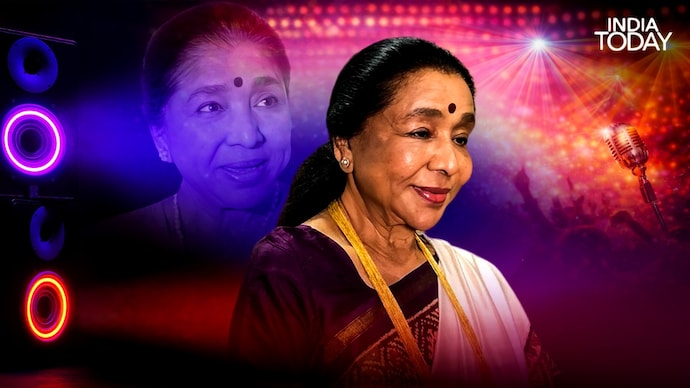
Picture this: a teenager in the 1940s Maharashtra, stepping into marriage at just 16, only to walk away years later in 1960 and rebuild her life on her own terms. The teenager was Asha Bhosle, and the trait of choosing courage over convention, and uncertainty over comfort, would define her life.
A few days back, the music paused, but the pulse lingers on. The news of her tragic death on April 12 at 92 marks the closure of an era, but to file her away as a distant, “vintage” icon would be to miss the point entirely, about who Asha Bhosle truly was. Every “main character” high, every carefully curated “baddie” playlist carries a trace of her spirit. Long before the moment became a mood, Asha Tai had already given it a sound.
Eight decades later, her loss feels like the closing note of a life lived in full melody – her songs still play, untouched by time and loved by a generation young enough to be her grandchildren. With over 12,000 songs across 20+ languages and a Guinness World Record to her name, the great Asha Bhosle wasn’t just a singer, she was a movement.
Long before “reinvention” became a buzzword, she lived it. And in many ways, she mirrors the bold, fluid, self-made energy Gen Z celebrates in its icons today.
The breaking away
Long before the spotlight, Asha’s story began in defiance. Married young to a man significantly older (31-year-old Ganpatrao Bhosle), she endured a difficult relationship that she eventually left in 1960, choosing to start over from scratch alongside her sister Lata Mangeshkar.
Work came slowly. While Lata’s voice was already rising through the ranks, Asha had to carve her own space. She began with small assignments, including a chorus in Chala Nav Jata Mi (1943).
Early on, she was even rejected for sounding “too nasal”, a criticism that could have ended many careers before they began. Instead, she trained rigorously under Indian classical singer Saraswati Rane, refining her classical base and finding her own voice.
That resilience wasn’t loud or performative – it was steady, relentless, and deeply personal. It laid the foundation for everything that followed.
A song for every trend
For a generation that understands life through moods, moments, and shifting energies, Asha Bhosle was never just a playback singer – she was a creator of feeling. Long before we had the language to define presence or emotional resonance, she was expressing it effortlessly through her music, shaping the very essence of what we now recognise as a mood.
If you’ve ever felt the quiet ache of a perfect evening ending too soon, or the thrill of wanting to make something new feel official, Asha Bhosle had a song for that long before the language existed.
Chura Liya Hai Tumne Jo Dil Ko from Yaadon Ki Baaraat (1973) carries the rush of a love that wants to be seen – tender, certain, and impossible to hide. Abhi Na Jao Chhod Kar from Hum Dono (1961) lingers in that fragile in-between, capturing the universal plea for just a little more time.
Her music didn’t just romanticise love – it understood it in all its shades: playful, uncertain, deeply felt. Long before modern labels tried to define these emotions, Asha was already giving them a voice.
On a different note, take Dum Maro Dum from Hare Rama Hare Krishna (1971). Long before pared-down, atmospheric sounds found global appeal, Asha Bhosle was already shaping that mood – hazy, rebellious, and quietly defiant – Billie Eilish style. The track carries an unspoken edge, the kind that lingers late into the night, effortless and self-assured. She didn’t just sing it; she gave voice to a certain freedom – the courage to step outside the expected and write your own narrative.
The Nayyar chapter
The 1950s marked a turning point when Asha collaborated with music director OP Nayyar. Together, they created a sound that felt fresh, bold, and unapologetically different.
Songs like Mera Naam Hai Shabnam (CID, 1956) and Ude Jab Jab Zulfein Teri (Naya Daur, 1957) brought a new sensuality and playfulness to Hindi film music. Asha’s voice carried a teasing, jazzy quality that broke away from the conventional mould of playback singing.
What truly cements Asha Bhosle as Gen Z’s unseen godmother is her fearless experimentation. She refused to be boxed in – moving effortlessly from classical to cabaret, pop to the genre-bending sounds she created along the way. Long before playlists celebrated fluidity, Asha embodied it, blending styles with ease and instinct.
Off-screen, life was no easier. She was a single mother navigating personal loss after the death of her husband, Ganpatrao Bhosle. Yet, she continued to work, evolve, and stay visible in an industry that often sidelines women.
The revolution named Pancham
If the Nayyar era established her identity, her collaboration with RD Burman redefined it. Known fondly as Pancham, Burman and Asha created over 700 songs together, pushing boundaries of genre and sound.
Tracks like Piya Tu Ab To Aaja (Caravan, 1971) fused classical elements with Latin rhythms, while Dum Maro Dum (Hare Rama Hare Krishna, 1971) captured the spirit of a generation with its psychedelic edge. Then came Chura Liya Hai Tumne (Yaadon Ki Baaraat, 1973), a timeless romantic track that continues to live on playlists today.
What Gen Z loves most is her willingness to experiment. Bhosle moved effortlessly between styles – romantic, rebellious, classical, folk – never allowing herself to be confined. Even in deeply personal phases of her life, including being widowed young, she channelled her experiences into her music with striking honesty.
Burman often called Asha Bhosle his muse, but what they shared went far beyond the studio.
Somewhere between late-night recordings, endless rehearsals, and songs that refused to sound like anything that came before, a quieter, deeply personal bond took shape. They eventually married, but by then their connection had already found its truest expression in music – playful, experimental, and full of feeling. Together, they didn’t just create songs; they built a world that still feels alive every time those melodies play.
Beyond boundaries
Asha’s journey didn’t stop at their iconic collaboration – it kept expanding, refusing to settle. Moving seamlessly between composers like Laxmikant-Pyarelal, Kalyanji-Anandji and later Bappi Lahiri, AR Rahman and Jatin-Lalit, she delivered songs that held every shade of emotion, from longing to lightness. Tracks like Abhi Na Jao Chhod Kar and Yeh Reshmi Zulfon Ka (Mere Sanam, 1965) weren’t just hits – they were reminders that versatility is its own kind of power.
What makes Asha Bhosle enduringly inspiring to young music lovers of today is her refusal to be confined. Long before creative freedom became a mantra, she lived it – gliding between Marathi natya sangeet, Konkani folk, and Hindi film music with quiet confidence. She didn’t chase reinvention; she embodied it.
Even in her later years, she proved that relevance has no age. In 1995, she delivered Rangeela Re and Tanha Tanha for Rahman in Rangeela. The same year, she sang Zara sa jhoom loon main (Dilwale Dulhania Le Jayenge) for Jatin-Lalit, reiterating her prowess at scoring in diverse music genres, effortlessly claiming space in a new era when music was fast changing.
It wasn’t just a comeback – it was a statement: keep evolving, keep showing up, and never let the world decide when your moment is over.
The digital afterlife
Fast-forward to now, and her voice is the hidden software in modern Indian beats. Gen Z might not clock it, but Asha's samples pulse through lo-fi YouTube remixes, high-energy dance drops, and even desi hip-hop. She's in the soundscape of your feed, the backbone of those viral edits.
Today, Asha Bhosle’s voice continues to echo in unexpected ways. Her songs are sampled in remixes, spun into lo-fi playlists, and rediscovered through reels and short-form videos. Tracks like Dum Maro Dum and Piya Tu Ab To Aaja have found new life among younger listeners.
In many ways, she exists as a quiet undercurrent in contemporary music – her influence embedded in sounds that continue to evolve.
Asha Bhosle didn't just sing for her time; she built the vibes we live by. As we mourn, let's celebrate how her rebellious spirit lives on – not in museums, but in the playlists fuelling our chaos.
Her music, and her spirit, continues to play on.
Picture this: a teenager in the 1940s Maharashtra, stepping into marriage at just 16, only to walk away years later in 1960 and rebuild her life on her own terms. The teenager was Asha Bhosle, and the trait of choosing courage over convention, and uncertainty over comfort, would define her life.
A few days back, the music paused, but the pulse lingers on. The news of her tragic death on April 12 at 92 marks the closure of an era, but to file her away as a distant, “vintage” icon would be to miss the point entirely, about who Asha Bhosle truly was. Every “main character” high, every carefully curated “baddie” playlist carries a trace of her spirit. Long before the moment became a mood, Asha Tai had already given it a sound.
Eight decades later, her loss feels like the closing note of a life lived in full melody – her songs still play, untouched by time and loved by a generation young enough to be her grandchildren. With over 12,000 songs across 20+ languages and a Guinness World Record to her name, the great Asha Bhosle wasn’t just a singer, she was a movement.
Long before “reinvention” became a buzzword, she lived it. And in many ways, she mirrors the bold, fluid, self-made energy Gen Z celebrates in its icons today.
The breaking away
Long before the spotlight, Asha’s story began in defiance. Married young to a man significantly older (31-year-old Ganpatrao Bhosle), she endured a difficult relationship that she eventually left in 1960, choosing to start over from scratch alongside her sister Lata Mangeshkar.
Work came slowly. While Lata’s voice was already rising through the ranks, Asha had to carve her own space. She began with small assignments, including a chorus in Chala Nav Jata Mi (1943).
Early on, she was even rejected for sounding “too nasal”, a criticism that could have ended many careers before they began. Instead, she trained rigorously under Indian classical singer Saraswati Rane, refining her classical base and finding her own voice.
That resilience wasn’t loud or performative – it was steady, relentless, and deeply personal. It laid the foundation for everything that followed.
A song for every trend
For a generation that understands life through moods, moments, and shifting energies, Asha Bhosle was never just a playback singer – she was a creator of feeling. Long before we had the language to define presence or emotional resonance, she was expressing it effortlessly through her music, shaping the very essence of what we now recognise as a mood.
If you’ve ever felt the quiet ache of a perfect evening ending too soon, or the thrill of wanting to make something new feel official, Asha Bhosle had a song for that long before the language existed.
Chura Liya Hai Tumne Jo Dil Ko from Yaadon Ki Baaraat (1973) carries the rush of a love that wants to be seen – tender, certain, and impossible to hide. Abhi Na Jao Chhod Kar from Hum Dono (1961) lingers in that fragile in-between, capturing the universal plea for just a little more time.
Her music didn’t just romanticise love – it understood it in all its shades: playful, uncertain, deeply felt. Long before modern labels tried to define these emotions, Asha was already giving them a voice.
On a different note, take Dum Maro Dum from Hare Rama Hare Krishna (1971). Long before pared-down, atmospheric sounds found global appeal, Asha Bhosle was already shaping that mood – hazy, rebellious, and quietly defiant – Billie Eilish style. The track carries an unspoken edge, the kind that lingers late into the night, effortless and self-assured. She didn’t just sing it; she gave voice to a certain freedom – the courage to step outside the expected and write your own narrative.
The Nayyar chapter
The 1950s marked a turning point when Asha collaborated with music director OP Nayyar. Together, they created a sound that felt fresh, bold, and unapologetically different.
Songs like Mera Naam Hai Shabnam (CID, 1956) and Ude Jab Jab Zulfein Teri (Naya Daur, 1957) brought a new sensuality and playfulness to Hindi film music. Asha’s voice carried a teasing, jazzy quality that broke away from the conventional mould of playback singing.
What truly cements Asha Bhosle as Gen Z’s unseen godmother is her fearless experimentation. She refused to be boxed in – moving effortlessly from classical to cabaret, pop to the genre-bending sounds she created along the way. Long before playlists celebrated fluidity, Asha embodied it, blending styles with ease and instinct.
Off-screen, life was no easier. She was a single mother navigating personal loss after the death of her husband, Ganpatrao Bhosle. Yet, she continued to work, evolve, and stay visible in an industry that often sidelines women.
The revolution named Pancham
If the Nayyar era established her identity, her collaboration with RD Burman redefined it. Known fondly as Pancham, Burman and Asha created over 700 songs together, pushing boundaries of genre and sound.
Tracks like Piya Tu Ab To Aaja (Caravan, 1971) fused classical elements with Latin rhythms, while Dum Maro Dum (Hare Rama Hare Krishna, 1971) captured the spirit of a generation with its psychedelic edge. Then came Chura Liya Hai Tumne (Yaadon Ki Baaraat, 1973), a timeless romantic track that continues to live on playlists today.
What Gen Z loves most is her willingness to experiment. Bhosle moved effortlessly between styles – romantic, rebellious, classical, folk – never allowing herself to be confined. Even in deeply personal phases of her life, including being widowed young, she channelled her experiences into her music with striking honesty.
Burman often called Asha Bhosle his muse, but what they shared went far beyond the studio.
Somewhere between late-night recordings, endless rehearsals, and songs that refused to sound like anything that came before, a quieter, deeply personal bond took shape. They eventually married, but by then their connection had already found its truest expression in music – playful, experimental, and full of feeling. Together, they didn’t just create songs; they built a world that still feels alive every time those melodies play.
Beyond boundaries
Asha’s journey didn’t stop at their iconic collaboration – it kept expanding, refusing to settle. Moving seamlessly between composers like Laxmikant-Pyarelal, Kalyanji-Anandji and later Bappi Lahiri, AR Rahman and Jatin-Lalit, she delivered songs that held every shade of emotion, from longing to lightness. Tracks like Abhi Na Jao Chhod Kar and Yeh Reshmi Zulfon Ka (Mere Sanam, 1965) weren’t just hits – they were reminders that versatility is its own kind of power.
What makes Asha Bhosle enduringly inspiring to young music lovers of today is her refusal to be confined. Long before creative freedom became a mantra, she lived it – gliding between Marathi natya sangeet, Konkani folk, and Hindi film music with quiet confidence. She didn’t chase reinvention; she embodied it.
Even in her later years, she proved that relevance has no age. In 1995, she delivered Rangeela Re and Tanha Tanha for Rahman in Rangeela. The same year, she sang Zara sa jhoom loon main (Dilwale Dulhania Le Jayenge) for Jatin-Lalit, reiterating her prowess at scoring in diverse music genres, effortlessly claiming space in a new era when music was fast changing.
It wasn’t just a comeback – it was a statement: keep evolving, keep showing up, and never let the world decide when your moment is over.
The digital afterlife
Fast-forward to now, and her voice is the hidden software in modern Indian beats. Gen Z might not clock it, but Asha's samples pulse through lo-fi YouTube remixes, high-energy dance drops, and even desi hip-hop. She's in the soundscape of your feed, the backbone of those viral edits.
Today, Asha Bhosle’s voice continues to echo in unexpected ways. Her songs are sampled in remixes, spun into lo-fi playlists, and rediscovered through reels and short-form videos. Tracks like Dum Maro Dum and Piya Tu Ab To Aaja have found new life among younger listeners.
In many ways, she exists as a quiet undercurrent in contemporary music – her influence embedded in sounds that continue to evolve.
Asha Bhosle didn't just sing for her time; she built the vibes we live by. As we mourn, let's celebrate how her rebellious spirit lives on – not in museums, but in the playlists fuelling our chaos.
Her music, and her spirit, continues to play on.

