Explained: Why Vijay's Jana Nayagan couldn't have been leaked from editing table
Soon after Vijay's Jana Nayagan was leaked, the needle of suspicion pointed at the film's editor. While the edit table is often blamed in such cases, the technical reality is far more complex, say senior film editors.
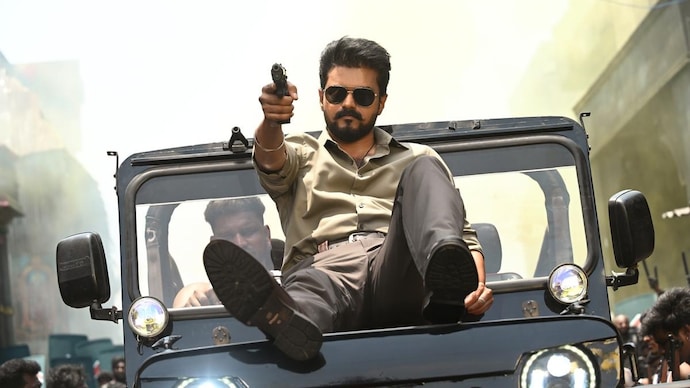
The leak of Thalapathy Vijay's farewell film, Jana Nayagan, has sent film industries all over into a familiar spiral. And as it happens every time a work-in-progress clip surfaces online, suspicion fell immediately on the editing team. The film's editor, Pradeep E Ragav, finds himself at the centre of the storm, with social media blaming him for the leak despite technical evidence pointing to the fact that the reality is far more complex.
On April 13, the Southern India Film Editors Association publicly defended Pradeep Ragav and called out what it described as "baseless" rumours surrounding the leak.
So, why was the edit table, as always, blamed? And what does the evidence actually suggest?
To understand the gap between public perception that blames the editor and the technical reality that makes such an occurrence practically impossible, India Today Digital spoke to two senior industry editors, Praveen KL and TS Suresh.
How and why do leaks happen?
The editing room is where a film is assembled — where raw footage is shaped into a coherent whole. But it is far from the only place footage travels during post-production. Modern filmmaking involves a sprawling web of departments: dubbing, VFX, music, sound design. All of them need access to the material, and that access is where the vulnerability lies.
Praveen KL notes that most editors watermark their files along with a date stamp when sending footage between departments. But he is clear that watermarking alone was not the issue.
"In a professional edit room, editors don't watermark a file just to leak it — if someone wanted to leak it, they'd do it cleanly," he tells India Today Digital.
The workflow itself also makes a single-point leak from the editor's desk unlikely. "Editors generally do not send the entire film to different studios at once. Instead, we cut the film into 20-minute reels. It's easier to send and easier to manage for departments like dubbing, DI and colour grading," Praveen explains.
In most cases, leaks occur when copies of the film have already reached multiple sources simultaneously.
Real problem: workflow, not technology
TS Suresh, who has worked for 21 years in the Tamil film industry, believes the industry has been caught in a cycle of convenience over security all these years — and that the consequences are entirely predictable.
"Piracy is no longer a technology problem. It's a workflow and accountability problem," he tells India Today. "Even on massive projects, we are still passing around sensitive cuts on Google Drive and WeTransfer, handing physical hard drives and pen drives to runners. Once a file gets downloaded onto someone else's machine, you've lost it. There's zero tracking," he adds.
Suresh identifies the period just before release as the most dangerous window. "The risk peaks during final mastering and colour grading, internal previews, distribution prep, and last-minute tweaks. Suddenly everyone needs a copy. Discipline breaks down and files get bounced around recklessly," he says.
How editors protect their footage
Praveen KL has developed practical safeguards drawn from his time at Discovery Asia Pacific where he used to edit documentaries. While sending footage for dubbing at an interim stage, he deliberately disrupts it.
"I jumble the scenes or convert the footage to black and white. I don't send them in actual story order — Scene 21 might be labelled Scene 4. Artists can still do their work, but the footage is useless to anyone trying to piece together the film," he says.
He adds that editors often use a compartmentalised password system across departments: "The music department gets one password, sound effects gets another. If a file leaks, I can trace exactly which department it came from and on what date it was sent."
What needs to change
Both editors agree that the technology to prevent leaks already exists — platforms like Frame.io and Vimeo offer granular access controls, one-time viewing links, and automatic file deletion facility. The obstacle was not technical; it was cultural.
"There are platforms where you can limit access to a single viewing or have a file automatically deleted after download," Praveen says. "With Frame.io, a director in Delhi can comment on a specific time code, and those markers appear directly on my editing timeline in Chennai. It's all automated. Technology exists, though it's just not being used," he adds.
Suresh is more pointed about the industry's priorities. "We throw crores at talent and shooting schedules, but treat post-production like an underfunded cleanup crew rather than the final assembly line of a multi-crore business. Fix that mindset, and these leaks become far less likely," he says.
Praveen assured that he will initiate talks with the Film Employees Federation of South India (FEFSI) and the Editing Union to make secure workflows a compulsory standard. "For a senior editor, justifying the cost to a producer [for secure platforms] is manageable. For a newcomer, it's much harder. If we make it a council rule, it protects everyone," he says.
The Jana Nayagan incident is, in that sense, less a mystery and more a wake-up call for the industry. As Suresh puts it: "It's not complicated. Fix the workflow, and you fix the leaks."
The leak of Thalapathy Vijay's farewell film, Jana Nayagan, has sent film industries all over into a familiar spiral. And as it happens every time a work-in-progress clip surfaces online, suspicion fell immediately on the editing team. The film's editor, Pradeep E Ragav, finds himself at the centre of the storm, with social media blaming him for the leak despite technical evidence pointing to the fact that the reality is far more complex.
On April 13, the Southern India Film Editors Association publicly defended Pradeep Ragav and called out what it described as "baseless" rumours surrounding the leak.
So, why was the edit table, as always, blamed? And what does the evidence actually suggest?
To understand the gap between public perception that blames the editor and the technical reality that makes such an occurrence practically impossible, India Today Digital spoke to two senior industry editors, Praveen KL and TS Suresh.
How and why do leaks happen?
The editing room is where a film is assembled — where raw footage is shaped into a coherent whole. But it is far from the only place footage travels during post-production. Modern filmmaking involves a sprawling web of departments: dubbing, VFX, music, sound design. All of them need access to the material, and that access is where the vulnerability lies.
Praveen KL notes that most editors watermark their files along with a date stamp when sending footage between departments. But he is clear that watermarking alone was not the issue.
"In a professional edit room, editors don't watermark a file just to leak it — if someone wanted to leak it, they'd do it cleanly," he tells India Today Digital.
The workflow itself also makes a single-point leak from the editor's desk unlikely. "Editors generally do not send the entire film to different studios at once. Instead, we cut the film into 20-minute reels. It's easier to send and easier to manage for departments like dubbing, DI and colour grading," Praveen explains.
In most cases, leaks occur when copies of the film have already reached multiple sources simultaneously.
Real problem: workflow, not technology
TS Suresh, who has worked for 21 years in the Tamil film industry, believes the industry has been caught in a cycle of convenience over security all these years — and that the consequences are entirely predictable.
"Piracy is no longer a technology problem. It's a workflow and accountability problem," he tells India Today. "Even on massive projects, we are still passing around sensitive cuts on Google Drive and WeTransfer, handing physical hard drives and pen drives to runners. Once a file gets downloaded onto someone else's machine, you've lost it. There's zero tracking," he adds.
Suresh identifies the period just before release as the most dangerous window. "The risk peaks during final mastering and colour grading, internal previews, distribution prep, and last-minute tweaks. Suddenly everyone needs a copy. Discipline breaks down and files get bounced around recklessly," he says.
How editors protect their footage
Praveen KL has developed practical safeguards drawn from his time at Discovery Asia Pacific where he used to edit documentaries. While sending footage for dubbing at an interim stage, he deliberately disrupts it.
"I jumble the scenes or convert the footage to black and white. I don't send them in actual story order — Scene 21 might be labelled Scene 4. Artists can still do their work, but the footage is useless to anyone trying to piece together the film," he says.
He adds that editors often use a compartmentalised password system across departments: "The music department gets one password, sound effects gets another. If a file leaks, I can trace exactly which department it came from and on what date it was sent."
What needs to change
Both editors agree that the technology to prevent leaks already exists — platforms like Frame.io and Vimeo offer granular access controls, one-time viewing links, and automatic file deletion facility. The obstacle was not technical; it was cultural.
"There are platforms where you can limit access to a single viewing or have a file automatically deleted after download," Praveen says. "With Frame.io, a director in Delhi can comment on a specific time code, and those markers appear directly on my editing timeline in Chennai. It's all automated. Technology exists, though it's just not being used," he adds.
Suresh is more pointed about the industry's priorities. "We throw crores at talent and shooting schedules, but treat post-production like an underfunded cleanup crew rather than the final assembly line of a multi-crore business. Fix that mindset, and these leaks become far less likely," he says.
Praveen assured that he will initiate talks with the Film Employees Federation of South India (FEFSI) and the Editing Union to make secure workflows a compulsory standard. "For a senior editor, justifying the cost to a producer [for secure platforms] is manageable. For a newcomer, it's much harder. If we make it a council rule, it protects everyone," he says.
The Jana Nayagan incident is, in that sense, less a mystery and more a wake-up call for the industry. As Suresh puts it: "It's not complicated. Fix the workflow, and you fix the leaks."

