Cannes 2026: Restored Malayalam classic Amma Ariyan draws standing ovation
Malayalam classic Amma Ariyan has returned to the global spotlight after its restored 4K version received a standing ovation at Cannes Film Festival. The screening has sparked renewed interest in the iconic film.
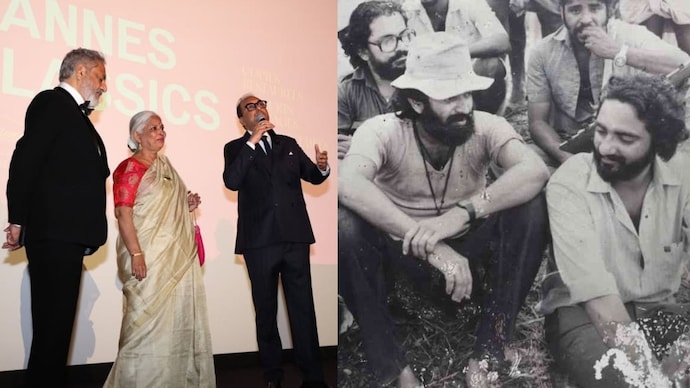
The restored 4K version of Malayalam classic Amma Ariyan received a standing ovation at the Cannes Film Festival after its screening on Sunday, bringing renewed global attention to late filmmaker John Abraham’s landmark Malayalam film nearly four decades after its release.
The screening marked the fifth consecutive year that the Film Heritage Foundation has presented a restored Indian title at Cannes. According to the foundation, Amma Ariyan was screened at a packed theatre and emerged as the only Indian feature film selected this year for a world premiere in this category of the festival.
Who introduced Amma Ariyan at Cannes?
The Film Heritage Foundation said the screening was introduced by Cannes Film Festival director Thierry Fremaux, Film Heritage Foundation director Shivendra Singh Dungarpur, lead actor Joy Mathew and editor Bina Paul.
Sharing moments from the event on Instagram, the foundation described the screening as a “full house” and said audiences responded with a standing ovation after the film concluded.
Dungarpur reportedly spoke about John Abraham’s legacy and influence on independent filmmaking, while Joy Mathew and Bina Paul reflected on the making of the film and their experiences working with the director.
Why is Amma Ariyan considered significant?
Released in 1986, Amma Ariyan is widely regarded as one of Malayalam cinema’s most politically significant films. Set against the backdrop of 1970s Kerala, the film follows Purushan, who embarks on a journey to inform a mother about her son’s death.
The narrative gradually evolves into a wider political and personal exploration, reflecting the social unrest and ideological tensions of the period.
The 115-minute film was produced by the Odessa Collective, a people-funded movement co-founded by John Abraham to challenge conventional film production and distribution systems.
How was the film originally distributed?
Unlike mainstream releases, Amma Ariyan was not designed for commercial theatrical distribution. Members of the Odessa Collective travelled across villages, using street performances and public screenings to raise funds directly from communities.
The restored Cannes screening has now brought the cult Malayalam classic back into international conversation, with audiences discovering the film anew almost 40 years after it was first made.
The restored 4K version of Malayalam classic Amma Ariyan received a standing ovation at the Cannes Film Festival after its screening on Sunday, bringing renewed global attention to late filmmaker John Abraham’s landmark Malayalam film nearly four decades after its release.
The screening marked the fifth consecutive year that the Film Heritage Foundation has presented a restored Indian title at Cannes. According to the foundation, Amma Ariyan was screened at a packed theatre and emerged as the only Indian feature film selected this year for a world premiere in this category of the festival.
Who introduced Amma Ariyan at Cannes?
The Film Heritage Foundation said the screening was introduced by Cannes Film Festival director Thierry Fremaux, Film Heritage Foundation director Shivendra Singh Dungarpur, lead actor Joy Mathew and editor Bina Paul.
Sharing moments from the event on Instagram, the foundation described the screening as a “full house” and said audiences responded with a standing ovation after the film concluded.
Dungarpur reportedly spoke about John Abraham’s legacy and influence on independent filmmaking, while Joy Mathew and Bina Paul reflected on the making of the film and their experiences working with the director.
Why is Amma Ariyan considered significant?
Released in 1986, Amma Ariyan is widely regarded as one of Malayalam cinema’s most politically significant films. Set against the backdrop of 1970s Kerala, the film follows Purushan, who embarks on a journey to inform a mother about her son’s death.
The narrative gradually evolves into a wider political and personal exploration, reflecting the social unrest and ideological tensions of the period.
The 115-minute film was produced by the Odessa Collective, a people-funded movement co-founded by John Abraham to challenge conventional film production and distribution systems.
How was the film originally distributed?
Unlike mainstream releases, Amma Ariyan was not designed for commercial theatrical distribution. Members of the Odessa Collective travelled across villages, using street performances and public screenings to raise funds directly from communities.
The restored Cannes screening has now brought the cult Malayalam classic back into international conversation, with audiences discovering the film anew almost 40 years after it was first made.

