Vignesh Shivan to Lokesh Kanagaraj: Why are filmmakers blaming audience for flops?
Vignesh Shivan's post on Love Insurance Kompany has renewed debate over filmmakers blaming audiences and online negativity after flops. The backlash has drawn parallels with comments by Lokesh Kanagaraj and others, sharpening questions over whether films simply failed to connect.
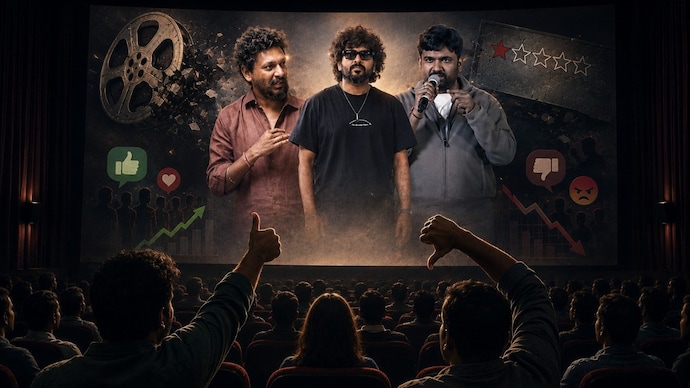
There is a particular kind of audacity some filmmakers display after a box-office failure. The film has flopped, the numbers are in, and somewhere between the disappointment and the post-release interviews, the filmmaker identifies the real culprit: the audience. This appears to be an increasingly familiar trend.
A few years ago, director Lokesh Kanagaraj suggested that audiences failed to connect with the flashback portion of Leo (2023) after the Vijay-starrer received mixed reactions. The latest to step into that conversation is Vignesh Shivan following the disappointing theatrical run of Love Insurance Kompany (LIK).
In a post that has since gone viral, the filmmaker argued that many viewers skipped the film because of the overwhelming negativity surrounding it online. He suggested that some reviews were written to showcase "intelligence or superiority" rather than engaging fairly with the film and lamented that an earnest, original Tamil film had not received the generosity it deserved from audiences.
To be fair, this is not an entirely invented argument. Online discourse is messy. A coordinated pile-on can colour public perception before audiences have even bought a ticket. Social media rewards extreme opinions, and some reviews are undoubtedly written more for engagement than genuine criticism. Filmmakers are not wrong to feel frustrated by that reality.
The problem is that these long explanations are always available. There will never be a flop so comprehensive that a filmmaker cannot find, somewhere in the wreckage, a toxic reviewer, an unfair narrative or a malicious algorithm to blame.
That is why Vignesh's comments triggered such a strong reaction. What many viewers objected to was not his disappointment but the implication that the film's failure was largely shaped by forces outside the film itself. Audiences argued that they are free to reject a film if they do not connect with it and that ambition alone cannot guarantee ticket sales.
More importantly, Vignesh is not alone.
Following the disappointing reception of Prabhas’ The Raja Saab, director Maruthi suggested that audiences had watched the film in a festive mood and failed to engage with its deeper layers. The explanation was met with ridicule from viewers, who believed the film's problems lay in its writing and execution rather than audience's comprehension.
Venkat Prabhu found himself in a similar position after The GOAT (2024) received a mixed response outside Tamil Nadu. The filmmaker linked some of the film's struggles to IPL loyalties - a curious explanation given how little the cricket subplot actually contributes to the overall narrative. Many viewers felt the argument overlooked the film's own shortcomings.
Then there was Kanguva (2024). As criticism mounted, actor Jyotika defended the film and suggested that organised campaigns and propaganda had amplified the negativity. Critics and audiences pushed back, pointing out that complaints about the film were remarkably consistent across Tamil, Telugu, Malayalam and Hindi markets. What looked to supporters like a coordinated attack looked to others like a shared reaction.
Even Lokesh Kanagaraj entered similar territory after the response to Rajnikanth’s Coolie (2025). His argument was more subtle. Rather than blaming audiences directly, he suggested that viewers had created expectations he never promised to fulfil. Yet the debate remained familiar. If a film fails to meet expectations, who is responsible for that gap?
What connects all these responses is a reluctance to accept a simple possibility: sometimes a film does not work because of its flaws and the audience is perfectly entitled to say so.
The effort behind a film is real. Years of work, uncertainty and pressure go into every release. But none of that history accompanies the audience into the theatre. Viewers are judging the film in front of them, not the struggle it took to make it.
The strongest counterargument to the "negativity killed our film" theory can be found in the box-office performance of films that succeeded despite mixed reviews. Suriya's Karuppu opened to a divided critical response and considerable scepticism, yet it is marching towards the Rs 300 crore mark and is shaping up to be one of the biggest successes of the actor's career. Neither mixed reviews nor online negativity slowed its momentum because audiences found something worth recommending.
The same argument applies to several of the very filmmakers now questioning audience reception. Rajinikanth's Coolie crossed Rs 500 crore worldwide despite receiving mixed reactions, while Leo went on to earn over Rs 600 crore globally even as debates around its second half and flashback portions dominated online discussions. Closer home, Vignesh Shivan's own Kaathuvaakula Rendu Kaadhal received a mixed critical response but still emerged as a commercial success, grossing over Rs 50 crore worldwide.
These films were able to make these collections because audiences, who are being blamed by these filmmakers, embraced them despite the criticism surrounding them. If negative reviews alone determined a film's fate, none of these successes would have been possible. That is how cinema has always worked. A film that genuinely connects develops its own word-of-mouth. One that does not struggle, regardless of whether the reviews are glowing or hostile.
None of this means filmmakers must suffer in silence. The pain of a flop is real, and nobody expects them to respond without emotion. But there is a difference between expressing disappointment and blaming. Audiences do not owe a film their approval. They owe it their attention, and most of the time they give it. What happens after that belongs to the film itself.
That is perhaps the uncomfortable reality behind every post-flop explanation. In an era of social media algorithms, fan wars, online campaigns and viral reviews, external factors can certainly shape a film's journey. But when audiences across regions repeatedly reject a film, the simplest explanation is often the hardest for filmmakers to accept: the film did not connect. It may have been ambitious or original. But sometimes, the problem isn't the audience, the critics or the online discourse; It's the film itself.
There is a particular kind of audacity some filmmakers display after a box-office failure. The film has flopped, the numbers are in, and somewhere between the disappointment and the post-release interviews, the filmmaker identifies the real culprit: the audience. This appears to be an increasingly familiar trend.
A few years ago, director Lokesh Kanagaraj suggested that audiences failed to connect with the flashback portion of Leo (2023) after the Vijay-starrer received mixed reactions. The latest to step into that conversation is Vignesh Shivan following the disappointing theatrical run of Love Insurance Kompany (LIK).
In a post that has since gone viral, the filmmaker argued that many viewers skipped the film because of the overwhelming negativity surrounding it online. He suggested that some reviews were written to showcase "intelligence or superiority" rather than engaging fairly with the film and lamented that an earnest, original Tamil film had not received the generosity it deserved from audiences.
To be fair, this is not an entirely invented argument. Online discourse is messy. A coordinated pile-on can colour public perception before audiences have even bought a ticket. Social media rewards extreme opinions, and some reviews are undoubtedly written more for engagement than genuine criticism. Filmmakers are not wrong to feel frustrated by that reality.
The problem is that these long explanations are always available. There will never be a flop so comprehensive that a filmmaker cannot find, somewhere in the wreckage, a toxic reviewer, an unfair narrative or a malicious algorithm to blame.
That is why Vignesh's comments triggered such a strong reaction. What many viewers objected to was not his disappointment but the implication that the film's failure was largely shaped by forces outside the film itself. Audiences argued that they are free to reject a film if they do not connect with it and that ambition alone cannot guarantee ticket sales.
More importantly, Vignesh is not alone.
Following the disappointing reception of Prabhas’ The Raja Saab, director Maruthi suggested that audiences had watched the film in a festive mood and failed to engage with its deeper layers. The explanation was met with ridicule from viewers, who believed the film's problems lay in its writing and execution rather than audience's comprehension.
Venkat Prabhu found himself in a similar position after The GOAT (2024) received a mixed response outside Tamil Nadu. The filmmaker linked some of the film's struggles to IPL loyalties - a curious explanation given how little the cricket subplot actually contributes to the overall narrative. Many viewers felt the argument overlooked the film's own shortcomings.
Then there was Kanguva (2024). As criticism mounted, actor Jyotika defended the film and suggested that organised campaigns and propaganda had amplified the negativity. Critics and audiences pushed back, pointing out that complaints about the film were remarkably consistent across Tamil, Telugu, Malayalam and Hindi markets. What looked to supporters like a coordinated attack looked to others like a shared reaction.
Even Lokesh Kanagaraj entered similar territory after the response to Rajnikanth’s Coolie (2025). His argument was more subtle. Rather than blaming audiences directly, he suggested that viewers had created expectations he never promised to fulfil. Yet the debate remained familiar. If a film fails to meet expectations, who is responsible for that gap?
What connects all these responses is a reluctance to accept a simple possibility: sometimes a film does not work because of its flaws and the audience is perfectly entitled to say so.
The effort behind a film is real. Years of work, uncertainty and pressure go into every release. But none of that history accompanies the audience into the theatre. Viewers are judging the film in front of them, not the struggle it took to make it.
The strongest counterargument to the "negativity killed our film" theory can be found in the box-office performance of films that succeeded despite mixed reviews. Suriya's Karuppu opened to a divided critical response and considerable scepticism, yet it is marching towards the Rs 300 crore mark and is shaping up to be one of the biggest successes of the actor's career. Neither mixed reviews nor online negativity slowed its momentum because audiences found something worth recommending.
The same argument applies to several of the very filmmakers now questioning audience reception. Rajinikanth's Coolie crossed Rs 500 crore worldwide despite receiving mixed reactions, while Leo went on to earn over Rs 600 crore globally even as debates around its second half and flashback portions dominated online discussions. Closer home, Vignesh Shivan's own Kaathuvaakula Rendu Kaadhal received a mixed critical response but still emerged as a commercial success, grossing over Rs 50 crore worldwide.
These films were able to make these collections because audiences, who are being blamed by these filmmakers, embraced them despite the criticism surrounding them. If negative reviews alone determined a film's fate, none of these successes would have been possible. That is how cinema has always worked. A film that genuinely connects develops its own word-of-mouth. One that does not struggle, regardless of whether the reviews are glowing or hostile.
None of this means filmmakers must suffer in silence. The pain of a flop is real, and nobody expects them to respond without emotion. But there is a difference between expressing disappointment and blaming. Audiences do not owe a film their approval. They owe it their attention, and most of the time they give it. What happens after that belongs to the film itself.
That is perhaps the uncomfortable reality behind every post-flop explanation. In an era of social media algorithms, fan wars, online campaigns and viral reviews, external factors can certainly shape a film's journey. But when audiences across regions repeatedly reject a film, the simplest explanation is often the hardest for filmmakers to accept: the film did not connect. It may have been ambitious or original. But sometimes, the problem isn't the audience, the critics or the online discourse; It's the film itself.

