Why Suriya's Karuppu success feels personal after years of heartbreaks, near-misses
Karuppu has drawn celebratory crowds even as many viewers acknowledge its flaws. The reaction reflects the depth of affection for Suriya after years of near-misses and delays.
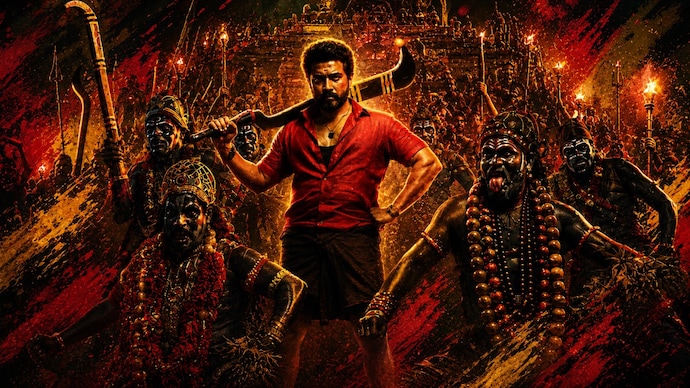
There are films that audiences celebrate because they are genuinely great. And then there are films that audiences celebrate because the person standing at the centre of them means far more than the film itself. For Shah Rukh Khan, that film was Pathaan (2023), for Ajith Kumar it was Good Bad Ugly (2025), and now, for Suriya, it is Karuppu.
The conversations around the film have hardly been unanimous. Even among fans, there is a broad understanding that Karuppu is not Suriya's finest work. It is uneven in places, indulgent in others, and often survives more on emotional momentum than storytelling precision. Yet theatres across Tamil Nadu and the Telugu states have erupted with a kind of joy that cannot be fully explained through reviews, screenplay structure, or technical brilliance alone.
Because people are not just celebrating Karuppu. They are celebrating Suriya and that distinction changes everything.
In the interval of Retro, when Paari smiles, that simple yet burdened smile, something quietly shifted inside the darkened theatre. In the interval of Retro, when Paari smiles, that simple yet burdened smile, something quietly shifted inside the darkened theatre. The audience got emotional because that smile felt close to heart. It was the kind of smile they had been waiting to feel on their own faces for a very long time while watching a Suriya film. But once again, they could not smile back at him. Somewhere along the way, we lost the Suriya we once celebrated so wholeheartedly.
I still remember walking into a theatre as a teenager and seeing a hero who looked nothing like the stars we were used to. No spikes loaded with hair gel, no carefully sculpted mass styling. Just a man with a brutal buzz cut, a shaved line across the side of his head, scars on his body, and rage sitting quietly behind his eyes.
That was Suriya in Ghajini (2005).
At that age, I did not understand performance transformation or psychological depth. I only knew that this actor felt frighteningly committed to whatever he was doing. I got the same haircut the following week and was disappointed to find half my class had already beaten me to it (don't chuckle, it was a nightmare as a teenager). That is not fandom in the conventional sense, but what genuine screen presence does. It does not ask you to follow but makes the following feel like your own decision.
By the time he turned thirty, his filmography already looked like the career summary of a fully matured actor. Nandha, Mounam Pesiyadhe, Kaakha Kaakha, Pithamagan, Perazhagan, Ghajini, Aayutha Ezhuthu, Singam. Within a few years, he had moved through psychological drama, romance, action thrillers, emotional tragedies, and deeply experimental performances.
The heartbreak of Sakthi dying in Pithamagan (2003) still hurts on television. Vaaranam Aayiram made an entire generation believe self-improvement could heal heartbreak. Jai Bhim (2021) proved he could command a film entirely through restraint. Rolex in Vikram (2022) reminded audiences he could still terrify them with just a few minutes of screen time.
What made Suriya special was never just versatility. It was his sincerity.
The art of building audience connection
Long before "pan-India cinema" became fashionable, Suriya was already building a genuine emotional connection with Telugu audiences. SS Rajamouli once admitted that watching Suriya promote Ghajini and cultivate audiences beyond Tamil cinema inspired him to think about expanding regional cinema into a larger national market. Rajamouli even openly said that missing the opportunity to direct Suriya was his own regret, not Suriya's loss.
That kind of respect does not come from stardom alone. It comes from years of accumulated goodwill, professionalism, risk-taking, and emotional honesty as a performer. Unlike stars who built distance through mystique, Suriya always felt reachable, the boy-next-door who seemed to have earned stardom through effort rather than entitlement.
And then came the difficult years.
What followed Suriya's peak was not a collapse, but something more frustrating. He never stopped experimenting. He trusted filmmakers most stars would have avoided. He moved between genres fearlessly: political thrillers, social dramas, science fiction, fantasy spectacles. But one by one, the films stopped fully connecting. Anjaan collapsed under weak writing. NGK divided viewers. Thaanaa Serndha Koottam felt caught between tones. Kanguva drowned under the weight of its own ambition. Retro arrived with enormous hope and left behind mixed feelings.
Yet audiences never truly abandoned Suriya. If anything, they held him to a higher standard because they knew exactly what he was capable of. Every announcement brought fresh excitement. Every teaser revived hope. Every release carried the feeling that this could finally be the film that restored him to the space audiences believed he belonged in.
That accumulated goodwill is what makes Karuppu fascinating as a cultural moment.
Why Karuppu matters
The film's journey from announcement to release only deepened the emotion. Delays stretched from Diwali 2025 into election season. Morning shows were cancelled, and financial issues surrounding the production became public. Director RJ Balaji apologised emotionally after fans who woke up early for 9 am screenings were turned away. Reports suggested that Suriya personally stepped in to help resolve the production's financial troubles and ensure the release happened at all.
By the time Karuppu finally reached theatres, audiences were no longer walking in with detached curiosity. They were walking in wanting this film to work.
Only one thing was driving them. Not market calculations or industry validation. Not even the reviews. Simply love for Suriya. And the film understands this emotion completely.
Karuppu is not just a mass entertainer or a fantasy drama, though it functions as both. Underneath all of that is something more personal, a film quietly assembled from the best parts of Suriya's own filmography.
None of it feels accidental. But what makes it land is that Suriya himself appears to believe it. There is a looseness to his performance, a visible ease that has been missing for a while. He looks like a man who has stopped carrying the burden of expectation and simply decided to enjoy being on-screen again. That feeling travels straight into the auditorium.
There are films that succeed because of cinema. And then there are films that succeed because of love. Karuppu is the second kind.
The celebration almost feels like relief. Relief that after years of near-misses, ambitious failures, delays, and disappointments, audiences could finally experience that euphoric communal high associated with a Suriya film once again. That is what Karuppu's success ultimately represents.
Not Suriya's greatest film, not even his greatest performance, but perhaps something rarer: the emotional victory of an actor people never truly stopped believing in.
The smile in Retro stayed with audiences because it felt like Suriya searching for a lost part of himself. But when he walked in as Karuppu Swamy - black shirt, black dhoti, smiling with complete abandon - we finally smiled back at the man who we had continued believing in all these years.
For a brief second, the line between the actor, the character, and us, the audience, disappeared. Everyone in that auditorium seemed to share the same emotion: relief, affection, and the joy of seeing someone they had continued rooting for finally smile again. Suriya had arrived... again.
There are films that audiences celebrate because they are genuinely great. And then there are films that audiences celebrate because the person standing at the centre of them means far more than the film itself. For Shah Rukh Khan, that film was Pathaan (2023), for Ajith Kumar it was Good Bad Ugly (2025), and now, for Suriya, it is Karuppu.
The conversations around the film have hardly been unanimous. Even among fans, there is a broad understanding that Karuppu is not Suriya's finest work. It is uneven in places, indulgent in others, and often survives more on emotional momentum than storytelling precision. Yet theatres across Tamil Nadu and the Telugu states have erupted with a kind of joy that cannot be fully explained through reviews, screenplay structure, or technical brilliance alone.
Because people are not just celebrating Karuppu. They are celebrating Suriya and that distinction changes everything.
In the interval of Retro, when Paari smiles, that simple yet burdened smile, something quietly shifted inside the darkened theatre. In the interval of Retro, when Paari smiles, that simple yet burdened smile, something quietly shifted inside the darkened theatre. The audience got emotional because that smile felt close to heart. It was the kind of smile they had been waiting to feel on their own faces for a very long time while watching a Suriya film. But once again, they could not smile back at him. Somewhere along the way, we lost the Suriya we once celebrated so wholeheartedly.
I still remember walking into a theatre as a teenager and seeing a hero who looked nothing like the stars we were used to. No spikes loaded with hair gel, no carefully sculpted mass styling. Just a man with a brutal buzz cut, a shaved line across the side of his head, scars on his body, and rage sitting quietly behind his eyes.
That was Suriya in Ghajini (2005).
At that age, I did not understand performance transformation or psychological depth. I only knew that this actor felt frighteningly committed to whatever he was doing. I got the same haircut the following week and was disappointed to find half my class had already beaten me to it (don't chuckle, it was a nightmare as a teenager). That is not fandom in the conventional sense, but what genuine screen presence does. It does not ask you to follow but makes the following feel like your own decision.
By the time he turned thirty, his filmography already looked like the career summary of a fully matured actor. Nandha, Mounam Pesiyadhe, Kaakha Kaakha, Pithamagan, Perazhagan, Ghajini, Aayutha Ezhuthu, Singam. Within a few years, he had moved through psychological drama, romance, action thrillers, emotional tragedies, and deeply experimental performances.
The heartbreak of Sakthi dying in Pithamagan (2003) still hurts on television. Vaaranam Aayiram made an entire generation believe self-improvement could heal heartbreak. Jai Bhim (2021) proved he could command a film entirely through restraint. Rolex in Vikram (2022) reminded audiences he could still terrify them with just a few minutes of screen time.
What made Suriya special was never just versatility. It was his sincerity.
The art of building audience connection
Long before "pan-India cinema" became fashionable, Suriya was already building a genuine emotional connection with Telugu audiences. SS Rajamouli once admitted that watching Suriya promote Ghajini and cultivate audiences beyond Tamil cinema inspired him to think about expanding regional cinema into a larger national market. Rajamouli even openly said that missing the opportunity to direct Suriya was his own regret, not Suriya's loss.
That kind of respect does not come from stardom alone. It comes from years of accumulated goodwill, professionalism, risk-taking, and emotional honesty as a performer. Unlike stars who built distance through mystique, Suriya always felt reachable, the boy-next-door who seemed to have earned stardom through effort rather than entitlement.
And then came the difficult years.
What followed Suriya's peak was not a collapse, but something more frustrating. He never stopped experimenting. He trusted filmmakers most stars would have avoided. He moved between genres fearlessly: political thrillers, social dramas, science fiction, fantasy spectacles. But one by one, the films stopped fully connecting. Anjaan collapsed under weak writing. NGK divided viewers. Thaanaa Serndha Koottam felt caught between tones. Kanguva drowned under the weight of its own ambition. Retro arrived with enormous hope and left behind mixed feelings.
Yet audiences never truly abandoned Suriya. If anything, they held him to a higher standard because they knew exactly what he was capable of. Every announcement brought fresh excitement. Every teaser revived hope. Every release carried the feeling that this could finally be the film that restored him to the space audiences believed he belonged in.
That accumulated goodwill is what makes Karuppu fascinating as a cultural moment.
Why Karuppu matters
The film's journey from announcement to release only deepened the emotion. Delays stretched from Diwali 2025 into election season. Morning shows were cancelled, and financial issues surrounding the production became public. Director RJ Balaji apologised emotionally after fans who woke up early for 9 am screenings were turned away. Reports suggested that Suriya personally stepped in to help resolve the production's financial troubles and ensure the release happened at all.
By the time Karuppu finally reached theatres, audiences were no longer walking in with detached curiosity. They were walking in wanting this film to work.
Only one thing was driving them. Not market calculations or industry validation. Not even the reviews. Simply love for Suriya. And the film understands this emotion completely.
Karuppu is not just a mass entertainer or a fantasy drama, though it functions as both. Underneath all of that is something more personal, a film quietly assembled from the best parts of Suriya's own filmography.
None of it feels accidental. But what makes it land is that Suriya himself appears to believe it. There is a looseness to his performance, a visible ease that has been missing for a while. He looks like a man who has stopped carrying the burden of expectation and simply decided to enjoy being on-screen again. That feeling travels straight into the auditorium.
There are films that succeed because of cinema. And then there are films that succeed because of love. Karuppu is the second kind.
The celebration almost feels like relief. Relief that after years of near-misses, ambitious failures, delays, and disappointments, audiences could finally experience that euphoric communal high associated with a Suriya film once again. That is what Karuppu's success ultimately represents.
Not Suriya's greatest film, not even his greatest performance, but perhaps something rarer: the emotional victory of an actor people never truly stopped believing in.
The smile in Retro stayed with audiences because it felt like Suriya searching for a lost part of himself. But when he walked in as Karuppu Swamy - black shirt, black dhoti, smiling with complete abandon - we finally smiled back at the man who we had continued believing in all these years.
For a brief second, the line between the actor, the character, and us, the audience, disappeared. Everyone in that auditorium seemed to share the same emotion: relief, affection, and the joy of seeing someone they had continued rooting for finally smile again. Suriya had arrived... again.

