Why Return of the Jungle director Vaibhav Kumaresh admires KJo, Anurag Kashyap
Director Vaibhav Kumaresh, in an interview, shared that his upcoming animated feature film, Return of the Jungle, was made for Indian audiences and rooted in Indian culture. The movie is slated to release in theatres on May 29.
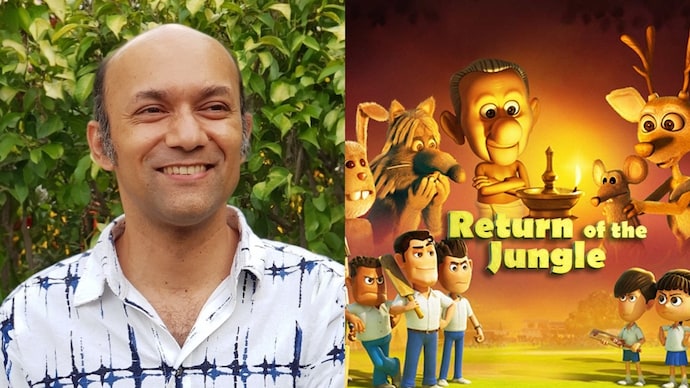
Animation filmmaker Vaibhav Kumaresh has said his feature directorial debut, Return of the Jungle, came from a long-held desire to tell stories rooted in Indian culture instead of seeking Western validation. In an exclusive conversation with India Today, he spoke about what he sees as a lack of authentic Indian storytelling in animation and whom he admires the most in Bollywood when it comes to storytelling.
With the film set to release on May 29, Kumaresh said the nervous excitement around it has been with him for years because of how long the project has taken.
Long journey to release
Talking about the nervousness, Kumaresh said the feeling had existed for a long time because of the film’s long journey. “Definitely, that nervous excitement feeling is there, but it’s been there for a very long time now. Because this film... the journey has been so long. And we inched forward very patiently, so now we are used to it. With the film about to release, and that excitement building up, it’s blissful and extremely exciting,” he said.
He said the idea for Return of the Jungle had been in his mind for more than three decades. Growing up, he said, he was always fascinated by cultural stories and imagined them in animation.
Local audience first
When asked whether he had global audiences in mind while creating the film, Kumaresh said his priority had always been the local audience. He said that as Indian animated feature films had struggled commercially for years, his first aim was to connect with and entertain audiences at home.
Explaining why Indian cinema works globally, he said, “Our Indian live action industry is so successful because they are not catering to an American or European audience. They are making it for the Indian audience.”
He cited filmmakers such as Ram Gopal Varma, Anurag Kashyap, Karan Johar and Ashutosh Gowarikar, and said they were making what they loved instead of trying to impress a global audience.
He added that while he may not fully understand global audiences, he deeply understands Indian viewers and the stories they respond to. “I may not know my global audience, but I know my desi audience. I know these stories will resonate with them because they are not getting such stories anywhere else. That’s exactly why I want to keep telling them. More importantly, these are the stories that genuinely excite me, and I want to continue sharing them,” Kumaresh said.
Need for Indian stories in animation
He explained that even while studying animation, he knew he wanted to bring Indian stories to life through the medium. According to Kumaresh, a major gap in Indian animation is the absence of contemporary Indian life on screen. He said most creators were focused on mythology or the usual trope of superhero children.
Speaking about the dominance of international content on screens, especially in animation, he stressed the need to tell local stories. “Otherwise, we are exposed to so much international content presently. Our audiences are consuming so much Japanese anime, Korean animation, and American animation. They are all beautifully made. But if we don't give them our own indigenous stories, what's the point of telling them?,” the filmmaker said.
Citing Indian box office examples, he added, “Why do you think Mahabharata Narasimha crossed Rs 350 crores? Even a Korean or Japanese animation film, or even a Disney Pixar animation film in India, has not crossed Rs 100 crores. Frozen and Kung Fu Panda have not crossed Rs 100 crores in India and Narasimha got so successful. That is such a positive sign.”
Speaking about AI, Kumaresh said he sees it as another technological aid for creators and that its value depends on how filmmakers, storytellers and artists choose to use it. He clarified that Return of the Jungle was made without any use of AI, though he said AI is used selectively in situations where it can save time on smaller components.
Funding the film
The filmmaker also recalled how difficult it was to find backing for an animated feature when the project began. He said this was at a time when most Indian animated films were suffering heavy losses at the box office, and apart from a few exceptions, many were not even recovering their costs. That, he said, made investors reluctant to support another animated feature, leading the team to self-fund the project.
“So, for us, it was a very simple option. If you want to make a film, you have to make it yourself, with your own money, because no one else is coming along. Our model was very unique. It was a very small team at Vaibhav Studios, consisting of only 18-20 artists,” he said.
Return of the Jungle will release in theatres on May 29.
Animation filmmaker Vaibhav Kumaresh has said his feature directorial debut, Return of the Jungle, came from a long-held desire to tell stories rooted in Indian culture instead of seeking Western validation. In an exclusive conversation with India Today, he spoke about what he sees as a lack of authentic Indian storytelling in animation and whom he admires the most in Bollywood when it comes to storytelling.
With the film set to release on May 29, Kumaresh said the nervous excitement around it has been with him for years because of how long the project has taken.
Long journey to release
Talking about the nervousness, Kumaresh said the feeling had existed for a long time because of the film’s long journey. “Definitely, that nervous excitement feeling is there, but it’s been there for a very long time now. Because this film... the journey has been so long. And we inched forward very patiently, so now we are used to it. With the film about to release, and that excitement building up, it’s blissful and extremely exciting,” he said.
He said the idea for Return of the Jungle had been in his mind for more than three decades. Growing up, he said, he was always fascinated by cultural stories and imagined them in animation.
Local audience first
When asked whether he had global audiences in mind while creating the film, Kumaresh said his priority had always been the local audience. He said that as Indian animated feature films had struggled commercially for years, his first aim was to connect with and entertain audiences at home.
Explaining why Indian cinema works globally, he said, “Our Indian live action industry is so successful because they are not catering to an American or European audience. They are making it for the Indian audience.”
He cited filmmakers such as Ram Gopal Varma, Anurag Kashyap, Karan Johar and Ashutosh Gowarikar, and said they were making what they loved instead of trying to impress a global audience.
He added that while he may not fully understand global audiences, he deeply understands Indian viewers and the stories they respond to. “I may not know my global audience, but I know my desi audience. I know these stories will resonate with them because they are not getting such stories anywhere else. That’s exactly why I want to keep telling them. More importantly, these are the stories that genuinely excite me, and I want to continue sharing them,” Kumaresh said.
Need for Indian stories in animation
He explained that even while studying animation, he knew he wanted to bring Indian stories to life through the medium. According to Kumaresh, a major gap in Indian animation is the absence of contemporary Indian life on screen. He said most creators were focused on mythology or the usual trope of superhero children.
Speaking about the dominance of international content on screens, especially in animation, he stressed the need to tell local stories. “Otherwise, we are exposed to so much international content presently. Our audiences are consuming so much Japanese anime, Korean animation, and American animation. They are all beautifully made. But if we don't give them our own indigenous stories, what's the point of telling them?,” the filmmaker said.
Citing Indian box office examples, he added, “Why do you think Mahabharata Narasimha crossed Rs 350 crores? Even a Korean or Japanese animation film, or even a Disney Pixar animation film in India, has not crossed Rs 100 crores. Frozen and Kung Fu Panda have not crossed Rs 100 crores in India and Narasimha got so successful. That is such a positive sign.”
Speaking about AI, Kumaresh said he sees it as another technological aid for creators and that its value depends on how filmmakers, storytellers and artists choose to use it. He clarified that Return of the Jungle was made without any use of AI, though he said AI is used selectively in situations where it can save time on smaller components.
Funding the film
The filmmaker also recalled how difficult it was to find backing for an animated feature when the project began. He said this was at a time when most Indian animated films were suffering heavy losses at the box office, and apart from a few exceptions, many were not even recovering their costs. That, he said, made investors reluctant to support another animated feature, leading the team to self-fund the project.
“So, for us, it was a very simple option. If you want to make a film, you have to make it yourself, with your own money, because no one else is coming along. Our model was very unique. It was a very small team at Vaibhav Studios, consisting of only 18-20 artists,” he said.
Return of the Jungle will release in theatres on May 29.

