The Man Who Will Not Be a Rubber Stamp
In Delhi, Rahul Gandhi refuses to be a rubber stamp. In Kerala, he is making a rubber stamp out of MLAs elected by the people.
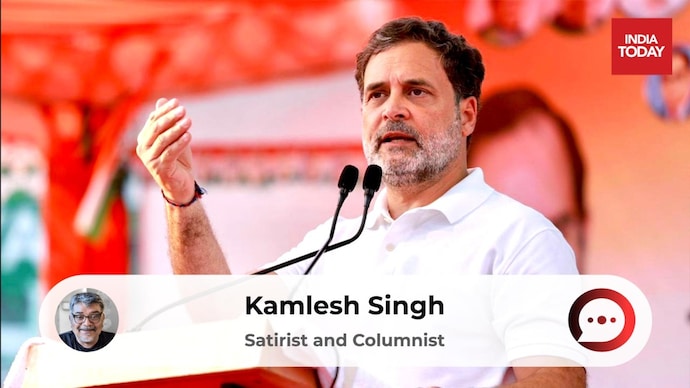
Rahul Gandhi has a constitutional principle. He will not be a rubber stamp. This is important.
On Tuesday, Rahul Gandhi submitted a two-page dissent note during the high-powered committee meeting headed by Prime Minister Narendra Modi for the selection of the next CBI director, saying he did not want to be part of what he called a "biased exercise". The panel to appoint the next CBI chief comprises the Prime Minister, the Chief Justice of India, and Rahul Gandhi. Rahul does not like those odds. Perfectly understandable.
Why be on a panel if you cannot prevail on the panel? Why sit at a card table where you cannot cut the cards?
Now travel south. Down to Kerala, where Rahul Gandhi is not outnumbered. He is, in fact, the house. He holds all the cards, controls the deck, and has been shuffling it for 10 days without dealing a single hand.
A different kind of biased exercise is underway. The United Democratic Front won 102 of 140 seats in Kerala. The Congress itself bagged 63, and its ally IUML added 22 more. The mandate was decisive, and, as such things go in the Indian National Congress, immediately complicated.
A week after the results, the Congress high command, unanimously authorised by its newly elected legislature party to select the Chief Minister, remains unable to break the deadlock. Three names circle the drain of indecision: V D Satheesan, the man who actually led the opposition for five years in Kerala while Pinarayi Vijayan governed with the casual menace of a leftist patriarch; Ramesh Chennithala, the veteran who has been waiting for his turn since the Congress last had a turn; and K C Venugopal.
Venugopal. AICC General Secretary (Organisation). Lok Sabha MP from Alappuzha. The X-factor in the Kerala story: the powerful general secretary who has thrown his hat into the ring even though he did not contest the assembly elections. He was not on the ballot. He did not knock on a single door seeking support from people who might want to see him as Chief Minister. He did not face the voters of Kerala. He was, one might say, in Delhi. Being Rahul's eyes and ears, organisational totem, and general factotum.
Venugopal is believed to enjoy the backing of nearly 43 newly elected Congress MLAs. These are MLAs who apparently feel they owe their seats to the man who ran the campaign from Delhi, not to the man who ran the opposition from Thiruvananthapuram. This is the high command's magic: it creates loyalty upward, never outward.
Before the polls, Kannur MP K Sudhakaran reportedly wanted to contest the assembly election but was persuaded by senior party leaders to stay out. MPs would not contest, said the party with great principle and considerable fanfare. Now, with Venugopal emerging as a possible Chief Minister despite being an MP who did not contest the assembly elections, the Congress high command may have to justify its position publicly. It will not, of course, because justifying positions publicly is not a high command tradition. The high command issues positions. The cadre justifies them. In press conferences, with appropriate expressions of devotion.
Satheesan, meanwhile, spent five years in opposition fighting Pinarayi Vijayan on the floor of the assembly, in press conferences, in corners of Kerala that do not trend on Delhi's radar. He fought and fronted and faced the voters. The grassroots cadres, emboldened by the emphatic election outcome, are now pressing elected representatives to publicly declare support for their man. Congress workers in Ernakulam ambushed their own MP at a private function, demanding clarity on the Chief Minister's question. This is what happens when a party wins a mandate and then behaves as though it lost one. The winners are confused. The workers are furious. And the high command is in a huddle.
A section within the party, naturally, believes the answer lies in a dark horse. There is always a dark horse. In Congress, when the obvious candidate is inconvenient, someone proposes the obscure one. It is called consensus. It is actually called control. Dressed in the language of unity and spritzed lightly with the perfume of principle.
The IUML, which delivered 22 seats and whose political support was critical to making Wayanad the parliamentary launch pad for Priyanka Gandhi, has backed Satheesan openly. Senior IUML legislator TV Ibrahim voiced the growing discontent with admirable directness: "We cannot go out and meet the people who voted for the UDF. People are asking where the Chief Minister is. The crisis has taken the sheen off the massive victory," senior IUML leader TV Ibrahim was quoted as saying by The Indian Express. When your allies are telling you that you are actively squandering a landslide, you are doing something philosophically ambitious. And logistically impressive.
Here, then, is the paradox in its full, magnificent absurdity. Rahul Gandhi will not sit in a three-member committee because he is outnumbered two to one. He calls it a rubber-stamp exercise. He dissents. He writes about the constitutional sanctity of meaningful participation with the moral urgency of a man who has just discovered federalism.
But in Kerala, where workers bled for five years in opposition, where Satheesan sparred with Pinarayi across an assembly floor while Venugopal networked in Delhi’s corridors, the grassroots verdict does not quite count. The MLAs will decide. But the high command will decide who the MLAs decide. The people elected the MLAs. The MLAs elect the leader. How, one must sincerely ask, can the people expect the high command to be a rubber stamp?
The high command makes the stamp.
Just like they do in the BJP. The only difference is that in the BJP, the stamp arrives before the election, sometimes stamped, sometimes a stamp on a parchi. In Congress, it arrives after several rounds of consultations, two rounds of summoning former state chiefs to Delhi, and one mandatory dark horse proposal.
Democracy, delivered. Slowly.
(Kamlesh Singh, a columnist and satirist, is Tau of the popular Teen Taal podcast)
Rahul Gandhi has a constitutional principle. He will not be a rubber stamp. This is important.
On Tuesday, Rahul Gandhi submitted a two-page dissent note during the high-powered committee meeting headed by Prime Minister Narendra Modi for the selection of the next CBI director, saying he did not want to be part of what he called a "biased exercise". The panel to appoint the next CBI chief comprises the Prime Minister, the Chief Justice of India, and Rahul Gandhi. Rahul does not like those odds. Perfectly understandable.
Why be on a panel if you cannot prevail on the panel? Why sit at a card table where you cannot cut the cards?
Now travel south. Down to Kerala, where Rahul Gandhi is not outnumbered. He is, in fact, the house. He holds all the cards, controls the deck, and has been shuffling it for 10 days without dealing a single hand.
A different kind of biased exercise is underway. The United Democratic Front won 102 of 140 seats in Kerala. The Congress itself bagged 63, and its ally IUML added 22 more. The mandate was decisive, and, as such things go in the Indian National Congress, immediately complicated.
A week after the results, the Congress high command, unanimously authorised by its newly elected legislature party to select the Chief Minister, remains unable to break the deadlock. Three names circle the drain of indecision: V D Satheesan, the man who actually led the opposition for five years in Kerala while Pinarayi Vijayan governed with the casual menace of a leftist patriarch; Ramesh Chennithala, the veteran who has been waiting for his turn since the Congress last had a turn; and K C Venugopal.
Venugopal. AICC General Secretary (Organisation). Lok Sabha MP from Alappuzha. The X-factor in the Kerala story: the powerful general secretary who has thrown his hat into the ring even though he did not contest the assembly elections. He was not on the ballot. He did not knock on a single door seeking support from people who might want to see him as Chief Minister. He did not face the voters of Kerala. He was, one might say, in Delhi. Being Rahul's eyes and ears, organisational totem, and general factotum.
Venugopal is believed to enjoy the backing of nearly 43 newly elected Congress MLAs. These are MLAs who apparently feel they owe their seats to the man who ran the campaign from Delhi, not to the man who ran the opposition from Thiruvananthapuram. This is the high command's magic: it creates loyalty upward, never outward.
Before the polls, Kannur MP K Sudhakaran reportedly wanted to contest the assembly election but was persuaded by senior party leaders to stay out. MPs would not contest, said the party with great principle and considerable fanfare. Now, with Venugopal emerging as a possible Chief Minister despite being an MP who did not contest the assembly elections, the Congress high command may have to justify its position publicly. It will not, of course, because justifying positions publicly is not a high command tradition. The high command issues positions. The cadre justifies them. In press conferences, with appropriate expressions of devotion.
Satheesan, meanwhile, spent five years in opposition fighting Pinarayi Vijayan on the floor of the assembly, in press conferences, in corners of Kerala that do not trend on Delhi's radar. He fought and fronted and faced the voters. The grassroots cadres, emboldened by the emphatic election outcome, are now pressing elected representatives to publicly declare support for their man. Congress workers in Ernakulam ambushed their own MP at a private function, demanding clarity on the Chief Minister's question. This is what happens when a party wins a mandate and then behaves as though it lost one. The winners are confused. The workers are furious. And the high command is in a huddle.
A section within the party, naturally, believes the answer lies in a dark horse. There is always a dark horse. In Congress, when the obvious candidate is inconvenient, someone proposes the obscure one. It is called consensus. It is actually called control. Dressed in the language of unity and spritzed lightly with the perfume of principle.
The IUML, which delivered 22 seats and whose political support was critical to making Wayanad the parliamentary launch pad for Priyanka Gandhi, has backed Satheesan openly. Senior IUML legislator TV Ibrahim voiced the growing discontent with admirable directness: "We cannot go out and meet the people who voted for the UDF. People are asking where the Chief Minister is. The crisis has taken the sheen off the massive victory," senior IUML leader TV Ibrahim was quoted as saying by The Indian Express. When your allies are telling you that you are actively squandering a landslide, you are doing something philosophically ambitious. And logistically impressive.
Here, then, is the paradox in its full, magnificent absurdity. Rahul Gandhi will not sit in a three-member committee because he is outnumbered two to one. He calls it a rubber-stamp exercise. He dissents. He writes about the constitutional sanctity of meaningful participation with the moral urgency of a man who has just discovered federalism.
But in Kerala, where workers bled for five years in opposition, where Satheesan sparred with Pinarayi across an assembly floor while Venugopal networked in Delhi’s corridors, the grassroots verdict does not quite count. The MLAs will decide. But the high command will decide who the MLAs decide. The people elected the MLAs. The MLAs elect the leader. How, one must sincerely ask, can the people expect the high command to be a rubber stamp?
The high command makes the stamp.
Just like they do in the BJP. The only difference is that in the BJP, the stamp arrives before the election, sometimes stamped, sometimes a stamp on a parchi. In Congress, it arrives after several rounds of consultations, two rounds of summoning former state chiefs to Delhi, and one mandatory dark horse proposal.
Democracy, delivered. Slowly.
(Kamlesh Singh, a columnist and satirist, is Tau of the popular Teen Taal podcast)

