The king has fallen: India's Alphonso mangoes are bleeding due to war and weather
Alphonso Mango is heralded as the "King of Mangoes," and commands premium prices both at home and in foreign lands. But this season it has been injured and those who grow it are bleeding.
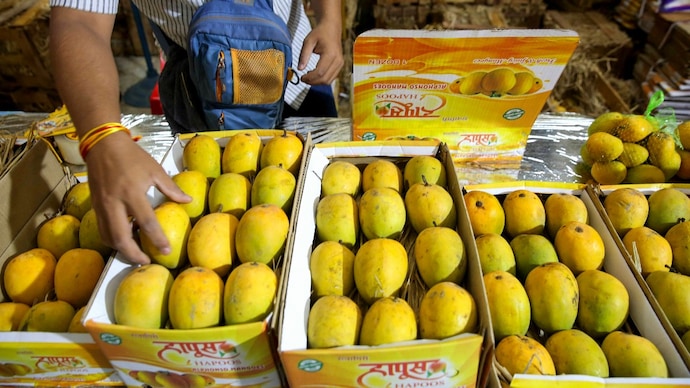
The Alphonso mango is not just a mere summer fruit in India but possesses a stature much more complex and revered.
In India, particularly in the coastal belt of Maharashtra in the country's west, Alphonso mangoes are treated like an event marked on every calendar.
It's for that reason that the particular mango is heralded as the "King of Mangoes," and commands premium prices both at home and in foreign lands.
The mango's rather short summer harvest window is eagerly awaited by consumers, traders, and exporters alike.
But this year, tragedy has struck and the king of mangoes has come under the weather.
A RUINED SEASON FOR MANGOES
Komal Walke, a 26-year-old horticulturist in the coastal town of Devgad, one of Maharashtra's most celebrated Alphonso-growing areas, watched her family's three-acre orchard produce almost nothing this season, reported news agency Reuters.
To fulfil outstanding orders from online grocery platforms, she has been forced to source fruit from larger farms.
"If we don't deliver on our orders, the big clients will not return next year," she told Reuters.
Her story is far from unique. More than a dozen farmers, traders, exporters, and government officials across Maharashtra, also described losses as severe and production as among the lowest in decades.
The apparently unprecedented damage unfolded in two stages.
A sharp difference between daytime and nighttime temperatures in December and January disrupted the flowering stage, which is the point at which mango trees begin developing fruit.
Then, unusually high heat in April and May, likely linked to the El Nino weather phenomenon, spoilt the fruits themselves.
El Nino is a periodic warming of surface temperatures in the Pacific Ocean that triggers erratic and often extreme weather patterns across the globe. A strong El Nino is expected this year and is forecast to hurt crops across India.
The scale of the loss in Devgad has provided a preview of what the shifting weather patterns can do. A government-backed survey by scientists and field officials estimated crop losses in the district at 85–90%.
WAR MAKES IT WORSE
But weather is not the only culprit, as other factors too have contributed to the damage sustained by India's beloved fruit.
India is the world's largest producer of mangoes, growing 28 million metric tons in 2024-25. The entire mango crop was valued at $2.3 billion last year, with roughly $56 million worth of fresh mangoes and $80 million worth of mango pulp exported in 2025.
But this year, reduced supply has been met with reduced demand, and the reason behind the drop is the ongoing US-Iran war, which has disrupted trade routes to the Gulf region; the situation is such that Dubai and Oman have cut shipments by nearly 40%.
The impacts are not only global but are also hitting households and farmers.
Sanjay Nare, a 52-year-old carton manufacturer in the town of Malvan, about 50 kilometres from Devgad, is sitting on nearly 1,00,000 unsold boxes of Alphonsos mangoes.
"The economy in this region is sustained by mangoes and fish," he said. "Without our seasonal mangoes, we have very little else."
The Alphonso mango is not just a mere summer fruit in India but possesses a stature much more complex and revered.
In India, particularly in the coastal belt of Maharashtra in the country's west, Alphonso mangoes are treated like an event marked on every calendar.
It's for that reason that the particular mango is heralded as the "King of Mangoes," and commands premium prices both at home and in foreign lands.
The mango's rather short summer harvest window is eagerly awaited by consumers, traders, and exporters alike.
But this year, tragedy has struck and the king of mangoes has come under the weather.
A RUINED SEASON FOR MANGOES
Komal Walke, a 26-year-old horticulturist in the coastal town of Devgad, one of Maharashtra's most celebrated Alphonso-growing areas, watched her family's three-acre orchard produce almost nothing this season, reported news agency Reuters.
To fulfil outstanding orders from online grocery platforms, she has been forced to source fruit from larger farms.
"If we don't deliver on our orders, the big clients will not return next year," she told Reuters.
Her story is far from unique. More than a dozen farmers, traders, exporters, and government officials across Maharashtra, also described losses as severe and production as among the lowest in decades.
The apparently unprecedented damage unfolded in two stages.
A sharp difference between daytime and nighttime temperatures in December and January disrupted the flowering stage, which is the point at which mango trees begin developing fruit.
Then, unusually high heat in April and May, likely linked to the El Nino weather phenomenon, spoilt the fruits themselves.
El Nino is a periodic warming of surface temperatures in the Pacific Ocean that triggers erratic and often extreme weather patterns across the globe. A strong El Nino is expected this year and is forecast to hurt crops across India.
The scale of the loss in Devgad has provided a preview of what the shifting weather patterns can do. A government-backed survey by scientists and field officials estimated crop losses in the district at 85–90%.
WAR MAKES IT WORSE
But weather is not the only culprit, as other factors too have contributed to the damage sustained by India's beloved fruit.
India is the world's largest producer of mangoes, growing 28 million metric tons in 2024-25. The entire mango crop was valued at $2.3 billion last year, with roughly $56 million worth of fresh mangoes and $80 million worth of mango pulp exported in 2025.
But this year, reduced supply has been met with reduced demand, and the reason behind the drop is the ongoing US-Iran war, which has disrupted trade routes to the Gulf region; the situation is such that Dubai and Oman have cut shipments by nearly 40%.
The impacts are not only global but are also hitting households and farmers.
Sanjay Nare, a 52-year-old carton manufacturer in the town of Malvan, about 50 kilometres from Devgad, is sitting on nearly 1,00,000 unsold boxes of Alphonsos mangoes.
"The economy in this region is sustained by mangoes and fish," he said. "Without our seasonal mangoes, we have very little else."

