700-year-old mummy's tooth reveals ancient disease that killed thousands
Before the invention of modern antibiotics, the disease was a leading cause of childhood death and disability, sometimes causing vision and hearing loss.
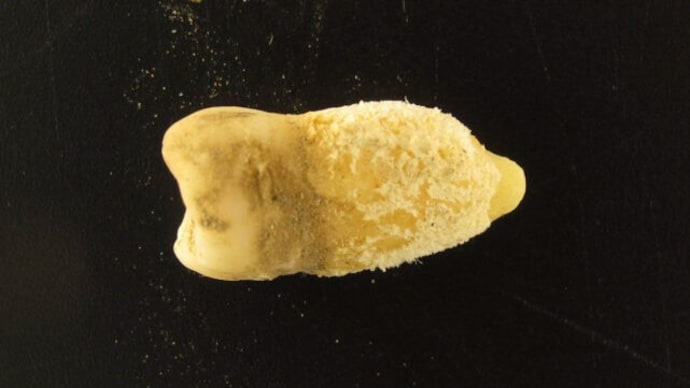
A single tooth from a mummified skull found in Bolivia is forcing scientists to rethink one of history's most enduring medical assumptions.
The assumption in question is that European colonists were responsible for bringing scarlet fever to the Americas.
New research with startling findings, published in the Nature Communications journal, suggests the disease was already there, centuries before any ships crossed the Atlantic.
WHAT IS SCARLET FEVER?
Scarlet fever is a bacterial infection caused by Streptococcus pyogenes, the same bug responsible for strep throat.
Before the invention of modern antibiotics, the disease was a leading cause of childhood death and disability, sometimes causing vision and hearing loss.
For a long time, scarlet fever was grouped among the so-called frontier diseases, which were illnesses widely believed to have been carried to the Americas by European settlers, devastating native populations whose immune systems had never encountered them before.
That story, it turns out, may be far from the truth.
TOOTH DEBUNKS ASSUMPTION
Scientists in Italy and the UK found evidence of a bacterial infection in the tooth of an ancient mummified skull belonging to a male individual who lived on the high-altitude lands of what is now Bolivia between 1283 and 1383 AD, over a century before Columbus sailed in 1492.
The ancient strain carried not all but many of the pathogenic genes found in modern Streptococcus pyogenes strains, and appears to have split from its closest relatives roughly 10,000 years ago.
Researchers believe it may have entered the Americas with early human migrations across the Bering Strait from Siberia.
Scarlet fever isn't alone in this rewriting of history.
Recent ancient DNA evidence has raised similar questions about syphilis and leprosy, both previously assumed to be colonial imports.
A 700-YEAR-OLD GENETIC PUZZLE
The ancient DNA retrieved from the tooth was highly fragmented and degraded, yet scientists say they could still extract enough information to reconstruct a model of the bacterium's genome.
One researcher compared it to assembling a jigsaw puzzle without knowing what the finished picture looks like.
Crucially, scientists found core virulence genes in the ancient strain, supporting its classification as a disease-causing bacterium that likely infected the throat.
While antibiotics have tamed scarlet fever today, modern strains are growing more resistant, making the study of its deep past more urgent than ever.
A single tooth from a mummified skull found in Bolivia is forcing scientists to rethink one of history's most enduring medical assumptions.
The assumption in question is that European colonists were responsible for bringing scarlet fever to the Americas.
New research with startling findings, published in the Nature Communications journal, suggests the disease was already there, centuries before any ships crossed the Atlantic.
WHAT IS SCARLET FEVER?
Scarlet fever is a bacterial infection caused by Streptococcus pyogenes, the same bug responsible for strep throat.
Before the invention of modern antibiotics, the disease was a leading cause of childhood death and disability, sometimes causing vision and hearing loss.
For a long time, scarlet fever was grouped among the so-called frontier diseases, which were illnesses widely believed to have been carried to the Americas by European settlers, devastating native populations whose immune systems had never encountered them before.
That story, it turns out, may be far from the truth.
TOOTH DEBUNKS ASSUMPTION
Scientists in Italy and the UK found evidence of a bacterial infection in the tooth of an ancient mummified skull belonging to a male individual who lived on the high-altitude lands of what is now Bolivia between 1283 and 1383 AD, over a century before Columbus sailed in 1492.
The ancient strain carried not all but many of the pathogenic genes found in modern Streptococcus pyogenes strains, and appears to have split from its closest relatives roughly 10,000 years ago.
Researchers believe it may have entered the Americas with early human migrations across the Bering Strait from Siberia.
Scarlet fever isn't alone in this rewriting of history.
Recent ancient DNA evidence has raised similar questions about syphilis and leprosy, both previously assumed to be colonial imports.
A 700-YEAR-OLD GENETIC PUZZLE
The ancient DNA retrieved from the tooth was highly fragmented and degraded, yet scientists say they could still extract enough information to reconstruct a model of the bacterium's genome.
One researcher compared it to assembling a jigsaw puzzle without knowing what the finished picture looks like.
Crucially, scientists found core virulence genes in the ancient strain, supporting its classification as a disease-causing bacterium that likely infected the throat.
While antibiotics have tamed scarlet fever today, modern strains are growing more resistant, making the study of its deep past more urgent than ever.

