They ate humans: Neanderthals ate outsiders, especially woman and children
The claim made by a new study shows an image that is darker than older portrayals of Neanderthals as simple cave-dwellers.
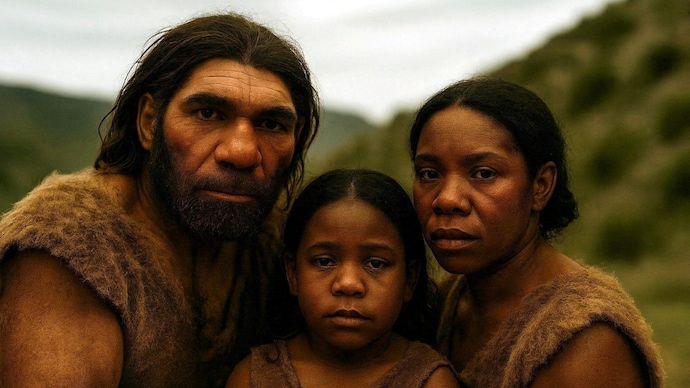
Forty thousand years ago, deep inside a cave in Belgium, something unsettling was happening.
A new study has found that our ancient human cousins, called Neanderthals, selectively hunted and ate people from outside their own group.
And that's not even the worst part. Scientists have concluded that this selective cannibalism especially targeted women and children.
The research, published by an international team led by scientists from the French National Centre for Scientific Research (CNRS), examined bones from a series of connected caves in Belgium, called the Goyet Caves. The remains that the team found date back to between 41,000 and 45,000 years, which is widely considered as the final millennia of Neanderthal existence in Europe.
WHAT DID BONES SHOW?
The condition of the bones told researchers a very grim story.
Many of the bones showed cut marks, deliberate breakage, and signs of processing, which is the same technique Neanderthals used when preparing animal prey for food.
The lower limbs appeared to have been specifically selected, and bones were broken open to get to the nutrient-rich marrow inside.
Crucially, DNA analysis showed that the victims did not belong to the local Neanderthal group.
Isotope measurements, a technique that uses chemical signatures in bone to trace where a person grew up, suggested that the victims had come from elsewhere. They were outsiders, brought to the cave and treated not as kin, but as prey.
This rules out ritual or ceremonial cannibalism, which has been proposed for some other prehistoric sites. Here, the evidence points directly to cannibalism for food.
DID NEANDERTHALS FIGHT?
The study’s authors suggest that the behaviour may reflect rising tensions between Neanderthal groups during a particularly difficult period.
Early Homo sapiens were beginning to arrive in Europe at this time, potentially putting pressure on resources and territory. The deliberate targeting of outsiders, especially the most vulnerable members of a rival group, hints at organised intergroup violence.
The findings are the result of over a decade of research.
Scientists revisited the Goyet bone collection, housed at the Royal Belgian Institute of Natural Sciences in Brussels, using modern tools including DNA sequencing, radiocarbon dating, and digital bone reconstruction.
The picture that emerges is darker than older portrayals of Neanderthals as simple cave-dwellers. Their world, it turns out, was shaped by social tensions, survival pressures, and extreme violence.
Forty thousand years ago, deep inside a cave in Belgium, something unsettling was happening.
A new study has found that our ancient human cousins, called Neanderthals, selectively hunted and ate people from outside their own group.
And that's not even the worst part. Scientists have concluded that this selective cannibalism especially targeted women and children.
The research, published by an international team led by scientists from the French National Centre for Scientific Research (CNRS), examined bones from a series of connected caves in Belgium, called the Goyet Caves. The remains that the team found date back to between 41,000 and 45,000 years, which is widely considered as the final millennia of Neanderthal existence in Europe.
WHAT DID BONES SHOW?
The condition of the bones told researchers a very grim story.
Many of the bones showed cut marks, deliberate breakage, and signs of processing, which is the same technique Neanderthals used when preparing animal prey for food.
The lower limbs appeared to have been specifically selected, and bones were broken open to get to the nutrient-rich marrow inside.
Crucially, DNA analysis showed that the victims did not belong to the local Neanderthal group.
Isotope measurements, a technique that uses chemical signatures in bone to trace where a person grew up, suggested that the victims had come from elsewhere. They were outsiders, brought to the cave and treated not as kin, but as prey.
This rules out ritual or ceremonial cannibalism, which has been proposed for some other prehistoric sites. Here, the evidence points directly to cannibalism for food.
DID NEANDERTHALS FIGHT?
The study’s authors suggest that the behaviour may reflect rising tensions between Neanderthal groups during a particularly difficult period.
Early Homo sapiens were beginning to arrive in Europe at this time, potentially putting pressure on resources and territory. The deliberate targeting of outsiders, especially the most vulnerable members of a rival group, hints at organised intergroup violence.
The findings are the result of over a decade of research.
Scientists revisited the Goyet bone collection, housed at the Royal Belgian Institute of Natural Sciences in Brussels, using modern tools including DNA sequencing, radiocarbon dating, and digital bone reconstruction.
The picture that emerges is darker than older portrayals of Neanderthals as simple cave-dwellers. Their world, it turns out, was shaped by social tensions, survival pressures, and extreme violence.

