Newly discovered spider named Pink Floyd can devour animal six times its size
The newly identified spider, measuring just 3 to 4 millimetres in length, gets its unique name from both music and habitat.
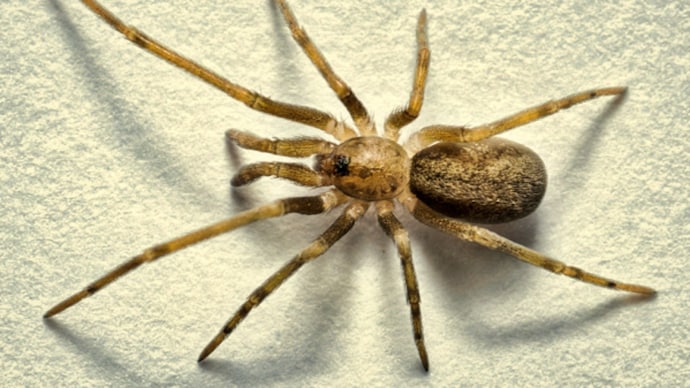
A team of researchers from across South America has discovered a new species of crevice-weaving spider, naming it Pikelinia floydmuraria in a creative nod to the legendary rock band Pink Floyd.
The study, published in the open-access journal Zoosystematics and Evolution, expands scientific understanding of the little-known Pikelinia genus.
The newly identified spider, measuring just 3 to 4 millimetres in length, gets its unique name from both music and habitat.
The term “muraria,” derived from Latin for “wall,” reflects the spider’s tendency to live in cracks and walls of buildings. At the same time, it pays tribute to Pink Floyd’s iconic album The Wall.
Despite its tiny size, Pikelinia floydmuraria could play an important role in urban ecosystems. Researchers found that these spiders, which thrive in human environments, actively prey on common household pests. Their diet includes ants, flies, mosquitoes and beetles, many of which are considered nuisances or disease carriers.
IT HAS A UNIQUE HUNTING ABILITY
One of the most striking findings of the study is the spider’s hunting ability. Scientists observed these spiders capturing ants up to six times larger than their own body size. The species appears to have adapted cleverly to city life by building webs near artificial lights, where insects are naturally drawn.
This strategy allows them to efficiently trap prey and potentially help control pest populations in urban areas.
The research also shed light on a long-standing mystery involving a related species from the Galapagos Islands. For the first time, scientists fully described the female anatomy of Pikelinia fasciata, a species first identified in 1902.
Comparisons between the Galpagos spider and the newly discovered Colombian species revealed striking similarities, particularly in male reproductive structures.
These similarities suggest a possible evolutionary link between the two species, despite being separated by the Pacific Ocean. However, researchers say it remains unclear whether this resemblance is due to shared ancestry or similar environmental adaptations.
The discovery of Pikelinia floydmuraria marks only the second known species of this genus in Colombia, highlighting how much remains unknown about even small, urban-dwelling creatures.
Scientists are now calling for further DNA-based studies to better understand the spider’s origins, evolution and ecological role.
As research continues, this tiny, music-inspired spider could prove to be more than just a scientific curiosity, potentially serving as a natural ally in keeping urban pest populations in check.
A team of researchers from across South America has discovered a new species of crevice-weaving spider, naming it Pikelinia floydmuraria in a creative nod to the legendary rock band Pink Floyd.
The study, published in the open-access journal Zoosystematics and Evolution, expands scientific understanding of the little-known Pikelinia genus.
The newly identified spider, measuring just 3 to 4 millimetres in length, gets its unique name from both music and habitat.
The term “muraria,” derived from Latin for “wall,” reflects the spider’s tendency to live in cracks and walls of buildings. At the same time, it pays tribute to Pink Floyd’s iconic album The Wall.
Despite its tiny size, Pikelinia floydmuraria could play an important role in urban ecosystems. Researchers found that these spiders, which thrive in human environments, actively prey on common household pests. Their diet includes ants, flies, mosquitoes and beetles, many of which are considered nuisances or disease carriers.
IT HAS A UNIQUE HUNTING ABILITY
One of the most striking findings of the study is the spider’s hunting ability. Scientists observed these spiders capturing ants up to six times larger than their own body size. The species appears to have adapted cleverly to city life by building webs near artificial lights, where insects are naturally drawn.
This strategy allows them to efficiently trap prey and potentially help control pest populations in urban areas.
The research also shed light on a long-standing mystery involving a related species from the Galapagos Islands. For the first time, scientists fully described the female anatomy of Pikelinia fasciata, a species first identified in 1902.
Comparisons between the Galpagos spider and the newly discovered Colombian species revealed striking similarities, particularly in male reproductive structures.
These similarities suggest a possible evolutionary link between the two species, despite being separated by the Pacific Ocean. However, researchers say it remains unclear whether this resemblance is due to shared ancestry or similar environmental adaptations.
The discovery of Pikelinia floydmuraria marks only the second known species of this genus in Colombia, highlighting how much remains unknown about even small, urban-dwelling creatures.
Scientists are now calling for further DNA-based studies to better understand the spider’s origins, evolution and ecological role.
As research continues, this tiny, music-inspired spider could prove to be more than just a scientific curiosity, potentially serving as a natural ally in keeping urban pest populations in check.

