Is Iran dumping excess oil in the ocean due to storage issues? Why it's worrying
With multiple spills recorded since February, and Iran's storage crisis showing no sign of easing, the sea is absorbing a crisis it may take generations to recover from. How bad does it get?
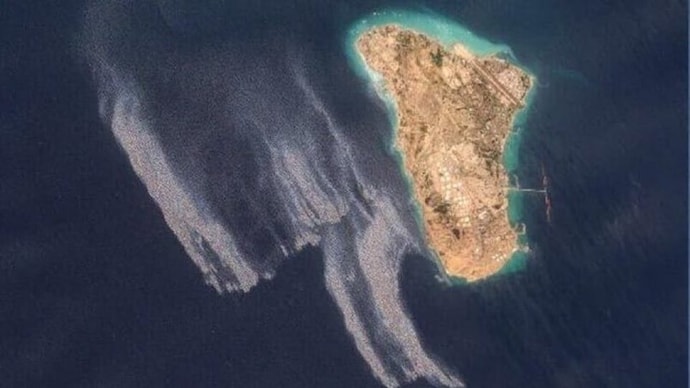
A grey-and-white slick stretching across roughly 45 square kilometres of the Persian Gulf appeared in satellite images last week near Iran's Kharg Island, the hub for 90% of Iran's oil exports.
Detected by Europe's Copernicus Sentinel satellites, it is one of several suspected spills recorded in the Gulf since the US-Israel war on Iran began on February 28.
Iran has denied responsibility, calling the claims "psychological warfare" and attributing the oil to waste discharged by a European tanker.
Whether accidental or deliberate, the damage to the water is real, and the Persian Gulf is one of the worst places on Earth for it to happen.
The particular vulnerability arises from the fact that the Gulf, unlike the open ocean, is a shallow, semi-enclosed basin with very limited water circulation. As a result, pollutants that enter it do not flush out but rather sink into the seabed and stay.
The Gulf is already under severe stress from rising water temperatures, increasing salinity, and decades of coastal development. An oil spill here does not just affect the surface; it penetrates sediments, coats shorelines, and works its way through an entire food chain.
HOW OIL DAMAGES MARINE LIFE
When oil enters the sea, its damage is immediate and cascading.
At the surface, it forms a slick that blocks sunlight and depletes oxygen, suffocating the microscopic organisms that form the base of the marine food web.
Seabirds that land on oiled water lose the insulating capacity of their feathers and die of hypothermia. Marine turtles mistake floating oil for food and essentially consume poison.
Below the surface, oil settles into coral communities and mangrove root systems, which are habitats that serve as nurseries for fish and spawning grounds for dozens of species.
"Oil spills affect the entire ecosystem, from microorganisms to fish, birds, and marine turtles that depend on mangrove habitats," Nina Noelle of Greenpeace Germany told CNN.
DECADES OF DAMAGE
Perhaps the most sobering reality of oil spills is how long their consequences endure.
After the 2010 Deepwater Horizon disaster, considered the largest accidental marine oil spill in history, oil levels along affected coastlines were found to be 100 times higher than normal in the summer after the event.
Eight years later, sediment contamination in surrounding marshland was still ten times above pre-spill levels.
Scientists estimate recovery timelines for some species at anywhere between 10 and 105 years.
In the Persian Gulf, where water circulates far less freely than in the open ocean, those timelines could be even longer.
And with multiple spills already recorded since February, active conflict making clean-up impossible, and Iran's storage crisis showing no sign of easing, the sea is absorbing a crisis it may take generations to recover from.
A grey-and-white slick stretching across roughly 45 square kilometres of the Persian Gulf appeared in satellite images last week near Iran's Kharg Island, the hub for 90% of Iran's oil exports.
Detected by Europe's Copernicus Sentinel satellites, it is one of several suspected spills recorded in the Gulf since the US-Israel war on Iran began on February 28.
Iran has denied responsibility, calling the claims "psychological warfare" and attributing the oil to waste discharged by a European tanker.
Whether accidental or deliberate, the damage to the water is real, and the Persian Gulf is one of the worst places on Earth for it to happen.
The particular vulnerability arises from the fact that the Gulf, unlike the open ocean, is a shallow, semi-enclosed basin with very limited water circulation. As a result, pollutants that enter it do not flush out but rather sink into the seabed and stay.
The Gulf is already under severe stress from rising water temperatures, increasing salinity, and decades of coastal development. An oil spill here does not just affect the surface; it penetrates sediments, coats shorelines, and works its way through an entire food chain.
HOW OIL DAMAGES MARINE LIFE
When oil enters the sea, its damage is immediate and cascading.
At the surface, it forms a slick that blocks sunlight and depletes oxygen, suffocating the microscopic organisms that form the base of the marine food web.
Seabirds that land on oiled water lose the insulating capacity of their feathers and die of hypothermia. Marine turtles mistake floating oil for food and essentially consume poison.
Below the surface, oil settles into coral communities and mangrove root systems, which are habitats that serve as nurseries for fish and spawning grounds for dozens of species.
"Oil spills affect the entire ecosystem, from microorganisms to fish, birds, and marine turtles that depend on mangrove habitats," Nina Noelle of Greenpeace Germany told CNN.
DECADES OF DAMAGE
Perhaps the most sobering reality of oil spills is how long their consequences endure.
After the 2010 Deepwater Horizon disaster, considered the largest accidental marine oil spill in history, oil levels along affected coastlines were found to be 100 times higher than normal in the summer after the event.
Eight years later, sediment contamination in surrounding marshland was still ten times above pre-spill levels.
Scientists estimate recovery timelines for some species at anywhere between 10 and 105 years.
In the Persian Gulf, where water circulates far less freely than in the open ocean, those timelines could be even longer.
And with multiple spills already recorded since February, active conflict making clean-up impossible, and Iran's storage crisis showing no sign of easing, the sea is absorbing a crisis it may take generations to recover from.

