An IPL trophy could be Shubman GIll's T20I ticket. Could be
IPL 2026: Three IPL seasons, nearly 2,000 runs, and two World Cup snubs. He might win an IPL title as captain on Sunday. Shubman Gill has made the loudest possible case for a T20I recall. Whether India's selectors are listening is an entirely different question.
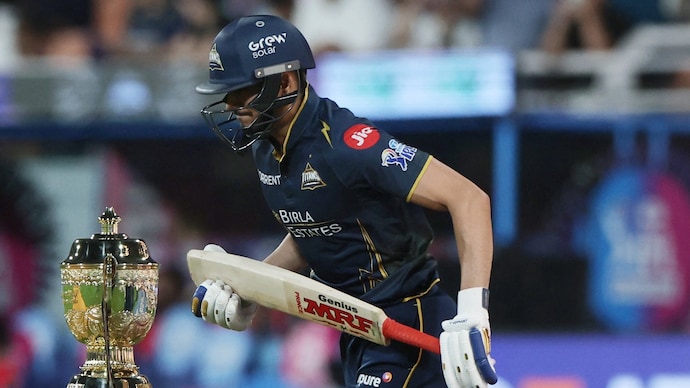
Shubman Gill has been here before. Not at this ground, not in this final, but in this exact position. IPL runs stacking up, the T20I door seemingly ajar, the question hanging in the air. In 2024, he scored 426 runs in 12 IPL games and still didn't make the T20 World Cup squad. In 2025, he came back as vice-captain, scored 650 IPL runs, and was told the door was open. Then, in December, chief selector Ajit Agarkar picked up the phone and told him it had closed again.
The reason, this time, was cold and statistical. In 15 T20I matches leading into the World Cup squad announcement, Gill had failed to score a half-century, averaging below 25 at a strike rate under 140. The selectors wanted power at the top.
Ishan Kishan, who had been out of T20I cricket since 2023, came back with 517 runs in 10 Syed Mushtaq Ali Trophy matches at a strike rate of nearly 200, and that was that. One phone call shattered Gill's World Cup dream. One unforgettable innings revived Kishan's international career. Such are the margins.
And yet, here he is. The question is whether, this time, the runs are simply too loud to ignore.
Speaking after the Qualifier 2 win in Chandigarh where he hit a 53-ball 103, Gill was measured but unambiguous.
"I will be happy to play if I get picked for the T20 team. And honestly, I want to keep working hard. Doesn't matter what format it is. I want to keep getting better as a T20 batter, ODI batter and Test batter. Cricket is such a game — you can never really get perfect, but obviously you strive for it, and that's what I like."
The careful phrasing is deliberate. Gill knows the T20I conversation around him has never been straightforward, and he is not about to make it messier on the eve of a final. But strip away the diplomacy and the message is clear: the door may have been shut on him, but he is still standing outside it, and he has spent two months building the loudest possible case for it to be reopened.
STRIKE RATE MATTERS
Because the case for Gill has never been stronger. This IPL, he has scored 722 runs at a strike rate of 163.72. That last number matters more than it might seem. His career IPL strike rate sits in the low 140s. The gap of nearly 20 runs per hundred balls is not accidental. Gill has consciously recalibrated his game in the shortest format, batting with an intent and aggression that has, for the first time, put the strike rate conversation to rest rather than fuelling it.
When even Agarkar, in December—the same month he made the phone call dropping Gill from the World Cup squad—said there was no doubting his talent, it told you something. The door was not being shut permanently. It was being shut on a version of Gill that the selectors felt wasn't hitting hard enough, fast enough.
That version, by the evidence of this IPL, no longer exists.
STILL NOT STRAIGHTFOWARD?
And yet the structural problem remains. India's T20I top order is crowded in a way that doesn't obviously accommodate him. Abhishek Sharma and Sanju Samson, who opened in the World Cup, are not going anywhere in a hurry.
And then there is the newest complication: Vaibhav Sooryavanshi, who announced himself to the world in this IPL with a kind of violent, joyful disregard for reputation that selectors simply cannot look away from. The teenager bats at the top, hits at a rate that makes even Gill's improved numbers look conservative, and carries the kind of novelty and excitement that selection committees tend to fall for. 776 runs at a strike rate of 237 and a record-breaking tally of 72 sixes.
The selectors' stated preference for a wicketkeeper-batter at the top adds another layer — Kishan or Samson bring keeping options. The queue, in other words, is long, and it is getting longer. Gill's case has to overcome a structural problem that runs beyond his own numbers.
He is also, paradoxically, almost too important in other formats. Five days after this final, he leads India in a one-off Test against Afghanistan. He is the ODI and Test captain, the designated next face of Indian cricket, the man being built for the long game. The T20I question, for those around him, may feel like a distraction from that larger project.
Gill, clearly, does not see it that way.
WHAT ABOUT PATIDAR?
Patidar's path, by contrast, may actually be simpler, if no less competitive.
He is not fighting for an opening slot. The T20I middle order, with its various moving parts around Suryakumar Yadav, Tilak Varma and Hardik Pandya, has more room to absorb a player of his profile — a 32-year-old who bats at No. 4 or 5, hits at close to 200, and, crucially, wins matches in the big moments rather than just the comfortable ones.
And if RCB win on Sunday, Patidar will become only the third captain in IPL history, after MS Dhoni and Rohit Sharma, to lift back-to-back titles. That is not footnote territory. That is the kind of company that reframes a cricketer's entire story.
The argument against Patidar is simply that nobody has been paying attention — and after this IPL, that excuse is running out.
On Saturday evening in Ahmedabad, Patidar spoke to the press. When the question about T20I selection came — framed around whether he envisioned himself as a future India T20 captain — he picked up the dead bat and left it there. "I don't visualise being the T20 captain of India. But at the same time, every captain wants to win trophies." And then, asked directly whether he was looking forward to any India selection conversation: "The answer to your first question is I'm not looking forward to any selection regarding India. So, I'm not looking forward to it."
It was a masterclass in saying nothing. But the context around Patidar makes the nothing rather loud.
The 32-year-old from Madhya Pradesh has, by any reasonable measure, been one of the IPL's most compelling performers this season, 486 runs at a strike rate nudging 200, capped by a 93 off 33 balls against Mohammed Siraj and Kagiso Rabada in the Qualifier 1. For someone who has played one ODI and a handful of Tests, and has barely registered in limited-overs selection conversations, the IPL has suddenly made him impossible to ignore.
His answer about captaincy, though, is more revealing than it first appears. "I've never thought about what another captain has done before. Wherever I am, I focus on what I can do best." And on handling pressure: "It's important to be yourself and focus on your strengths rather than focusing on what is not in your control. I always like to tell them about control levels."
Control levels. It is, perhaps, the most precise description of how Patidar operates — at the crease, in press conferences, and apparently everywhere in between.
The selectors meet soon after this IPL to pick the T20I squad for Ireland and England. For Patidar, a win on Sunday clears almost every remaining obstacle. For Gill, it adds the loudest possible chapter to an argument he has been making for three years, but the structural problem at the top of India's order does not disappear with a trophy. An IPL title is not a skeleton key. But it is, as both men know, the best available argument.
IPL 2026 | IPL Schedule | IPL Points Table | IPL Player Stats | Purple Cap | Orange Cap | IPL Videos | Cricket News | Live Score
Shubman Gill has been here before. Not at this ground, not in this final, but in this exact position. IPL runs stacking up, the T20I door seemingly ajar, the question hanging in the air. In 2024, he scored 426 runs in 12 IPL games and still didn't make the T20 World Cup squad. In 2025, he came back as vice-captain, scored 650 IPL runs, and was told the door was open. Then, in December, chief selector Ajit Agarkar picked up the phone and told him it had closed again.
The reason, this time, was cold and statistical. In 15 T20I matches leading into the World Cup squad announcement, Gill had failed to score a half-century, averaging below 25 at a strike rate under 140. The selectors wanted power at the top.
Ishan Kishan, who had been out of T20I cricket since 2023, came back with 517 runs in 10 Syed Mushtaq Ali Trophy matches at a strike rate of nearly 200, and that was that. One phone call shattered Gill's World Cup dream. One unforgettable innings revived Kishan's international career. Such are the margins.
And yet, here he is. The question is whether, this time, the runs are simply too loud to ignore.
Speaking after the Qualifier 2 win in Chandigarh where he hit a 53-ball 103, Gill was measured but unambiguous.
"I will be happy to play if I get picked for the T20 team. And honestly, I want to keep working hard. Doesn't matter what format it is. I want to keep getting better as a T20 batter, ODI batter and Test batter. Cricket is such a game — you can never really get perfect, but obviously you strive for it, and that's what I like."
The careful phrasing is deliberate. Gill knows the T20I conversation around him has never been straightforward, and he is not about to make it messier on the eve of a final. But strip away the diplomacy and the message is clear: the door may have been shut on him, but he is still standing outside it, and he has spent two months building the loudest possible case for it to be reopened.
STRIKE RATE MATTERS
Because the case for Gill has never been stronger. This IPL, he has scored 722 runs at a strike rate of 163.72. That last number matters more than it might seem. His career IPL strike rate sits in the low 140s. The gap of nearly 20 runs per hundred balls is not accidental. Gill has consciously recalibrated his game in the shortest format, batting with an intent and aggression that has, for the first time, put the strike rate conversation to rest rather than fuelling it.
When even Agarkar, in December—the same month he made the phone call dropping Gill from the World Cup squad—said there was no doubting his talent, it told you something. The door was not being shut permanently. It was being shut on a version of Gill that the selectors felt wasn't hitting hard enough, fast enough.
That version, by the evidence of this IPL, no longer exists.
STILL NOT STRAIGHTFOWARD?
And yet the structural problem remains. India's T20I top order is crowded in a way that doesn't obviously accommodate him. Abhishek Sharma and Sanju Samson, who opened in the World Cup, are not going anywhere in a hurry.
And then there is the newest complication: Vaibhav Sooryavanshi, who announced himself to the world in this IPL with a kind of violent, joyful disregard for reputation that selectors simply cannot look away from. The teenager bats at the top, hits at a rate that makes even Gill's improved numbers look conservative, and carries the kind of novelty and excitement that selection committees tend to fall for. 776 runs at a strike rate of 237 and a record-breaking tally of 72 sixes.
The selectors' stated preference for a wicketkeeper-batter at the top adds another layer — Kishan or Samson bring keeping options. The queue, in other words, is long, and it is getting longer. Gill's case has to overcome a structural problem that runs beyond his own numbers.
He is also, paradoxically, almost too important in other formats. Five days after this final, he leads India in a one-off Test against Afghanistan. He is the ODI and Test captain, the designated next face of Indian cricket, the man being built for the long game. The T20I question, for those around him, may feel like a distraction from that larger project.
Gill, clearly, does not see it that way.
WHAT ABOUT PATIDAR?
Patidar's path, by contrast, may actually be simpler, if no less competitive.
He is not fighting for an opening slot. The T20I middle order, with its various moving parts around Suryakumar Yadav, Tilak Varma and Hardik Pandya, has more room to absorb a player of his profile — a 32-year-old who bats at No. 4 or 5, hits at close to 200, and, crucially, wins matches in the big moments rather than just the comfortable ones.
And if RCB win on Sunday, Patidar will become only the third captain in IPL history, after MS Dhoni and Rohit Sharma, to lift back-to-back titles. That is not footnote territory. That is the kind of company that reframes a cricketer's entire story.
The argument against Patidar is simply that nobody has been paying attention — and after this IPL, that excuse is running out.
On Saturday evening in Ahmedabad, Patidar spoke to the press. When the question about T20I selection came — framed around whether he envisioned himself as a future India T20 captain — he picked up the dead bat and left it there. "I don't visualise being the T20 captain of India. But at the same time, every captain wants to win trophies." And then, asked directly whether he was looking forward to any India selection conversation: "The answer to your first question is I'm not looking forward to any selection regarding India. So, I'm not looking forward to it."
It was a masterclass in saying nothing. But the context around Patidar makes the nothing rather loud.
The 32-year-old from Madhya Pradesh has, by any reasonable measure, been one of the IPL's most compelling performers this season, 486 runs at a strike rate nudging 200, capped by a 93 off 33 balls against Mohammed Siraj and Kagiso Rabada in the Qualifier 1. For someone who has played one ODI and a handful of Tests, and has barely registered in limited-overs selection conversations, the IPL has suddenly made him impossible to ignore.
His answer about captaincy, though, is more revealing than it first appears. "I've never thought about what another captain has done before. Wherever I am, I focus on what I can do best." And on handling pressure: "It's important to be yourself and focus on your strengths rather than focusing on what is not in your control. I always like to tell them about control levels."
Control levels. It is, perhaps, the most precise description of how Patidar operates — at the crease, in press conferences, and apparently everywhere in between.
The selectors meet soon after this IPL to pick the T20I squad for Ireland and England. For Patidar, a win on Sunday clears almost every remaining obstacle. For Gill, it adds the loudest possible chapter to an argument he has been making for three years, but the structural problem at the top of India's order does not disappear with a trophy. An IPL title is not a skeleton key. But it is, as both men know, the best available argument.
IPL 2026 | IPL Schedule | IPL Points Table | IPL Player Stats | Purple Cap | Orange Cap | IPL Videos | Cricket News | Live Score

