Making sure right people come to US: Trump on visas for FIFA World Cup
US President Donald Trump said his administration is working to ensure that "the right people" are allowed into the country for the FIFA World Cup 2026 as the United States prepares to host the tournament.
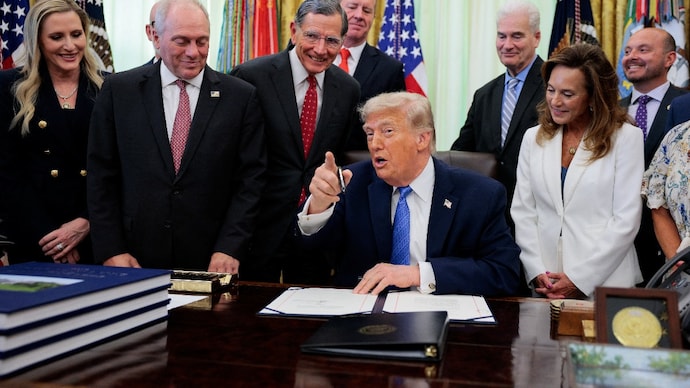
US President Donald Trump said, as quoted by Reuters, his administration is taking steps to ensure that 'the right people' are allowed into the country for the FIFA World Cup 2026, as the United States prepares to host the biggest edition of football's showpiece event.
Speaking ahead of the tournament's opening match on Thursday, Trump said his administration was focused on facilitating travel for visitors while maintaining security and immigration standards. The United States is hosting the majority of the tournament's 104 matches as part of a joint bid with Canada and Mexico.
Trump's comments come at a time when the United States has faced criticism over its immigration and border policies in the lead-up to the tournament. Human rights groups and football stakeholders have raised concerns over visa denials, travel restrictions and security checks involving players, officials and supporters.
United Nations High Commissioner for Human Rights Volker Trk, as reported by AP, warned of issues related to "racial profiling, surveillance and immigration enforcement" even before the 48-team tournament gets underway.
Speaking at a briefing in Geneva, Trk called for a "massive rethink" of immigration policies, particularly in the United States, and expressed hope that ongoing concerns would not overshadow the World Cup.
"We have seen some of the scenes," Trk said, adding that major sporting events should provide a safe and dignified environment for players, officials, supporters and society as a whole.
PLAYERS, OFFICIALS, FANS AFFECTED
Several incidents in recent weeks have fuelled the debate.
Iran's national team was moved from a training camp in Arizona to neighbouring Mexico, while some Iranian officials were reportedly denied US entry visas. Somali referee Omar Artan, considered one of Africa's leading match officials, was also refused entry into the United States.
According to a US official, Artan was denied admission due to alleged associations with suspected members of terror organisations. However, no further details or evidence were publicly disclosed.
Meanwhile, images circulating on social media showed a Senegal player being frisked by a security official on an airport tarmac, prompting criticism from some observers.
Fans have also reported difficulties entering the country. Supporters from nations including Morocco and Scotland said their travel documents were denied or revoked despite spending thousands of dollars on flights, accommodation and match tickets.
QUESTIONS OVER FIFA'S COMMITMENTS
The controversy has also placed FIFA under scrutiny. The governing body's bidding requirements for the 2026 World Cup stated that visa processing should be carried out in a non-discriminatory manner, while respecting a host nation's immigration and security regulations.
Critics argue that some of the incidents reported ahead of the tournament appear inconsistent with those principles. FIFA has also pledged to uphold the United Nations' guiding principles on business and human rights at its events.
With the tournament set to begin and millions of fans expected to follow the action across North America, attention is likely to remain on both the football and the policies governing who gets to experience it in person.
US President Donald Trump said, as quoted by Reuters, his administration is taking steps to ensure that 'the right people' are allowed into the country for the FIFA World Cup 2026, as the United States prepares to host the biggest edition of football's showpiece event.
Speaking ahead of the tournament's opening match on Thursday, Trump said his administration was focused on facilitating travel for visitors while maintaining security and immigration standards. The United States is hosting the majority of the tournament's 104 matches as part of a joint bid with Canada and Mexico.
Trump's comments come at a time when the United States has faced criticism over its immigration and border policies in the lead-up to the tournament. Human rights groups and football stakeholders have raised concerns over visa denials, travel restrictions and security checks involving players, officials and supporters.
United Nations High Commissioner for Human Rights Volker Trk, as reported by AP, warned of issues related to "racial profiling, surveillance and immigration enforcement" even before the 48-team tournament gets underway.
Speaking at a briefing in Geneva, Trk called for a "massive rethink" of immigration policies, particularly in the United States, and expressed hope that ongoing concerns would not overshadow the World Cup.
"We have seen some of the scenes," Trk said, adding that major sporting events should provide a safe and dignified environment for players, officials, supporters and society as a whole.
PLAYERS, OFFICIALS, FANS AFFECTED
Several incidents in recent weeks have fuelled the debate.
Iran's national team was moved from a training camp in Arizona to neighbouring Mexico, while some Iranian officials were reportedly denied US entry visas. Somali referee Omar Artan, considered one of Africa's leading match officials, was also refused entry into the United States.
According to a US official, Artan was denied admission due to alleged associations with suspected members of terror organisations. However, no further details or evidence were publicly disclosed.
Meanwhile, images circulating on social media showed a Senegal player being frisked by a security official on an airport tarmac, prompting criticism from some observers.
Fans have also reported difficulties entering the country. Supporters from nations including Morocco and Scotland said their travel documents were denied or revoked despite spending thousands of dollars on flights, accommodation and match tickets.
QUESTIONS OVER FIFA'S COMMITMENTS
The controversy has also placed FIFA under scrutiny. The governing body's bidding requirements for the 2026 World Cup stated that visa processing should be carried out in a non-discriminatory manner, while respecting a host nation's immigration and security regulations.
Critics argue that some of the incidents reported ahead of the tournament appear inconsistent with those principles. FIFA has also pledged to uphold the United Nations' guiding principles on business and human rights at its events.
With the tournament set to begin and millions of fans expected to follow the action across North America, attention is likely to remain on both the football and the policies governing who gets to experience it in person.

