Who was the last Spanish player to win Ballon d'Or before Rodri?
Rodri is the first Spanish player to win the Ballon d'Or since 1960 when Barcelona's Luis Suarez - not to be confused with his Uruguayan namesake - won the award.
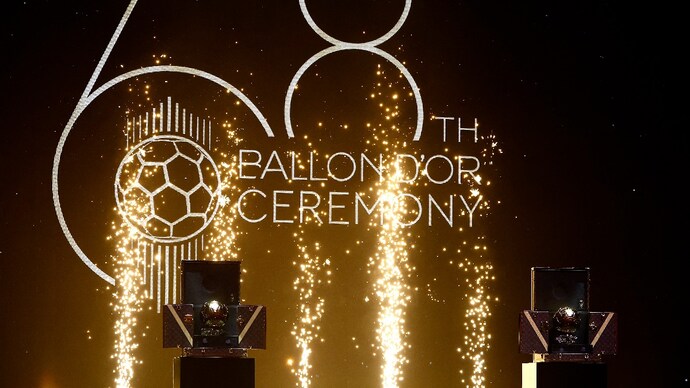
Manchester City footballer Rodri beat Vinicius Jr. to win the Ballon d'Or on Monday, October 28. In a glitzy ceremony in Paris, Rodri became the first Spanish player in over 60 years to win the prestigious award. Before Rodri, Luis Suarez was the last Spain player to win the award, he clinched the trophy way back in 1960.
Spain have been a powerhouse in world football but have fallen short in recent times when it comes to individual awards. On Monday, Spain's players - Rodri and Lamine Yamal - one individual awards, once again putting Spain on the map in the award ceremony.
But who was Luis Sućrez, the last Spanish player before Rodri to win the Ballon d'Or? Here's a look.
Luis Sućrez Miramontes, often affectionately known as "Luisito" or "El Arquitecto" (The Architect), is one of the most revered figures in Spanish football history, particularly noted for his exceptional skills and strategic playmaking. Born on May 2, 1935, in La CoruĖa, Spain, Sućrez embarked on a illustrious career that would see him achieve numerous accolades, including the prestigious Ballon d'Or in 1960.
Sućrez began his football journey at Deportivo de La CoruĖa before moving to EspaĖa Industrial, a lesser-known club, and eventually joining the Spanish giants, FC Barcelona, in 1955. At Barcelona, he quickly established himself as a creative and visionary midfielder, known for his elegant and fluid style of play. His role as an inside forward or attacking midfielder during his early years at Barcelona was pivotal in the team's success, and he soon became one of the key players under the guidance of various managers, including the influential Helenio Herrera.
Ballon d'Or and International Success
In 1960, Sućrez's outstanding performance earned him the Ballon d'Or, awarded by the French magazine *France Football*. This honor was a testament to his exceptional skills and his impact on the football world. He received the award on December 13, 1960, with a total of 54 votes, surpassing other legendary players such as Ferenc Puskćs, Lev Yashin, and Bobby Charlton.
Sućrez's success was not limited to club football. He was a crucial member of the Spanish national team, representing Spain from 1957 to 1972 and making 32 appearances. One of his most notable achievements with the national team was winning the 1964 European Championship, where Spain defeated the Soviet Union in the final. This victory marked a significant milestone in Spanish football history and underscored Sućrez's importance to the team.
Despite his success at Barcelona, Sućrez's relationship with the fans began to deteriorate due to a perceived rivalry with another star player, Lćszlė Kubala. This led to Sućrez being booed by his own supporters, a situation that became increasingly unbearable. In 1961, he made the significant decision to join Inter Milan, where he would reunite with his former manager Helenio Herrera. This move proved to be a turning point in his career, as he became an integral part of the legendary "Grande Inter" team.
At Inter Milan, Sućrez adapted to a new role as a deep-lying playmaker, utilizing his exceptional vision, passing range, and skill on the ball to orchestrate the team's attacks. During his nine-year tenure at Inter, he won three Serie A titles, two European Cups, and two Intercontinental Cups. His contributions were instrumental in Inter Milan's dominance during the 1960s, and he remains one of the most celebrated midfielders in the history of the club.
Post-Playing Career
After retiring as a player in 1973, Sućrez transitioned into a coaching career, managing several clubs including Inter Milan, Deportivo de La CoruĖa, Cagliari, and SPAL. He also had a stint as the manager of the Spanish national team from 1988 to 1991, leading them past the group stage of the 1990 World Cup. In his later years, Sućrez worked as a commentator for Spanish radio, sharing his insights and expertise with a new generation of football fans.
Legacy
Luis Sućrez Miramontes passed away on July 9, 2023, at the age of 88, leaving behind a legacy that is deeply revered in the football world. He remains the only male Spanish-born player to have won the Ballon d'Or, a distinction that highlights his unique talent and influence on the game. His career is a testament to his hard work, dedication, and innovative style of play, which inspired generations of footballers and fans alike.
Sućrez's impact extends beyond his on-field achievements. He was a symbol of Spanish football's golden era and played a crucial role in shaping the tactical and strategic aspects of the game. His ability to adapt and excel in different roles and environments is a hallmark of his greatness, and his legacy continues to be celebrated by fans and pundits around the world.
In summary, Luis Sućrez Miramontes was a footballing genius whose career was marked by numerous accolades, including the 1960 Ballon d'Or. His contributions to both club and international football are unparalleled, and his legacy as one of the greatest Spanish football players of all time remains unchallenged.
Manchester City footballer Rodri beat Vinicius Jr. to win the Ballon d'Or on Monday, October 28. In a glitzy ceremony in Paris, Rodri became the first Spanish player in over 60 years to win the prestigious award. Before Rodri, Luis Suarez was the last Spain player to win the award, he clinched the trophy way back in 1960.
Spain have been a powerhouse in world football but have fallen short in recent times when it comes to individual awards. On Monday, Spain's players - Rodri and Lamine Yamal - one individual awards, once again putting Spain on the map in the award ceremony.
But who was Luis Sućrez, the last Spanish player before Rodri to win the Ballon d'Or? Here's a look.
Luis Sućrez Miramontes, often affectionately known as "Luisito" or "El Arquitecto" (The Architect), is one of the most revered figures in Spanish football history, particularly noted for his exceptional skills and strategic playmaking. Born on May 2, 1935, in La CoruĖa, Spain, Sućrez embarked on a illustrious career that would see him achieve numerous accolades, including the prestigious Ballon d'Or in 1960.
Sućrez began his football journey at Deportivo de La CoruĖa before moving to EspaĖa Industrial, a lesser-known club, and eventually joining the Spanish giants, FC Barcelona, in 1955. At Barcelona, he quickly established himself as a creative and visionary midfielder, known for his elegant and fluid style of play. His role as an inside forward or attacking midfielder during his early years at Barcelona was pivotal in the team's success, and he soon became one of the key players under the guidance of various managers, including the influential Helenio Herrera.
Ballon d'Or and International Success
In 1960, Sućrez's outstanding performance earned him the Ballon d'Or, awarded by the French magazine *France Football*. This honor was a testament to his exceptional skills and his impact on the football world. He received the award on December 13, 1960, with a total of 54 votes, surpassing other legendary players such as Ferenc Puskćs, Lev Yashin, and Bobby Charlton.
Sućrez's success was not limited to club football. He was a crucial member of the Spanish national team, representing Spain from 1957 to 1972 and making 32 appearances. One of his most notable achievements with the national team was winning the 1964 European Championship, where Spain defeated the Soviet Union in the final. This victory marked a significant milestone in Spanish football history and underscored Sućrez's importance to the team.
Despite his success at Barcelona, Sućrez's relationship with the fans began to deteriorate due to a perceived rivalry with another star player, Lćszlė Kubala. This led to Sućrez being booed by his own supporters, a situation that became increasingly unbearable. In 1961, he made the significant decision to join Inter Milan, where he would reunite with his former manager Helenio Herrera. This move proved to be a turning point in his career, as he became an integral part of the legendary "Grande Inter" team.
At Inter Milan, Sućrez adapted to a new role as a deep-lying playmaker, utilizing his exceptional vision, passing range, and skill on the ball to orchestrate the team's attacks. During his nine-year tenure at Inter, he won three Serie A titles, two European Cups, and two Intercontinental Cups. His contributions were instrumental in Inter Milan's dominance during the 1960s, and he remains one of the most celebrated midfielders in the history of the club.
Post-Playing Career
After retiring as a player in 1973, Sućrez transitioned into a coaching career, managing several clubs including Inter Milan, Deportivo de La CoruĖa, Cagliari, and SPAL. He also had a stint as the manager of the Spanish national team from 1988 to 1991, leading them past the group stage of the 1990 World Cup. In his later years, Sućrez worked as a commentator for Spanish radio, sharing his insights and expertise with a new generation of football fans.
Legacy
Luis Sućrez Miramontes passed away on July 9, 2023, at the age of 88, leaving behind a legacy that is deeply revered in the football world. He remains the only male Spanish-born player to have won the Ballon d'Or, a distinction that highlights his unique talent and influence on the game. His career is a testament to his hard work, dedication, and innovative style of play, which inspired generations of footballers and fans alike.
Sućrez's impact extends beyond his on-field achievements. He was a symbol of Spanish football's golden era and played a crucial role in shaping the tactical and strategic aspects of the game. His ability to adapt and excel in different roles and environments is a hallmark of his greatness, and his legacy continues to be celebrated by fans and pundits around the world.
In summary, Luis Sućrez Miramontes was a footballing genius whose career was marked by numerous accolades, including the 1960 Ballon d'Or. His contributions to both club and international football are unparalleled, and his legacy as one of the greatest Spanish football players of all time remains unchallenged.

