5 Red Lights: What we learned from Formula 1's wild Canadian GP
The 2026 Formula 1 season finally came alive in Montreal. From Mercedes' rising teenage star and McLaren's strategy blunders to a vintage Hamilton-Verstappen duel, the Canadian Grand Prix delivered drama, intrigue and a title fight with real bite.
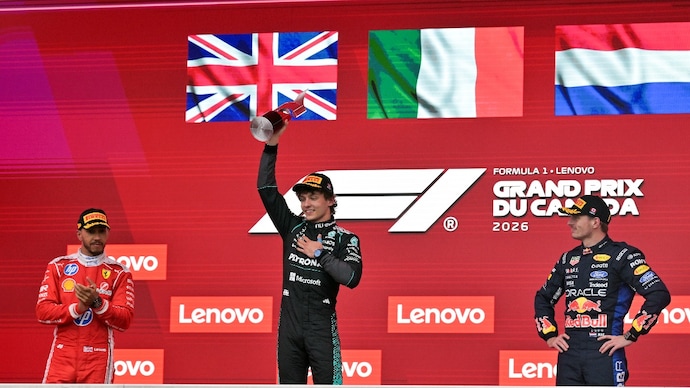
After a frustrating, stop-start beginning to the 2026 Formula 1 season, the Canadian Grand Prix felt like the championship finally hitting top gear. Montreal delivered everything the new era had promised: unpredictable strategy calls, wheel-to-wheel combat, shifting team fortunes and a title fight that suddenly feels very alive.
What made the weekend especially compelling was the sheer variety of storylines unfolding at once. Mercedes’ teenage prodigy continued his stunning emergence, McLaren found fresh ways to undermine themselves, and Formula 1’s old guard reminded everyone why class is permanent with a thrilling scrap that stole the show. Further down the grid, the development race is already beginning to reshape the competitive order, suggesting the pecking order from the opening rounds may not hold for much longer.
Most encouragingly for the sport, the racing itself finally looked like the version Formula 1 had hoped these regulations would create. Cars followed closely without immediately destroying their tyres, battles lasted across multiple laps, and overtaking felt earned rather than artificial. If Montreal was any indication, the 2026 season may just have found its spark. Here are five key talking points from a chaotic Canadian Grand Prix weekend.
Russell (not Antonelli) feeling the heat
After retiring from the race lead and watching his teammate win his 4th race on the go, a glum George Russell claimed that ‘the gods didn’t want him to win’ and that the championship was now ‘Antonelli’s to lose’. While it’s tempting to put that remark down to the Brit being naturally downbeat post his DNF, the fact remains that a 43-point deficit (while substantial) is certainly not insurmountable given that there are at least 17 races to go.
After all, Lando Norris came back from a 34-point deficit after his retirement at the 2025 Dutch GP to win last year’s championship, while Max Verstappen came agonisingly close to overturning a whopping 100-point-plus gap in the last few races.
Rather, the more astute reading of Russell’s remarks is that it’s a psychological ploy aimed at putting pressure on his 19-year-old teammate whose dominance in the early part of the season has surprised everyone up and down the paddock – including even his team at Mercedes. But rather tellingly, this indicates that Russell himself is facing the heat with the realisation that Antonelli, in his sophomore season, is no longer a pliant rookie eager to follow the lead of his more experienced teammate – a fact that was made abundantly clear from the duo’s scintillating duels on track during both the sprint and the main race.
Yes, Antonelli did make a couple of rash errors during both races, and it can be argued that Russell’s victory during the Sprint and his hanging on to the lead before retiring on Sunday could be attributed to the Brit having the cooler head on his shoulders. Yet the inescapable feeling for anyone watching over the weekend was that it was the young Italian who had the edge over his senior teammate when it came to race pace. The fact that this happened at arguably Russell’s strongest track on the calendar is what is likely to keep him up at night, more than just the 43-point deficit.
World Champions show how it’s done
For all the celebrated nature of their rivalry, it’s often overlooked that Lewis Hamilton and Max Verstappen have actually shared a title fight only once. On Sunday, two of the greatest-ever drivers in the sport (with a combined 11 titles between them) gave us a masterclass in hard, yet clean racing as they swapped positions in their fight towards the podium throughout the race and ultimately finished just within half a second of each other. After both racers delivered what was comfortably their best performance of the season so far, the cordial exchanges between the duo
In the cool-down room and on the podium while they celebrated young Antonelli’s victory, they helped many fans still smarting from their epic, but bitter 2021 title showdown.
While fans of the sport still yearn for a Verstappen vs Leclerc or a Verstappen vs Russell title fight, Sunday’s duel showed that the true box-office match was a rematch of Verstappen vs Hamilton.
McLaren disasterclass
While Ferrari is often the butt of the social media banter for their long and torturous history of taking questionable strategy calls to the agony of its drivers, their fiercest rivals perhaps get away lightly despite making far too many howlers of their own.
Montreal was yet another head scratcher from McLaren, with the Woking team electing to start both its drivers on intermediate tyres on a track which was bone dry for most parts of it. It was a disaster that put the team – which arguably is the only real challenger Mercedes have at the moment – firmly on the back foot. As a result, both drivers soon found themselves being lapped by the leaders they had hoped to challenge, after having to take unscheduled early pit stops to change to dry tyres. Their races never really recovered, with a reliability issue forcing Lando Norris to retire, while an uncharacteristically rash crash with Alex Albon and subsequent penalty resulted in Oscar Piastri finishing 11th and out of the points.
Both drivers agreed with the team management in insisting that the call to start the race on wet weather tyres was a fine one, and could have easily paid off handsomely if the circumstances were a little different. Yet it’s confounding why – in the face of an obvious catch 22 – did the team decide not to split strategies which would have guaranteed at least one of their drivers being in a position to challenge for the lead. It all comes back to McLaren’s dogged ‘Papaya rules’ policy of being parsimoniously fair to both its drivers, even if it backfires on both of them equally (Qatar 2025 immediately coming to mind). But while being just to its drivers in a season where both are title contenders is admirable (even if arguably naive) – in a season where the priority is reeling in Mercedes before it’s too late, it’s confounding that McLaren is still so visibly uneasy with prioritising either of its drivers.
Development gains change pecking order
Given that Canada was just round #5 in the season calendar, it is easy to forget that the season actually started almost 3 months ago – and we’re now seeing the first signs of the championship order being decided by the development race among teams rather than who got things right at the very outset. The updates Ferrari, McLaren and particularly Red Bull brought in Miami seem to have bridged the gap to Mercedes to an encouraging extent, but the bigger changes have been lower down the order.
Buoyed by their new Mercedes customer engine, Alpine has made big gains from their shaky start and is now the clear #5 in the pecking order, with both drivers regularly qualifying and finishing in the top 10. Williams seems to be the other big gainer in the development race, with reliability masking the problems of their overweight car to some extent. Points finishes in the last couple of races have now led to the team moving up to 8th in the standings – at the cost of Audi. The German carmaker had an encouraging debut in Australia with a points finish, but since then has been bogged down with reliability issues for both its drivers. A messy race in Montreal saw the team finish 12th and 13th out of 16 cars – a missed opportunity given how many points were picked up by their rivals.
The big winner in 2026 so far
With all the grumbling about energy harvesting and super clipping, it’s easy to overlook the biggest success of the 2026 regulations so far. Montreal saw several cars keep to within half a second of the car ahead for most parts of the race without hurting their tyres, something that was unthinkable in the latter stages of the previous rules' era. Indeed, there was a point in the race where the top 6 (Russell, Antonelli, Verstappen, Hamilton, Leclerc and Hadjar) were locked in individual battles with sub-1 second gaps, creating a thrilling spectacle.
With the tweaks to this year’s regulations, F1 finally seems to be in the sweet spot between the ‘impossible to overtake in the dirty air’ racing of 2025 and the ‘yo-yo racing’ we saw in the early rounds of this season. Long may this trend continue.
Montreal felt like the moment the 2026 season truly came alive. The racing was fierce, the tensions unmistakable and the title fight suddenly very real. Most importantly, we don’t have to wait for an eternity for the next race. Bring on Monaco!
After a frustrating, stop-start beginning to the 2026 Formula 1 season, the Canadian Grand Prix felt like the championship finally hitting top gear. Montreal delivered everything the new era had promised: unpredictable strategy calls, wheel-to-wheel combat, shifting team fortunes and a title fight that suddenly feels very alive.
What made the weekend especially compelling was the sheer variety of storylines unfolding at once. Mercedes’ teenage prodigy continued his stunning emergence, McLaren found fresh ways to undermine themselves, and Formula 1’s old guard reminded everyone why class is permanent with a thrilling scrap that stole the show. Further down the grid, the development race is already beginning to reshape the competitive order, suggesting the pecking order from the opening rounds may not hold for much longer.
Most encouragingly for the sport, the racing itself finally looked like the version Formula 1 had hoped these regulations would create. Cars followed closely without immediately destroying their tyres, battles lasted across multiple laps, and overtaking felt earned rather than artificial. If Montreal was any indication, the 2026 season may just have found its spark. Here are five key talking points from a chaotic Canadian Grand Prix weekend.
Russell (not Antonelli) feeling the heat
After retiring from the race lead and watching his teammate win his 4th race on the go, a glum George Russell claimed that ‘the gods didn’t want him to win’ and that the championship was now ‘Antonelli’s to lose’. While it’s tempting to put that remark down to the Brit being naturally downbeat post his DNF, the fact remains that a 43-point deficit (while substantial) is certainly not insurmountable given that there are at least 17 races to go.
After all, Lando Norris came back from a 34-point deficit after his retirement at the 2025 Dutch GP to win last year’s championship, while Max Verstappen came agonisingly close to overturning a whopping 100-point-plus gap in the last few races.
Rather, the more astute reading of Russell’s remarks is that it’s a psychological ploy aimed at putting pressure on his 19-year-old teammate whose dominance in the early part of the season has surprised everyone up and down the paddock – including even his team at Mercedes. But rather tellingly, this indicates that Russell himself is facing the heat with the realisation that Antonelli, in his sophomore season, is no longer a pliant rookie eager to follow the lead of his more experienced teammate – a fact that was made abundantly clear from the duo’s scintillating duels on track during both the sprint and the main race.
Yes, Antonelli did make a couple of rash errors during both races, and it can be argued that Russell’s victory during the Sprint and his hanging on to the lead before retiring on Sunday could be attributed to the Brit having the cooler head on his shoulders. Yet the inescapable feeling for anyone watching over the weekend was that it was the young Italian who had the edge over his senior teammate when it came to race pace. The fact that this happened at arguably Russell’s strongest track on the calendar is what is likely to keep him up at night, more than just the 43-point deficit.
World Champions show how it’s done
For all the celebrated nature of their rivalry, it’s often overlooked that Lewis Hamilton and Max Verstappen have actually shared a title fight only once. On Sunday, two of the greatest-ever drivers in the sport (with a combined 11 titles between them) gave us a masterclass in hard, yet clean racing as they swapped positions in their fight towards the podium throughout the race and ultimately finished just within half a second of each other. After both racers delivered what was comfortably their best performance of the season so far, the cordial exchanges between the duo
In the cool-down room and on the podium while they celebrated young Antonelli’s victory, they helped many fans still smarting from their epic, but bitter 2021 title showdown.
While fans of the sport still yearn for a Verstappen vs Leclerc or a Verstappen vs Russell title fight, Sunday’s duel showed that the true box-office match was a rematch of Verstappen vs Hamilton.
McLaren disasterclass
While Ferrari is often the butt of the social media banter for their long and torturous history of taking questionable strategy calls to the agony of its drivers, their fiercest rivals perhaps get away lightly despite making far too many howlers of their own.
Montreal was yet another head scratcher from McLaren, with the Woking team electing to start both its drivers on intermediate tyres on a track which was bone dry for most parts of it. It was a disaster that put the team – which arguably is the only real challenger Mercedes have at the moment – firmly on the back foot. As a result, both drivers soon found themselves being lapped by the leaders they had hoped to challenge, after having to take unscheduled early pit stops to change to dry tyres. Their races never really recovered, with a reliability issue forcing Lando Norris to retire, while an uncharacteristically rash crash with Alex Albon and subsequent penalty resulted in Oscar Piastri finishing 11th and out of the points.
Both drivers agreed with the team management in insisting that the call to start the race on wet weather tyres was a fine one, and could have easily paid off handsomely if the circumstances were a little different. Yet it’s confounding why – in the face of an obvious catch 22 – did the team decide not to split strategies which would have guaranteed at least one of their drivers being in a position to challenge for the lead. It all comes back to McLaren’s dogged ‘Papaya rules’ policy of being parsimoniously fair to both its drivers, even if it backfires on both of them equally (Qatar 2025 immediately coming to mind). But while being just to its drivers in a season where both are title contenders is admirable (even if arguably naive) – in a season where the priority is reeling in Mercedes before it’s too late, it’s confounding that McLaren is still so visibly uneasy with prioritising either of its drivers.
Development gains change pecking order
Given that Canada was just round #5 in the season calendar, it is easy to forget that the season actually started almost 3 months ago – and we’re now seeing the first signs of the championship order being decided by the development race among teams rather than who got things right at the very outset. The updates Ferrari, McLaren and particularly Red Bull brought in Miami seem to have bridged the gap to Mercedes to an encouraging extent, but the bigger changes have been lower down the order.
Buoyed by their new Mercedes customer engine, Alpine has made big gains from their shaky start and is now the clear #5 in the pecking order, with both drivers regularly qualifying and finishing in the top 10. Williams seems to be the other big gainer in the development race, with reliability masking the problems of their overweight car to some extent. Points finishes in the last couple of races have now led to the team moving up to 8th in the standings – at the cost of Audi. The German carmaker had an encouraging debut in Australia with a points finish, but since then has been bogged down with reliability issues for both its drivers. A messy race in Montreal saw the team finish 12th and 13th out of 16 cars – a missed opportunity given how many points were picked up by their rivals.
The big winner in 2026 so far
With all the grumbling about energy harvesting and super clipping, it’s easy to overlook the biggest success of the 2026 regulations so far. Montreal saw several cars keep to within half a second of the car ahead for most parts of the race without hurting their tyres, something that was unthinkable in the latter stages of the previous rules' era. Indeed, there was a point in the race where the top 6 (Russell, Antonelli, Verstappen, Hamilton, Leclerc and Hadjar) were locked in individual battles with sub-1 second gaps, creating a thrilling spectacle.
With the tweaks to this year’s regulations, F1 finally seems to be in the sweet spot between the ‘impossible to overtake in the dirty air’ racing of 2025 and the ‘yo-yo racing’ we saw in the early rounds of this season. Long may this trend continue.
Montreal felt like the moment the 2026 season truly came alive. The racing was fierce, the tensions unmistakable and the title fight suddenly very real. Most importantly, we don’t have to wait for an eternity for the next race. Bring on Monaco!

