Tim Cook is retiring, but why did Apple choose John Ternus as its next CEO? Reasons
At a time when we are living in the era of AI, the upcoming Apple CEO John Ternus may seem like a surprise choice to replace Tim Cook. But look closer and it all makes sense.
In recent years and months, there is one common criticism levelled at Apple. The company is failing at AI, many people often say. They look at Siri, which is arguably a dumb toddler in front of ultra smart AI systems from Google and OpenAI, and they say that Apple has totally dropped the ball. This criticism even leads many to say that Apple should move away from CEO Tim Cook, put in a fresh person in the hot seat, and take a fresh approach to everything it does, an approach that will put AI at the centre of the iPhone. Well, this week Apple indeed decided to move to a new era in which Tim Cook will not be the CEO.
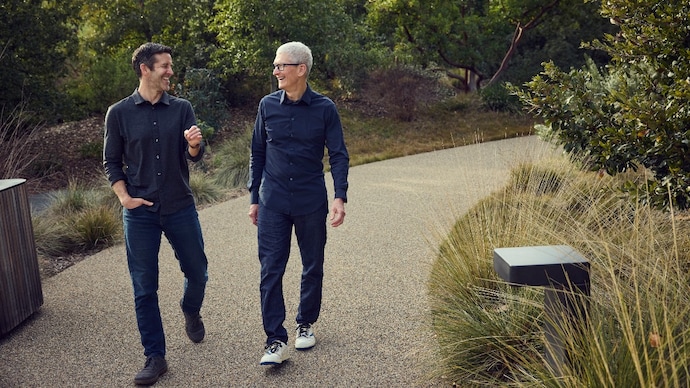
Come September 1, Apple will be led by John Ternus. On Tuesday, Apple officially announced that Cook is moving to an executive chairman role, while Ternus will replace him. Along with the post, it attached a photo of Cook and Ternus walking together in Apple Park, congenially and amiably with smiles on their faces.
For a lot of people who watch Apple closely, Ternus moving into the CEO role came as a no surprise. People expected Ternus to replace Cook, more so after COO Jeff Williams left the company last year. And that is exactly what is happening.
But at the same time, people who may not be keeping a close watch on Apple or how the company goes about its business were scratching their heads at the Ternus move. Many thought that Apple needed someone who was deep in AI and LLMs to reorient the company towards the latest buzz in the world of technology. Ternus, on the other hand, is a product and hardware person. And not an AI person.
But many are wrong. And rightly so. There are some very logical reasons why Ternus is getting the big job now that Cook is going into semi-retirement. Let me explain.
Apple is not an AI company, it is a hardware company
First, let us deal with the AI part of the equation. There is a sense that AI is all the buzz and rage nowadays and that any tech company worth its salt must go deep into AI. Up to an extent, this is correct. But Apple is not just any other tech company.
The reality is that unlike Google, Meta, and similar other tech companies, Apple has always put less emphasis on data (and AI) and more on products. In other words, hardware. It is essentially a product company and it has always tried to make products — the actual hardware products — that can delight and are useful to as many people as possible.
Since the days of Lisa, a computer that was crazy expensive but also a leap as far as commodity computers were concerned, Apple has focussed on creating best products. This is the reason why it is known for iPhone, iPod, Mac, iPad, AirPods, and Watch. For it, AI and software are secondary priorities, used inside the best products it can make.
Unlike other tech giants, Apple makes its money by selling actual products and not software. It even gives some of the best software — think Pages, Photos or Keynote — for free, bundling it with its products. Similarly, it does not make most of its money from services or advertisements or by using data in this way or that. Data and software are secondary, even though with some apps — Apple Music, for example — the company earns good money. Priority is always the hardware product.
To lead such a company, John Ternus is the perfect guy. He is the hardware guy, who has not only seen through the development and introduction of all major Apple products in the last 25 years but has also led some of the projects himself.
Ternus is a key man behind one of the biggest Apple innovations of last 15 years
On Tuesday when Ming-Chi Kuo, an important analyst who has been tracking Apple for years, talked about the CEO transition, he highlighted the M1 connection. In the last 15 years one of the biggest Apple innovations has come not in the form of a new device, or a new design. Instead, it has been in the processor — the heart of a computer — that sits inside the MacBooks. You can’t see this processor unless you take apart the laptop but it is one of the most significant innovations Apple has made.
In fact, so significant has been the Apple Silicon project, which has given us the M Series processor, that it has changed the entire world of computing by shattering the paradigm that companies like AMD and Intel had established earlier. It forced everyone to change. The entire project was apparently led by John Ternus.
Kuo highlighted the importance in his social media post. “John Ternus’ most important move in recent years was leading the Mac transition from x86 (Intel) to ARM (Apple’s own Apple Silicon),” he wrote. “Pulling off a full-stack shift across hardware, software, and the developer ecosystem in one go, and turning that into a commercial success, required a very high level of execution and tight cross-functional coordination. Without this, there wouldn’t be the success of today’s MacBook Neo and the advantage Apple now holds as it gears up for AI devices.”
Indeed, the success of the project likely propelled Ternus to the front of the potential CEO candidates.
He is an insider
Some people, the similar set that asks Apple to focus on AI, are also disappointed that Ternus is an insider. They believe that Ternus will keep the company on the same path on which Cook has been driving. Well, that is exactly the point and the reason why Ternus is getting the job.
Apple is well-known for making product breakthroughs, but the way it moves as a company is very different. It is rather traditionalist and conservative in its approach. Unlike most big tech companies, it doesn’t make large acquisitions. Relatively speaking, it rarely buys other companies. Unlike many others, at least so far, it has also not done big layoffs. That is because it is anyway conservative in its hiring. Unlike many other companies, it doesn’t make swift and sudden pivots. For example, Mark Zuckerberg changed the name of Facebook to Meta a few years ago and burned billions of dollars, trying to turn his company into a virtual reality firm. Apple, at least the way it is right now, will never do something like this.
In recent years and months, there is one common criticism levelled at Apple. The company is failing at AI, many people often say. They look at Siri, which is arguably a dumb toddler in front of ultra smart AI systems from Google and OpenAI, and they say that Apple has totally dropped the ball. This criticism even leads many to say that Apple should move away from CEO Tim Cook, put in a fresh person in the hot seat, and take a fresh approach to everything it does, an approach that will put AI at the centre of the iPhone. Well, this week Apple indeed decided to move to a new era in which Tim Cook will not be the CEO.
Come September 1, Apple will be led by John Ternus. On Tuesday, Apple officially announced that Cook is moving to an executive chairman role, while Ternus will replace him. Along with the post, it attached a photo of Cook and Ternus walking together in Apple Park, congenially and amiably with smiles on their faces.
For a lot of people who watch Apple closely, Ternus moving into the CEO role came as a no surprise. People expected Ternus to replace Cook, more so after COO Jeff Williams left the company last year. And that is exactly what is happening.
But at the same time, people who may not be keeping a close watch on Apple or how the company goes about its business were scratching their heads at the Ternus move. Many thought that Apple needed someone who was deep in AI and LLMs to reorient the company towards the latest buzz in the world of technology. Ternus, on the other hand, is a product and hardware person. And not an AI person.
But many are wrong. And rightly so. There are some very logical reasons why Ternus is getting the big job now that Cook is going into semi-retirement. Let me explain.
Apple is not an AI company, it is a hardware company
First, let us deal with the AI part of the equation. There is a sense that AI is all the buzz and rage nowadays and that any tech company worth its salt must go deep into AI. Up to an extent, this is correct. But Apple is not just any other tech company.
The reality is that unlike Google, Meta, and similar other tech companies, Apple has always put less emphasis on data (and AI) and more on products. In other words, hardware. It is essentially a product company and it has always tried to make products — the actual hardware products — that can delight and are useful to as many people as possible.
Since the days of Lisa, a computer that was crazy expensive but also a leap as far as commodity computers were concerned, Apple has focussed on creating best products. This is the reason why it is known for iPhone, iPod, Mac, iPad, AirPods, and Watch. For it, AI and software are secondary priorities, used inside the best products it can make.
Unlike other tech giants, Apple makes its money by selling actual products and not software. It even gives some of the best software — think Pages, Photos or Keynote — for free, bundling it with its products. Similarly, it does not make most of its money from services or advertisements or by using data in this way or that. Data and software are secondary, even though with some apps — Apple Music, for example — the company earns good money. Priority is always the hardware product.
To lead such a company, John Ternus is the perfect guy. He is the hardware guy, who has not only seen through the development and introduction of all major Apple products in the last 25 years but has also led some of the projects himself.
Ternus is a key man behind one of the biggest Apple innovations of last 15 years
On Tuesday when Ming-Chi Kuo, an important analyst who has been tracking Apple for years, talked about the CEO transition, he highlighted the M1 connection. In the last 15 years one of the biggest Apple innovations has come not in the form of a new device, or a new design. Instead, it has been in the processor — the heart of a computer — that sits inside the MacBooks. You can’t see this processor unless you take apart the laptop but it is one of the most significant innovations Apple has made.
In fact, so significant has been the Apple Silicon project, which has given us the M Series processor, that it has changed the entire world of computing by shattering the paradigm that companies like AMD and Intel had established earlier. It forced everyone to change. The entire project was apparently led by John Ternus.
Kuo highlighted the importance in his social media post. “John Ternus’ most important move in recent years was leading the Mac transition from x86 (Intel) to ARM (Apple’s own Apple Silicon),” he wrote. “Pulling off a full-stack shift across hardware, software, and the developer ecosystem in one go, and turning that into a commercial success, required a very high level of execution and tight cross-functional coordination. Without this, there wouldn’t be the success of today’s MacBook Neo and the advantage Apple now holds as it gears up for AI devices.”
Indeed, the success of the project likely propelled Ternus to the front of the potential CEO candidates.
He is an insider
Some people, the similar set that asks Apple to focus on AI, are also disappointed that Ternus is an insider. They believe that Ternus will keep the company on the same path on which Cook has been driving. Well, that is exactly the point and the reason why Ternus is getting the job.
Apple is well-known for making product breakthroughs, but the way it moves as a company is very different. It is rather traditionalist and conservative in its approach. Unlike most big tech companies, it doesn’t make large acquisitions. Relatively speaking, it rarely buys other companies. Unlike many others, at least so far, it has also not done big layoffs. That is because it is anyway conservative in its hiring. Unlike many other companies, it doesn’t make swift and sudden pivots. For example, Mark Zuckerberg changed the name of Facebook to Meta a few years ago and burned billions of dollars, trying to turn his company into a virtual reality firm. Apple, at least the way it is right now, will never do something like this.

