Sridhar Vembu has an AI warning for high school students
Sridhar Vembu has warned that AI tools may be making students overdependent instead of helping them truly learn. His comments came after a study found that students using GPT-based tools performed worse in exams without AI support.
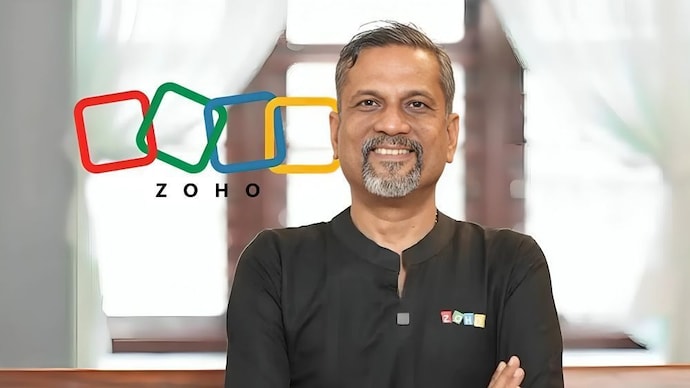
As AI tools become a bigger part of classrooms and workplaces, Sridhar Vembu has shared a warning that may resonate with students, especially those preparing for competitive exams and relying heavily on AI chatbots for answers. The Zoho founder reacted to a recent study on AI-assisted learning and argued that while AI may appear helpful in the short term, it could quietly weaken a student’s ability to think independently.
Vembu’s comments came in response to a viral post on X by Rimsha Bhardwaj, who highlighted findings from a 2025 research paper published in the Proceedings of the National Academy of Sciences (PNAS). The study examined how high school students performed when they used AI tools to practice mathematics.
"This research shows that high school students don't learn mathematics better with AI, they just learn to rely too much on AI. AI is not a training wheel, it becomes a crutch," Vembu wrote on X.
According to the viral thread, the study was conducted by Hamsa Bastani and her co-authors at the Wharton School. Nearly 1,000 high school students in Turkey reportedly took part in the experiment. They were divided into three groups during math practice sessions. One group used a regular GPT-4 chatbot that directly answered questions, another used a tutor-style version that offered hints instead of complete solutions, while the third group studied without AI support.
During practice sessions, the AI-assisted groups appeared to perform far better. Students using the standard GPT system reportedly solved 48 per cent more questions, while the tutor-style AI group solved 127 per cent more compared to students studying on their own. But the final outcome reportedly told a very different story.
When students later appeared for a test without access to AI tools, the group that had relied on the regular GPT interface scored 17 per cent lower than students who had studied without any AI support. Researchers reportedly found that many students had become dependent on the chatbot to do the thinking for them instead of actually understanding the concepts.
The post also claimed that students who relied most heavily on AI were often the most confident about their understanding, despite performing poorly in the actual exam. That finding has triggered a wider debate online about whether AI tools are improving education or simply creating an illusion of learning.
Even as concerns around overdependence grow, AI tools are rapidly becoming part of daily learning and work culture. Big tech companies such as Meta and Google are increasingly pushing employees to use AI for coding, research and productivity-related tasks.
The same change is now visible in education too. Google recently added JEE Main mock test support inside its Gemini AI platform. Students can type prompts asking for a mock test experience, and Gemini generates practice exams using question banks sourced from PhysicsWallah and Careers360. After completing the test, the AI can also analyse performance, point out weak areas and explain answers.
Vembu talks about career options that are easily 'safe' from AI
Interestingly, while he is now raising concerns about students becoming too dependent on AI for learning, he has also spoken about a different side of human life that technology may never replace. He recently asserted that people who dedicate themselves to meaningful work such as raising children, teaching, caring for the elderly, returning to agriculture despite leaving well-paying careers, protecting forests out of passion for nature, serving as temple priests even when no one is watching, and practising classical music regardless of audience size, will survive the AI era. According to him, these roles are driven by purpose rather than financial reward, which is exactly why AI is unlikely to take away their meaning. He believes society could slowly move towards these kinds of purpose-led activities as automation takes over more efficiency-focused jobs.
Vembu also argued that the real issue is not about money alone. In his view, AI and modern technology could dramatically increase productivity and create a world with abundant goods and services. The bigger concern, however, is how people will access and consume that abundance if machines generate surplus without creating enough employment opportunities or stable incomes. To explain the idea, he referred to ancient temples and monuments that were built by large groups of skilled workers who were supported through food, shelter, and other resources made possible by the economic surplus of that era and distributed by rulers.
According to Vembu, if technology begins producing surplus without relying on traditional jobs, societies will eventually face a political and economic question: how that wealth and abundance should be shared among people.
As AI tools become a bigger part of classrooms and workplaces, Sridhar Vembu has shared a warning that may resonate with students, especially those preparing for competitive exams and relying heavily on AI chatbots for answers. The Zoho founder reacted to a recent study on AI-assisted learning and argued that while AI may appear helpful in the short term, it could quietly weaken a student’s ability to think independently.
Vembu’s comments came in response to a viral post on X by Rimsha Bhardwaj, who highlighted findings from a 2025 research paper published in the Proceedings of the National Academy of Sciences (PNAS). The study examined how high school students performed when they used AI tools to practice mathematics.
"This research shows that high school students don't learn mathematics better with AI, they just learn to rely too much on AI. AI is not a training wheel, it becomes a crutch," Vembu wrote on X.
According to the viral thread, the study was conducted by Hamsa Bastani and her co-authors at the Wharton School. Nearly 1,000 high school students in Turkey reportedly took part in the experiment. They were divided into three groups during math practice sessions. One group used a regular GPT-4 chatbot that directly answered questions, another used a tutor-style version that offered hints instead of complete solutions, while the third group studied without AI support.
During practice sessions, the AI-assisted groups appeared to perform far better. Students using the standard GPT system reportedly solved 48 per cent more questions, while the tutor-style AI group solved 127 per cent more compared to students studying on their own. But the final outcome reportedly told a very different story.
When students later appeared for a test without access to AI tools, the group that had relied on the regular GPT interface scored 17 per cent lower than students who had studied without any AI support. Researchers reportedly found that many students had become dependent on the chatbot to do the thinking for them instead of actually understanding the concepts.
The post also claimed that students who relied most heavily on AI were often the most confident about their understanding, despite performing poorly in the actual exam. That finding has triggered a wider debate online about whether AI tools are improving education or simply creating an illusion of learning.
Even as concerns around overdependence grow, AI tools are rapidly becoming part of daily learning and work culture. Big tech companies such as Meta and Google are increasingly pushing employees to use AI for coding, research and productivity-related tasks.
The same change is now visible in education too. Google recently added JEE Main mock test support inside its Gemini AI platform. Students can type prompts asking for a mock test experience, and Gemini generates practice exams using question banks sourced from PhysicsWallah and Careers360. After completing the test, the AI can also analyse performance, point out weak areas and explain answers.
Vembu talks about career options that are easily 'safe' from AI
Interestingly, while he is now raising concerns about students becoming too dependent on AI for learning, he has also spoken about a different side of human life that technology may never replace. He recently asserted that people who dedicate themselves to meaningful work such as raising children, teaching, caring for the elderly, returning to agriculture despite leaving well-paying careers, protecting forests out of passion for nature, serving as temple priests even when no one is watching, and practising classical music regardless of audience size, will survive the AI era. According to him, these roles are driven by purpose rather than financial reward, which is exactly why AI is unlikely to take away their meaning. He believes society could slowly move towards these kinds of purpose-led activities as automation takes over more efficiency-focused jobs.
Vembu also argued that the real issue is not about money alone. In his view, AI and modern technology could dramatically increase productivity and create a world with abundant goods and services. The bigger concern, however, is how people will access and consume that abundance if machines generate surplus without creating enough employment opportunities or stable incomes. To explain the idea, he referred to ancient temples and monuments that were built by large groups of skilled workers who were supported through food, shelter, and other resources made possible by the economic surplus of that era and distributed by rulers.
According to Vembu, if technology begins producing surplus without relying on traditional jobs, societies will eventually face a political and economic question: how that wealth and abundance should be shared among people.

