Anthropic co-founder warns of AI job losses, says oversight needed from outside Big Tech
At the launch of Pope Leo XIV's AI encyclical Magnifica Humanitas, Anthropic co-founder Christopher Olah warned that artificial intelligence could replace human labour at a massive scale.
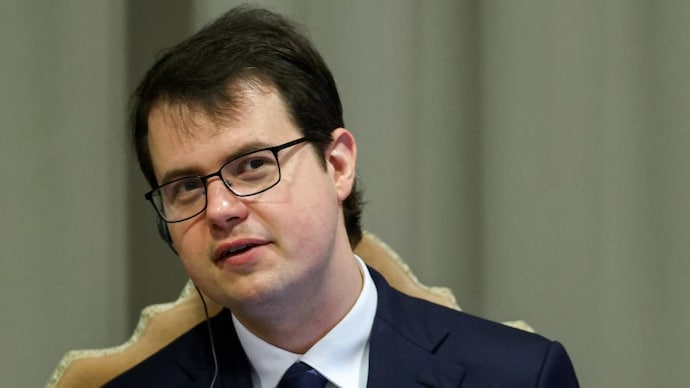
When Pope Leo XIV presented Magnifica Humanitas on May 25, the historic moment was expected to focus on morality, technology, and the future of artificial intelligence. Instead, one warning quickly stood out above the rest, the possibility that AI could replace human jobs on a massive scale. While Pope Leo XIV warned about unchecked technological power, Anthropic co-founder Christoph Olah delivered a stark message about what AI could mean for workers around the world. Olah was also seated among cardinals and theologians at the Vatican auditorium as the Church unveiled its sweeping encyclical on artificial intelligence.
“A real possibility” of large-scale job losses
Speaking before members of the Roman Curia, Olah said there was “a real possibility” that AI could displace human labour “at very large scale.”
“If that happens, supporting those displaced will be a moral imperative of historic proportions,” he said while seated beside the pope.
At a time when companies are rapidly rolling out AI tools capable of writing, coding, analysing data, and automating workplace tasks, Olah’s remarks reflected growing concerns that the technology could reshape employment faster than societies are prepared for.
Pope Leo’s AI encyclical warns about concentrated power
The encyclical itself, titled Magnifica Humanitas (“Magnificent Humanity”), focused on safeguarding humanity during the rise of artificial intelligence.
The document warned about contemporary crises being intensified by rapid and unchecked technological development. Pope Leo XIV also advocated for stronger government regulation of AI companies and criticised what he described as the “concentration of power in the digital world.”
The message from the Vatican was clear: AI is not just a technological issue, but a human one.
AI companies operate under enormous pressure
Olah also acknowledged that AI companies themselves operate under enormous pressure. He said frontier AI labs face commercial competition, geopolitical pressures, and personal ambition that can sometimes conflict with society’s broader interests.
“Every frontier AI lab operates inside a set of incentives and constraints that can sometimes conflict with doing the right thing,” he said.
According to Olah, even well-intentioned researchers remain influenced by those forces. That is why, he argued, outside criticism and public scrutiny are necessary.
Why the Vatican and Anthropic shared the stage
The sight of a pope and an AI executive appearing together was unexpected, especially given the Vatican’s repeated warnings about artificial intelligence. Yet both sides appeared united on the point that the risks of AI are becoming too large to ignore.
Olah called for dialogue and “mutual effort” between technology companies and outside institutions, including the Church.
“It is through dialogue and mutual effort, through the push and pull, that humanity will achieve great things,” he said.
When Pope Leo XIV presented Magnifica Humanitas on May 25, the historic moment was expected to focus on morality, technology, and the future of artificial intelligence. Instead, one warning quickly stood out above the rest, the possibility that AI could replace human jobs on a massive scale. While Pope Leo XIV warned about unchecked technological power, Anthropic co-founder Christoph Olah delivered a stark message about what AI could mean for workers around the world. Olah was also seated among cardinals and theologians at the Vatican auditorium as the Church unveiled its sweeping encyclical on artificial intelligence.
“A real possibility” of large-scale job losses
Speaking before members of the Roman Curia, Olah said there was “a real possibility” that AI could displace human labour “at very large scale.”
“If that happens, supporting those displaced will be a moral imperative of historic proportions,” he said while seated beside the pope.
At a time when companies are rapidly rolling out AI tools capable of writing, coding, analysing data, and automating workplace tasks, Olah’s remarks reflected growing concerns that the technology could reshape employment faster than societies are prepared for.
Pope Leo’s AI encyclical warns about concentrated power
The encyclical itself, titled Magnifica Humanitas (“Magnificent Humanity”), focused on safeguarding humanity during the rise of artificial intelligence.
The document warned about contemporary crises being intensified by rapid and unchecked technological development. Pope Leo XIV also advocated for stronger government regulation of AI companies and criticised what he described as the “concentration of power in the digital world.”
The message from the Vatican was clear: AI is not just a technological issue, but a human one.
AI companies operate under enormous pressure
Olah also acknowledged that AI companies themselves operate under enormous pressure. He said frontier AI labs face commercial competition, geopolitical pressures, and personal ambition that can sometimes conflict with society’s broader interests.
“Every frontier AI lab operates inside a set of incentives and constraints that can sometimes conflict with doing the right thing,” he said.
According to Olah, even well-intentioned researchers remain influenced by those forces. That is why, he argued, outside criticism and public scrutiny are necessary.
Why the Vatican and Anthropic shared the stage
The sight of a pope and an AI executive appearing together was unexpected, especially given the Vatican’s repeated warnings about artificial intelligence. Yet both sides appeared united on the point that the risks of AI are becoming too large to ignore.
Olah called for dialogue and “mutual effort” between technology companies and outside institutions, including the Church.
“It is through dialogue and mutual effort, through the push and pull, that humanity will achieve great things,” he said.

