Anthropic tells Pope, they keep finding unsettling and mysterious things in AI
At the launch of Pope Leo XIV's AI encyclical Magnifica Humanitas, Anthropic co-founder Christopher Olah claimed researchers are finding "evidence of introspection" inside AI systems. His remarks sharpened a debate the encyclical itself treated cautiously.
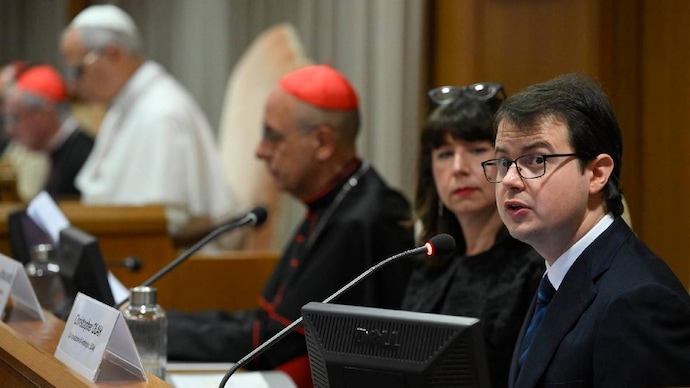
Pope Leo XIV, on May 25, presented Magnifica Humanitas (“Magnificent Humanity”), an encyclical warning about the growing crises being intensified by rapid and unchecked AI development. But during the event, Olah made comments that quickly reignited one of the most controversial debates in artificial intelligence. Speaking before members of the Roman Curia, Olah suggested humanity needs to pay much closer attention to what is happening inside advanced AI systems and hinted that researchers are seeing signs that appear surprisingly human-like.
“I am a scientist. I lead a research team that studies the internal structure of these models,” Olah said.
“We keep finding things that are mysterious, even unsettling. We find structures that mirror results from human neuroscience. We find evidence of introspection.”
He went even further.
“We find internal states that, functionally, mirror joy, satisfaction, fear, grief, and unease,” he said.
“I don't know what that means, but I think it warrants ongoing discernment.”
Can AI actually become conscious?
Olah’s comments immediately reignited public debate around AI consciousness, the idea that future AI systems might not just appear intelligent, but could potentially become aware or capable of feeling.
As AI systems improve rapidly, many people have started wondering whether humanity could eventually cross a line from machines that simulate thinking to machines that actually experience something internally.
But many experts strongly disagree with that idea.
The Vatican’s document takes a more cautious view
Interestingly, the Vatican’s own encyclical took a far more cautious position than Olah’s remarks. Magnifica Humanitas argued that people should avoid confusing artificial intelligence with human intelligence.
The document stated that AI systems only imitate certain human functions and remain entirely dependent on data processing. According to the encyclical, AI systems do not experience life, feel emotions, form relationships, or understand morality and responsibility in the way humans do.
The document warned that while AI may simulate empathy or understanding, it still does not truly comprehend what it produces because it lacks human emotional, relational, and spiritual experience.
Other researchers also push back
Scepticism around AI consciousness is common among researchers.
Recently, Alexander Lerchner from Google DeepMind argued that AI systems can never truly become conscious because they are ultimately dependent on humans to organise and interpret reality.
In simple terms, critics argue that AI systems do not actually “know” what they are saying. They simply predict what word, image, or response should come next based on patterns in data.
For many experts, being able to simulate conversation or reasoning is completely different from genuinely experiencing thoughts or feelings.
Why this debate matters
The debate over AI consciousness is not just philosophical. If society ever concludes that an AI system is truly conscious, it could completely change how such systems are regulated, used, and even treated.
That is partly why Olah’s comments drew so much attention. Inside one of the world’s most important religious institutions, alongside the pope himself, an AI researcher openly admitted that even the people building these systems may not fully understand what is emerging inside them.
Pope Leo XIV, on May 25, presented Magnifica Humanitas (“Magnificent Humanity”), an encyclical warning about the growing crises being intensified by rapid and unchecked AI development. But during the event, Olah made comments that quickly reignited one of the most controversial debates in artificial intelligence. Speaking before members of the Roman Curia, Olah suggested humanity needs to pay much closer attention to what is happening inside advanced AI systems and hinted that researchers are seeing signs that appear surprisingly human-like.
“I am a scientist. I lead a research team that studies the internal structure of these models,” Olah said.
“We keep finding things that are mysterious, even unsettling. We find structures that mirror results from human neuroscience. We find evidence of introspection.”
He went even further.
“We find internal states that, functionally, mirror joy, satisfaction, fear, grief, and unease,” he said.
“I don't know what that means, but I think it warrants ongoing discernment.”
Can AI actually become conscious?
Olah’s comments immediately reignited public debate around AI consciousness, the idea that future AI systems might not just appear intelligent, but could potentially become aware or capable of feeling.
As AI systems improve rapidly, many people have started wondering whether humanity could eventually cross a line from machines that simulate thinking to machines that actually experience something internally.
But many experts strongly disagree with that idea.
The Vatican’s document takes a more cautious view
Interestingly, the Vatican’s own encyclical took a far more cautious position than Olah’s remarks. Magnifica Humanitas argued that people should avoid confusing artificial intelligence with human intelligence.
The document stated that AI systems only imitate certain human functions and remain entirely dependent on data processing. According to the encyclical, AI systems do not experience life, feel emotions, form relationships, or understand morality and responsibility in the way humans do.
The document warned that while AI may simulate empathy or understanding, it still does not truly comprehend what it produces because it lacks human emotional, relational, and spiritual experience.
Other researchers also push back
Scepticism around AI consciousness is common among researchers.
Recently, Alexander Lerchner from Google DeepMind argued that AI systems can never truly become conscious because they are ultimately dependent on humans to organise and interpret reality.
In simple terms, critics argue that AI systems do not actually “know” what they are saying. They simply predict what word, image, or response should come next based on patterns in data.
For many experts, being able to simulate conversation or reasoning is completely different from genuinely experiencing thoughts or feelings.
Why this debate matters
The debate over AI consciousness is not just philosophical. If society ever concludes that an AI system is truly conscious, it could completely change how such systems are regulated, used, and even treated.
That is partly why Olah’s comments drew so much attention. Inside one of the world’s most important religious institutions, alongside the pope himself, an AI researcher openly admitted that even the people building these systems may not fully understand what is emerging inside them.

